
穿心莲内酯对斯普拉格-道利大鼠的肝脏保护作用可能通过抗氧化防御机制实现。
Hepatoprotective activity of andrographolide possibly through antioxidative defense mechanism in Sprague-Dawley rats.
作者信息
Mondal Milon, Sarkar Chandan, Saha Sushmita, Hossain Md Naim, Norouzi Roghayeh, Mubarak Mohammad S, Siyadatpanah Abolghasem, Wilairatana Polrat, Hossain Rajib, Islam Muhammad Torequl, Coutinho Henrique Douglas Melo
机构信息
Department of Pharmacy, Life Science Faculty, Bangabandhu Sheikh Mujibur Rahman Science and Technology University, Gopalganj 8100, Bangladesh.
Department of Pharmacy, Jahangirnagar University, Savar, Dhaka 1342, Bangladesh.
出版信息
Toxicol Rep. 2022 Apr 22;9:1013-1022. doi: 10.1016/j.toxrep.2022.04.007. eCollection 2022.
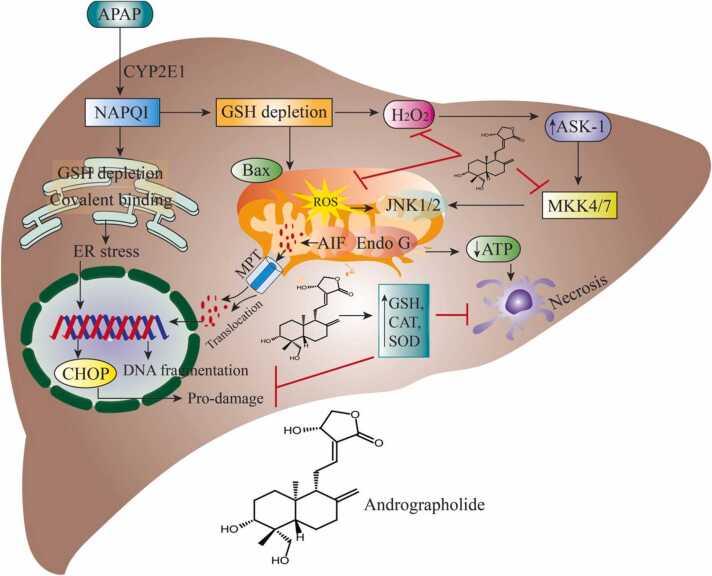
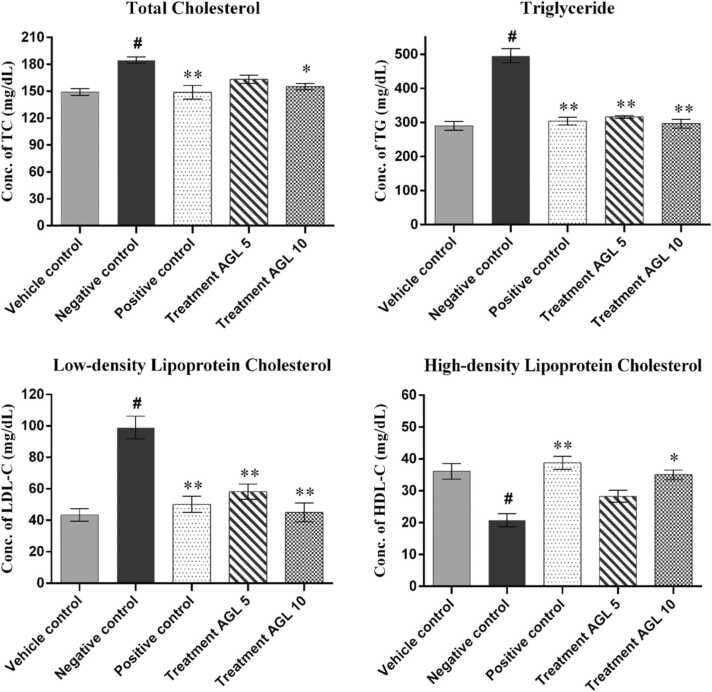
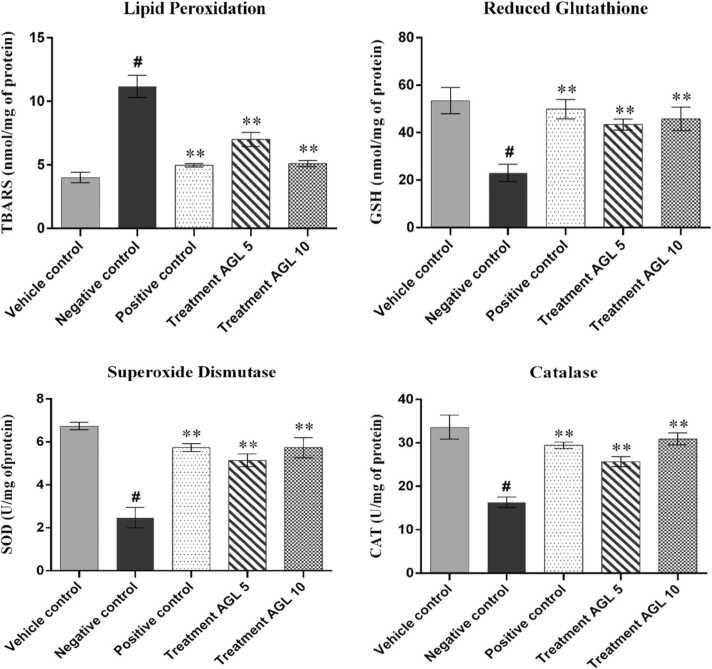
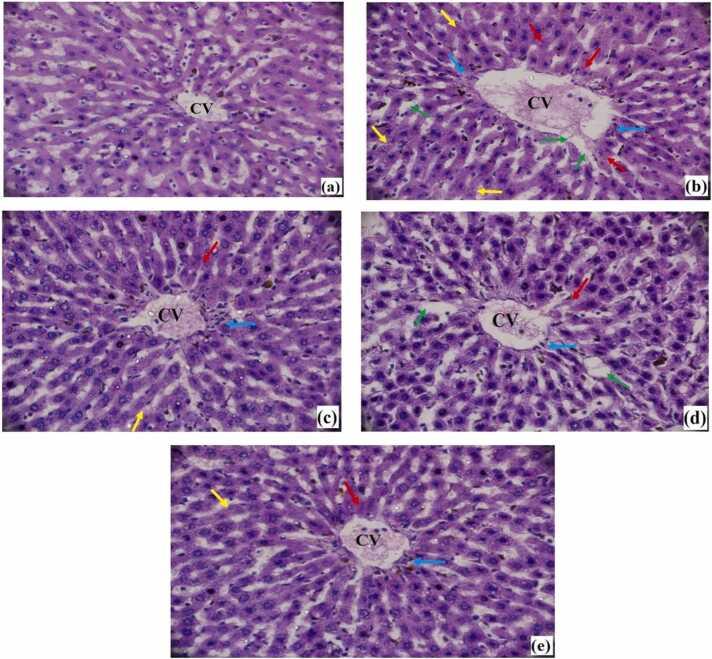
The aims of this study to assess the efficiency of AGL against acetaminophen (APAP)-induced hepatic toxicity that was generated by mitochondrial oxidative stress and glutathione depletion. Free radical scavenging potentiality was analyzed by using 2, 2-diphenyl-1-picrylhydrazyl (DPPH), hydrogen peroxide, nitric oxide, and hydroxyl radical scavenging assays. APAP-induced liver toxicity was formed at a dose level of 640 mg/kg mg/kg BW each, p.o. for 14 days for all experimental rats except the vehicle control group. AGL (5 and 10 mg/kg) were treated orally with negative control and negative control silymarin (50 mg/kg) group. To assess the protective effect, we looked at the levels of serum biochemical markers, liver histoarchitecture, and hepatic antioxidant enzyme activity. AGL showed in vitro anti-oxidant potentialities by scavenging radicals in the respective assays. As evidenced by serum biochemical indicators and relative liver weight, AGL co-administration substantially reduced toxicant-induced hepatic damage. APAP-intoxication increased the malondialdehyde (MDA) level and declined in cellular endogenous antioxidant enzymes such as reduced catalase, superoxide dismutase, and glutathione, where, AGL treatment amended their level. In the same way, histopathological evaluation further verified that AGL protected the hepatocyte from APAP-induced damage. As AGL scavenges toxic free radicals, thereby protects mitochondria and other organelles from reactive oxygen and nitrogen species-mediated stress and its eventual consequence necrosis. Therefore, we propose the hepatoprotective activity of AGL through its antioxidant mechanism.
本研究旨在评估AGL对由线粒体氧化应激和谷胱甘肽耗竭所引发的对乙酰氨基酚(APAP)诱导的肝毒性的疗效。通过使用2,2-二苯基-1-苦基肼(DPPH)、过氧化氢、一氧化氮和羟自由基清除试验来分析自由基清除潜力。除溶剂对照组外,所有实验大鼠均以640 mg/kg体重的剂量口服给予APAP,持续14天,以形成APAP诱导的肝毒性。AGL(5和10 mg/kg)与阴性对照组和阴性对照水飞蓟宾(50 mg/kg)组一起口服给药。为评估保护作用,我们观察了血清生化标志物水平、肝脏组织架构和肝脏抗氧化酶活性。AGL在各自的试验中通过清除自由基显示出体外抗氧化潜力。血清生化指标和相对肝脏重量证明,AGL联合给药显著降低了毒物诱导的肝损伤。APAP中毒增加了丙二醛(MDA)水平,并使细胞内源性抗氧化酶如还原型过氧化氢酶、超氧化物歧化酶和谷胱甘肽水平下降,而AGL治疗改善了它们的水平。同样,组织病理学评估进一步证实AGL保护肝细胞免受APAP诱导的损伤。由于AGL清除有毒自由基,从而保护线粒体和其他细胞器免受活性氧和氮物种介导的应激及其最终后果坏死。因此,我们提出AGL通过其抗氧化机制具有肝保护活性。


 Zotero 插件