
不同血浆浓度的吡非尼酮治疗特发性肺纤维化患者的安全性和有效性分析。
Analysis of the safety and efficacy of different plasma concentrations of pirfenidone in patients with idiopathic pulmonary fibrosis.
作者信息
Li Hui, Yang Jing, Chen Shanshan, Wang Peile, Yu Xueqing, Zhou Qingwei, Zhang Xiaojian, Zhang Guojun
机构信息
Department of Respiratory Medicine, Henan key Laboratory of Interstitial Lung Diseases and Lung Transplantation Medicine, Henan Respiratory Disease Clinical Medical Research Center, The First Affiliated Hospital of Zhengzhou University, Zhengzhou, China.
Department of Pharmacy, Henan Engineering Research Center for Application and Translation of Precision Clinical Pharmacy, The First Affiliated Hospital of Zhengzhou University, Zhengzhou University, Zhengzhou, China.
出版信息
Front Pharmacol. 2022 Nov 29;13:1055702. doi: 10.3389/fphar.2022.1055702. eCollection 2022.
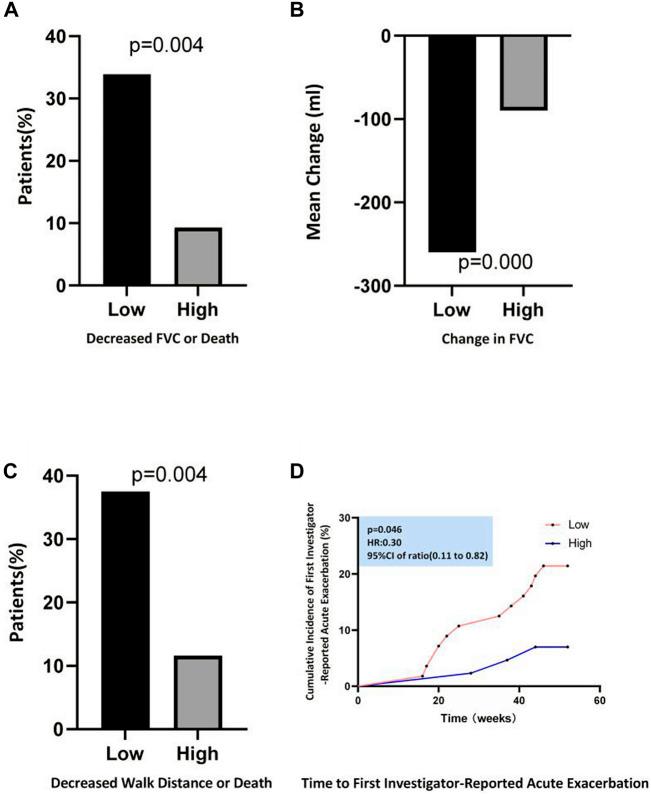
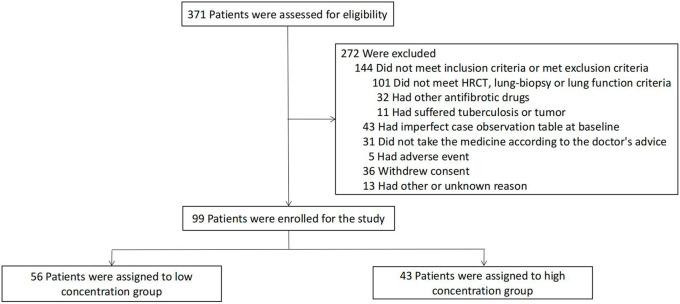
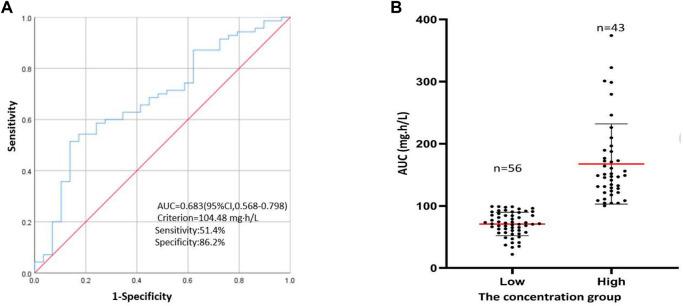
The high incidence and mortality of idiopathic pulmonary fibrosis (IPF) have led to the widespread use of antifibrotic drugs such as pirfenidone; however, the associated adverse reactions greatly vary among individuals and the dose is not fixed. To date, no reliable blood concentration range of pirfenidone is available to monitor adverse reactions and clinical efficacy. This real study assessed the efficacy and safety of different plasma concentrations of pirfenidone in patients with IPF. The study included 99 patients with IPF orally treated with pirfenidone capsules for at least 52 weeks. Ultra-performance liquid chromatography-mass spectrometry was used to analyze drug plasma concentrations. The annual rate of forced vital capacity (FVC) decline, assessed at week 52, was set as the primary end point. Secondary end points were the change from the baseline in the 6-min walk distance (6 MWD) and the time to the first acute exacerbation of IPF, both of which evaluated over 52 weeks. In the total population, the annual FVC decline in the high-concentration group was -90.0 ml per year versus -260.0 ml per year in the low-concentration group, for a between-group difference of 190.3 ml per year. The proportion of patients treated with high plasma concentrations of pirfenidone who showed an absolute decline of ≥10% in FVC% predicted, with a 6 MWD reduction of ≥50 m, or died, was lower than that of patients treated with low plasma concentrations of pirfenidone. High concentrations of pirfenidone reduced the risk of acute exacerbation in patients with IPF. Considerable differences were not observed for the total St. George's Respiratory Questionnaire score or the rates of death between the high- and low-concentration groups. Mild to moderate adverse events, mainly involving the gastrointestinal system and the skin, were more common in the high-concentration group than in the low-concentration group but did not lead to termination of treatment in most cases. Our results suggest that treatment of IPF with high blood concentration of pirfenidone is both safe and effective. In the case of tolerable adverse reactions, patients with IPF may benefit from high concentrations of pirfenidone.
特发性肺纤维化(IPF)的高发病率和死亡率导致抗纤维化药物如吡非尼酮被广泛使用;然而,相关不良反应在个体间差异很大,且剂量不固定。迄今为止,尚无可靠的吡非尼酮血药浓度范围可用于监测不良反应和临床疗效。这项真实世界研究评估了不同血浆浓度的吡非尼酮对IPF患者的疗效和安全性。该研究纳入了99例口服吡非尼酮胶囊治疗至少52周的IPF患者。采用超高效液相色谱-质谱联用技术分析药物血浆浓度。将第52周评估的用力肺活量(FVC)年下降率设定为主要终点。次要终点为6分钟步行距离(6MWD)相对于基线的变化以及IPF首次急性加重的时间,二者均在52周内进行评估。在总人群中,高浓度组的FVC年下降率为每年-90.0ml,而低浓度组为每年-260.0ml,组间差异为每年190.3ml。血浆吡非尼酮浓度高的患者中,预测FVC%绝对下降≥10%、6MWD减少≥50m或死亡的比例低于血浆吡非尼酮浓度低的患者。高浓度的吡非尼酮降低了IPF患者急性加重的风险。高浓度组和低浓度组在圣乔治呼吸问卷总分或死亡率方面未观察到显著差异。轻度至中度不良事件主要累及胃肠道系统和皮肤,在高浓度组比低浓度组更常见,但在大多数情况下并未导致治疗终止。我们的结果表明,高血药浓度的吡非尼酮治疗IPF既安全又有效。在不良反应可耐受的情况下,IPF患者可能从高浓度吡非尼酮治疗中获益。
 Zotero 插件