
受 COVID-19 大流行影响的个人防护设备(PPE)在亚洲最长的城市海滩——玛尼拉海滩造成的污染:丰度、分布及分析特性。
Personal protective equipment (PPE) pollution driven by COVID-19 pandemic in Marina Beach, the longest urban beach in Asia: Abundance, distribution, and analytical characterization.
机构信息
Centre for Aquaculture, Sathyabama Institute of Science and Technology, Chennai 600 119, Tamil Nadu, India.
LESCB, URL-CNRST N 18, Abdelmalek Essaadi University, Faculty of Sciences, Tetouan, Morocco.
出版信息
Mar Pollut Bull. 2023 Jan;186:114476. doi: 10.1016/j.marpolbul.2022.114476. Epub 2022 Dec 7.
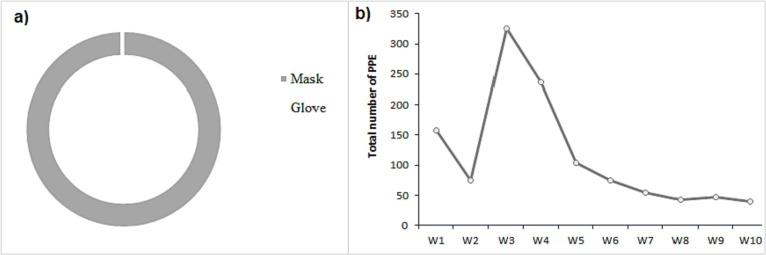
COVID-19 pandemic has enforced the use of personal protective equipment (PPE, masks and gloves). However, the mismanagement of litter are exacerbating the increasing plastic issue worldwide. In the present study, we sampled discarded PPE in 10 sites along Marina Beach, India. We characterized the litter types by chemical analysis techniques. A total of 1154 COVID-19-associated PPE items were found on Marina beach. The highest number of items were face masks (97.9 %) and the mean PPE density in the sites studied was 4 × 10 PPE m. The results demonstrate that poor solid waste management and lack of awareness are the main causes of pollution at Marina beach. FTIR spectroscopy revealed that face masks and gloves were principally made of polypropylene and latex, respectively. The FTIR spectra also showed signs of chemical degradation. Our results suggest that plastic pollution is increasing, possibly becoming more impactful to marine biota. Beach management measures were discussed.
新冠疫情大流行强制要求人们使用个人防护设备(PPE,口罩和手套)。然而,垃圾管理不善使全球的塑料污染问题更加严重。在本研究中,我们在印度 Marina 海滩的 10 个地点采集了废弃的 PPE。我们通过化学分析技术对垃圾类型进行了特征描述。在 Marina 海滩上发现了 1154 件与 COVID-19 相关的 PPE 物品。其中口罩数量最多(97.9%),研究地点的 PPE 平均密度为每平方米 4×10 件。结果表明,垃圾管理不善和缺乏意识是 Marina 海滩污染的主要原因。傅里叶变换红外(FTIR)光谱显示,口罩和手套主要由聚丙烯和乳胶制成。FTIR 光谱还显示出化学降解的迹象。我们的研究结果表明,塑料污染正在加剧,可能对海洋生物产生更大的影响。还讨论了海滩管理措施。




 Zotero 插件