
PABPC1——信使核糖核酸稳定性、蛋白质翻译与肿瘤发生
PABPC1--mRNA stability, protein translation and tumorigenesis.
作者信息
Qi Ya, Wang Min, Jiang Qi
机构信息
Department of Gynecology and Obstetrics, Shengjing Hospital Affiliated of China Medical University, Shenyang, Liaoning, China.
Second Department of Clinical Medicine, China Medical University, Shenyang, Liaoning, China.
出版信息
Front Oncol. 2022 Dec 1;12:1025291. doi: 10.3389/fonc.2022.1025291. eCollection 2022.
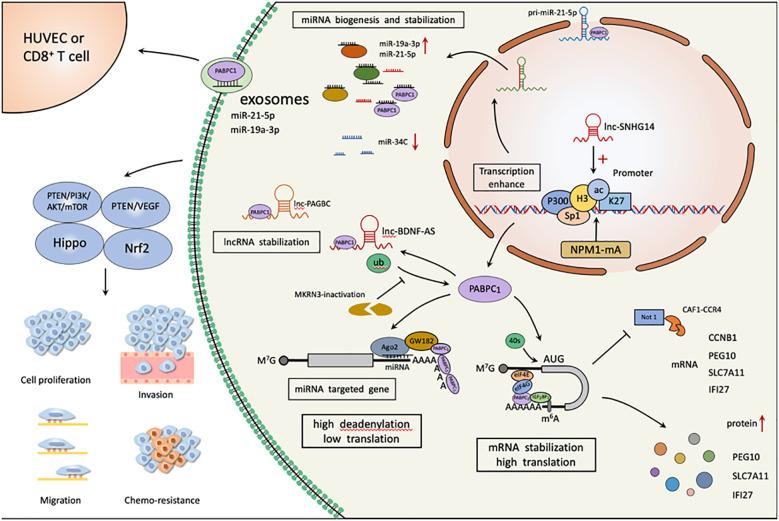
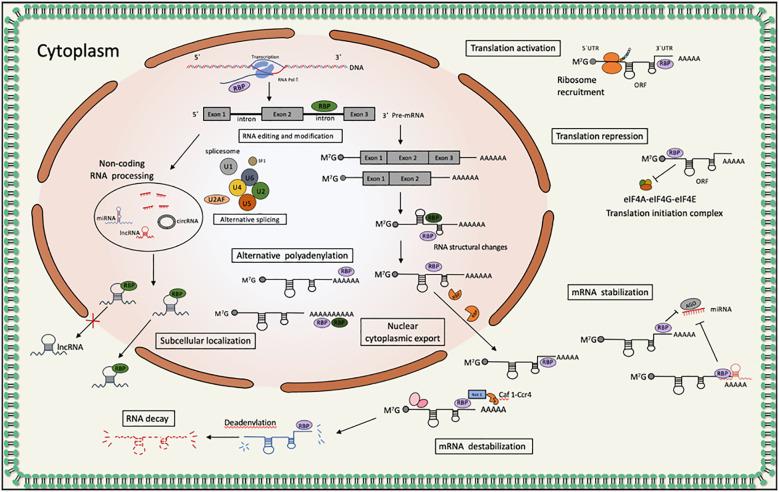
Mammalian poly A-binding proteins (PABPs) are highly conserved multifunctional RNA-binding proteins primarily involved in the regulation of mRNA translation and stability, of which PABPC1 is considered a central regulator of cytoplasmic mRNA homing and is involved in a wide range of physiological and pathological processes by regulating almost every aspect of RNA metabolism. Alterations in its expression and function disrupt intra-tissue homeostasis and contribute to the development of various tumors. There is increasing evidence that PABPC1 is aberrantly expressed in a variety of tumor tissues and cancers such as lung, gastric, breast, liver, and esophageal cancers, and PABPC1 might be used as a potential biomarker for tumor diagnosis, treatment, and clinical application in the future. In this paper, we review the abnormal expression, functional role, and molecular mechanism of PABPC1 in tumorigenesis and provide directions for further understanding the regulatory role of PABPC1 in tumor cells.
哺乳动物多聚腺苷酸结合蛋白(PABP)是高度保守的多功能RNA结合蛋白,主要参与mRNA翻译和稳定性的调控,其中PABPC1被认为是细胞质mRNA归巢的核心调节因子,并通过调节RNA代谢的几乎各个方面参与广泛的生理和病理过程。其表达和功能的改变会破坏组织内稳态,并促进各种肿瘤的发生。越来越多的证据表明,PABPC1在多种肿瘤组织和癌症中异常表达,如肺癌、胃癌、乳腺癌、肝癌和食管癌,并且PABPC1未来可能用作肿瘤诊断、治疗及临床应用的潜在生物标志物。在本文中,我们综述了PABPC1在肿瘤发生中的异常表达、功能作用及分子机制,并为进一步了解PABPC1在肿瘤细胞中的调控作用提供方向。
 Zotero 插件