
包含至少 3 种引起人类环孢子虫病的物种。
comprises at least 3 species that cause human cyclosporiasis.
机构信息
Parasitic Diseases Branch, Division of Parasitic Diseases and Malaria, Centers for Disease Control and Prevention, Atlanta, GA 30329, USA.
Epidemiology Department, The Rollins School of Public Health, Emory University, Atlanta, GA, USA.
出版信息
Parasitology. 2023 Mar;150(3):269-285. doi: 10.1017/S003118202200172X. Epub 2022 Dec 23.
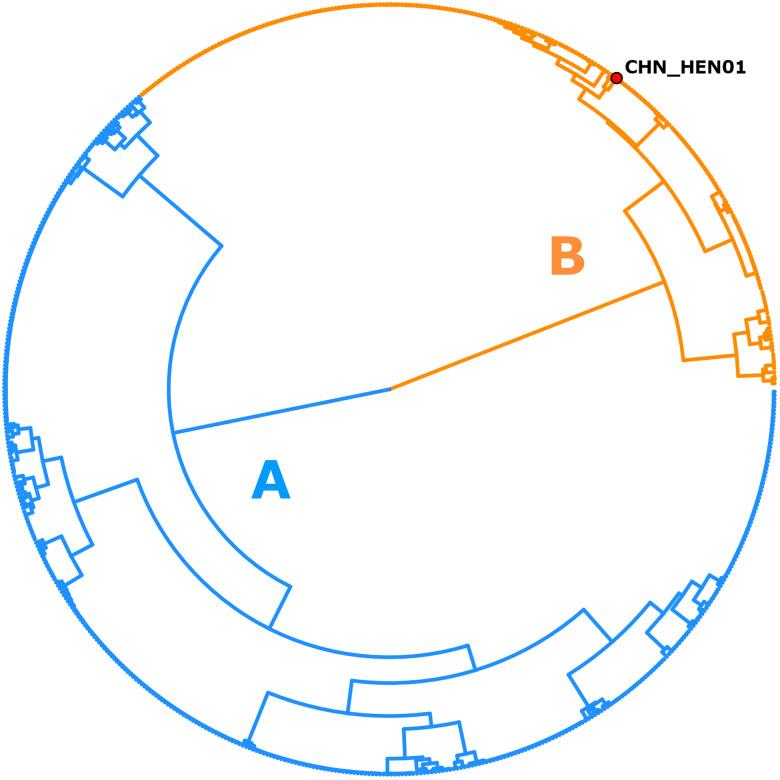
The apicomplexan parasite causes seasonal foodborne outbreaks of the gastrointestinal illness cyclosporiasis. Prior to the coronavirus disease-2019 pandemic, annually reported cases were increasing in the USA, leading the US Centers for Disease Control and Prevention to develop a genotyping tool to complement cyclosporiasis outbreak investigations. Thousands of US isolates and 1 from China (strain CHN_HEN01) were genotyped by Illumina amplicon sequencing, revealing 2 lineages (A and B). The allelic composition of isolates was examined at each locus. Two nuclear loci (CDS3 and 360i2) distinguished lineages A and B. CDS3 had 2 major alleles: 1 almost exclusive to lineage A and the other to lineage B. Six 360i2 alleles were observed – 2 exclusive to lineage A (alleles A1 and A2), 2 to lineage B (B1 and B2) and 1 (B4) was exclusive to CHN_HEN01 which shared allele B3 with lineage B. Examination of heterozygous genotypes revealed that mixtures of A- and B-type 360i2 alleles occurred rarely, suggesting a lack of gene flow between lineages. Phylogenetic analysis of loci from whole-genome shotgun sequences, mitochondrial and apicoplast genomes, revealed that CHN_HEN01 represents a distinct lineage (C). Retrospective examination of epidemiologic data revealed associations between lineage and the geographical distribution of US infections plus strong temporal associations. Given the multiple lines of evidence for speciation within human-infecting , we provide an updated taxonomic description of , and describe 2 novel species as aetiological agents of human cyclosporiasis: sp. nov. and sp. nov. (Apicomplexa: Eimeriidae).
顶复门寄生虫 引起季节性食源性腹泻疾病环孢子虫病。在 2019 年冠状病毒病大流行之前,美国每年报告的病例数呈上升趋势,这促使美国疾病控制与预防中心开发了一种基因分型工具,以补充环孢子虫病暴发调查。通过 Illumina 扩增子测序对数千个美国分离株和一个来自中国的分离株(菌株 CHN_HEN01)进行了基因分型,揭示了 2 个谱系(A 和 B)。在每个基因座上检查了分离株的等位基因组成。2 个核基因座(CDS3 和 360i2)区分了谱系 A 和 B。CDS3 有 2 个主要等位基因:1 个几乎只存在于谱系 A,另 1 个只存在于谱系 B。观察到 6 个 360i2 等位基因 - 2 个仅存在于谱系 A(等位基因 A1 和 A2),2 个仅存在于谱系 B(B1 和 B2),1 个(B4)仅存在于与谱系 B 共享等位基因 B3 的 CHN_HEN01。对杂合基因型的检查表明,A-和 B-型 360i2 等位基因的混合物很少发生,这表明谱系之间没有基因流。对全基因组鸟枪法序列、线粒体和质体基因组的基因座进行系统发育分析表明,CHN_HEN01 代表一个独特的谱系(C)。对流行病学数据的回顾性检查显示,谱系与美国感染的地理分布之间存在关联,并且与时间之间存在很强的关联。鉴于在人类感染的 中存在多种物种形成的证据,我们提供了 的更新分类描述,并描述了 2 个新的物种作为人类环孢子虫病的病原体: sp. nov. 和 sp. nov.(顶复门:艾美耳科)。






 Zotero 插件