
通过配体到金属的电荷转移和自由基配体转移实现的烯烃光化学重氮化反应。
Photochemical diazidation of alkenes enabled by ligand-to-metal charge transfer and radical ligand transfer.
作者信息
Bian Kang-Jie, Kao Shih-Chieh, Nemoto David, Chen Xiao-Wei, West Julian G
机构信息
Department of Chemistry, Rice University, 6500 Main St, Houston, TX, USA.
出版信息
Nat Commun. 2022 Dec 23;13(1):7881. doi: 10.1038/s41467-022-35560-3.
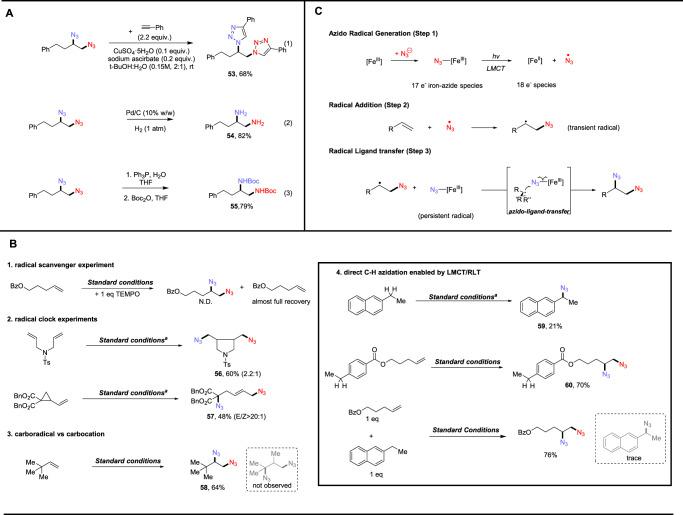
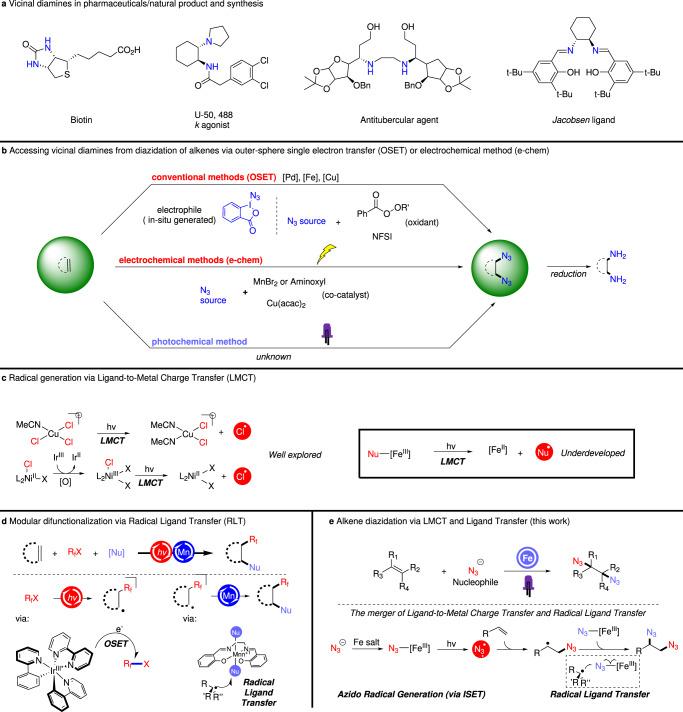
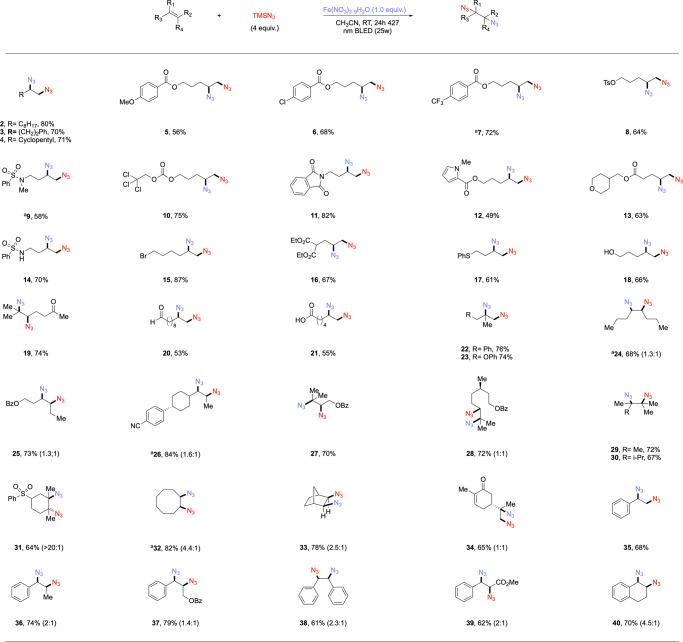
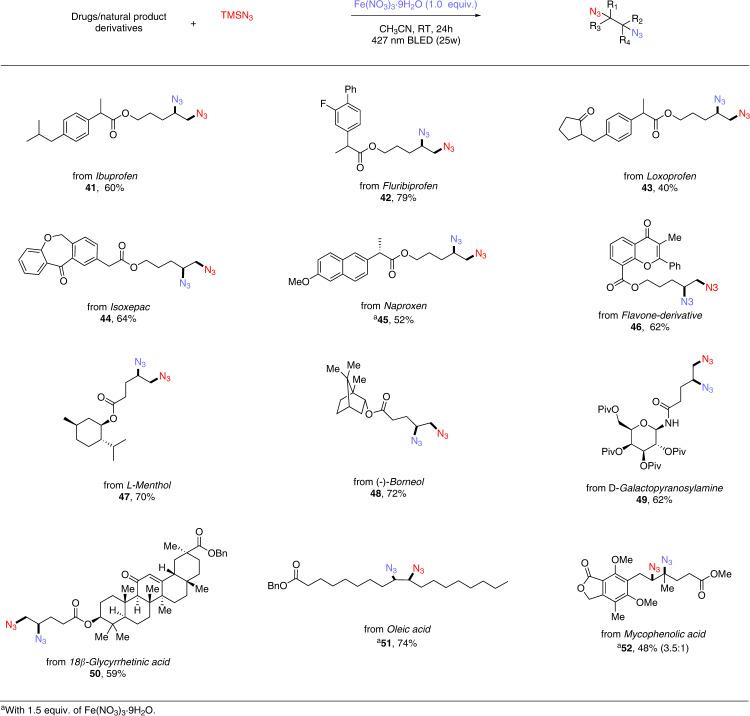
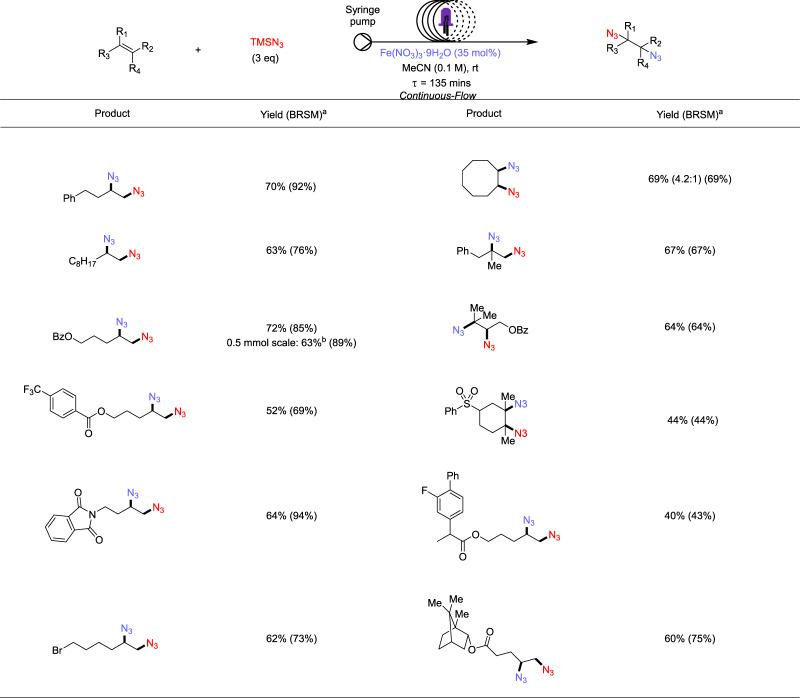
Vicinal diamines are privileged synthetic motifs in chemistry due to their prevalence and powerful applications in bioactive molecules, pharmaceuticals, and ligand design for transition metals. With organic diazides being regarded as modular precursors to vicinal diamines, enormous efforts have been devoted to developing efficient strategies to access organic diazide generated from olefins, themselves common feedstock chemicals. However, state-of-the-art methods for alkene diazidation rely on the usage of corrosive and expensive oxidants or complicated electrochemical setups, significantly limiting the substrate tolerance and practicality of these methods on large scale. Toward overcoming these limitations, here we show a photochemical diazidation of alkenes via iron-mediated ligand-to-metal charge transfer (LMCT) and radical ligand transfer (RLT). Leveraging the merger of these two reaction manifolds, we utilize a stable, earth abundant, and inexpensive iron salt to function as both radical initiator and terminator. Mild conditions, broad alkene scope and amenability to continuous-flow chemistry rendering the transformation photocatalytic were demonstrated. Preliminary mechanistic studies support the radical nature of the cooperative process in the photochemical diazidation, revealing this approach to be a powerful means of olefin difunctionalization.
由于邻二胺在生物活性分子、药物以及过渡金属配体设计中普遍存在且应用广泛,因此在化学领域是一类重要的合成基序。鉴于有机二叠氮化物被视为邻二胺的模块化前体,人们已投入大量精力来开发高效策略,以制备由烯烃生成的有机二叠氮化物,而烯烃本身就是常见的基础化学品。然而,目前用于烯烃叠氮化的先进方法依赖于使用腐蚀性强且昂贵的氧化剂或复杂的电化学装置,这极大地限制了这些方法的底物耐受性和大规模实用性。为克服这些限制,我们在此展示了一种通过铁介导的配体到金属电荷转移(LMCT)和自由基配体转移(RLT)实现的烯烃光化学叠氮化反应。利用这两种反应体系的结合,我们使用一种稳定、储量丰富且廉价的铁盐同时作为自由基引发剂和终止剂。温和的条件、广泛的烯烃适用范围以及对连续流化学的适应性证明了该转化反应具有光催化性质。初步的机理研究支持了光化学叠氮化反应中协同过程的自由基性质,表明这种方法是烯烃双官能化的有力手段。
 Zotero 插件