
枸杞籽通过PI3K/AKT1信号通路抑制非小细胞肺癌的增殖并诱导其凋亡。
Gou Qi Zi inhibits proliferation and induces apoptosis through the PI3K/AKT1 signaling pathway in non-small cell lung cancer.
作者信息
Zhang Lingling, Gong Yanju, Zhang Lei, Liang Bing, Xu Huan, Hu Wangming, Jin Zhong, Wu Xiao, Chen Xiongbin, Li Min, Shi Liangqin, Shi Yaping, Li Mingjian, Huang Yong, Wang Yong, Yang Lan
机构信息
Basic Medicine College, Chengdu University of Traditional Chinese Medicine, Chengdu, China.
School of Medicine, Jianghan University, Wuhan, China.
出版信息
Front Oncol. 2022 Dec 14;12:1034750. doi: 10.3389/fonc.2022.1034750. eCollection 2022.
BACKGROUND
Gou Qi Zi () is a traditional herbal medicine with antioxidative effects. Although Gou Qi Zi has been used to prevent premature aging and in the treatment of non-small cell lung cancer (NSCLC), its mechanism of action in NSCLC remains unclear. The present study utilized network pharmacology to assess the potential mechanism of action of Gou Qi Zi in the treatment of NSCLC.
METHODS
The TCMSP, TCMID, SwissTargetPrediction, DrugBank, DisGeNET, GeneCards, OMIM and TTD databases were searched for the active components of Gou Qi Zi and their potential therapeutic targets in NSCLC. Protein-protein interaction networks were identified and the interactions of target proteins were analyzed. Involved pathways were determined by GO enrichment and KEGG pathway analyses using the Metascape database, and molecular docking technology was used to study the interactions between active compounds and potential targets. These results were verified by cell counting kit-8 assays, BrdU labeling, flow cytometry, immunohistochemistry, western blotting, and qRT-PCR.
RESULTS
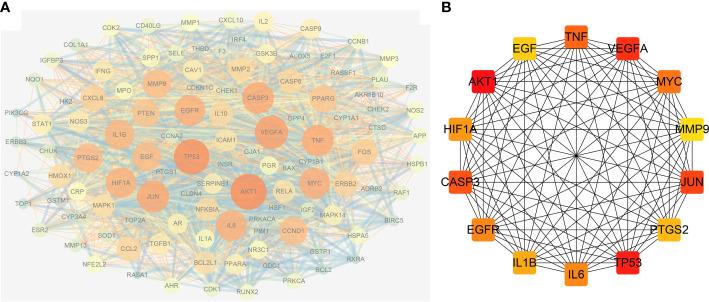
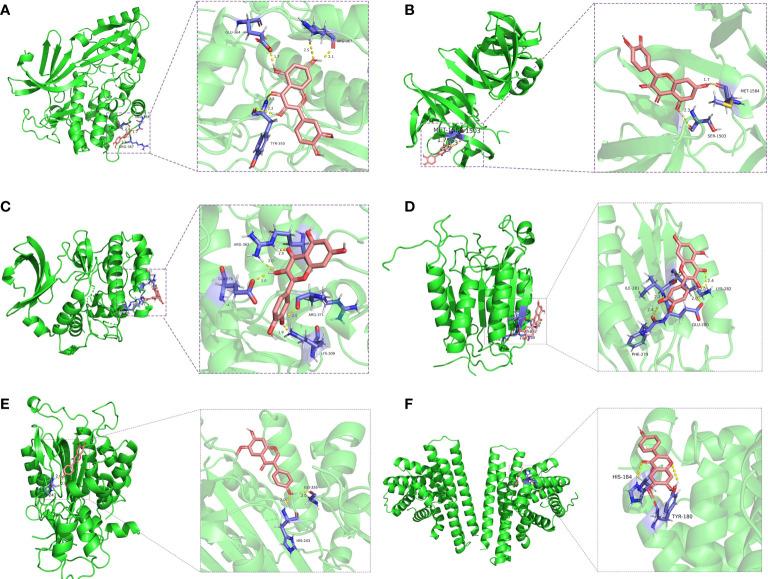
Database searches identified 33 active components in Gou Qi Zi, 199 predicted biological targets and 113 NSCLC-related targets. A network of targets of traditional Chinese medicine compounds and potential targets of Gou Qi Zi in NSCLC was constructed. GO enrichment analysis showed that Gou Qi Zi targeting of NSCLC was mainly due to the effect of its associated lipopolysaccharide. KEGG pathway analysis showed that Gou Qi Zi acted mainly through the PI3K/AKT1 signaling pathway in the treatment of NSCLC. Molecular docking experiments showed that the bioactive compounds of Gou Qi Zi could bind to AKT1, C-MYC and TP53. These results were verified by experimental assays.
CONCLUSION
Gou Qi Zi induces apoptosis and inhibits proliferation of NSCLC and by inhibiting the PI3K/AKT1 signaling pathway.
背景
枸杞子是一种具有抗氧化作用的传统草药。尽管枸杞子已被用于预防早衰和治疗非小细胞肺癌(NSCLC),但其在NSCLC中的作用机制仍不清楚。本研究利用网络药理学评估枸杞子治疗NSCLC的潜在作用机制。
方法
通过检索中药系统药理学数据库与分析平台(TCMSP)、中药整合数据库(TCMID)、瑞士靶点预测(SwissTargetPrediction)、药物银行(DrugBank)、疾病基因数据库(DisGeNET)、基因卡片(GeneCards)、在线孟德尔人类遗传数据库(OMIM)和治疗靶点数据库(TTD),获取枸杞子的活性成分及其在NSCLC中的潜在治疗靶点。鉴定蛋白质-蛋白质相互作用网络并分析靶蛋白的相互作用。使用Metascape数据库通过基因本体(GO)富集分析和京都基因与基因组百科全书(KEGG)通路分析确定相关通路,并采用分子对接技术研究活性化合物与潜在靶点之间的相互作用。通过细胞计数试剂盒-8(CCK-8)检测、BrdU标记、流式细胞术、免疫组织化学、蛋白质免疫印迹法和实时定量聚合酶链反应(qRT-PCR)验证这些结果。
结果
数据库检索确定了枸杞子中的33种活性成分、199个预测的生物学靶点和113个与NSCLC相关的靶点。构建了中药化合物靶点与枸杞子在NSCLC中的潜在靶点网络。GO富集分析表明,枸杞子对NSCLC的靶向作用主要归因于其相关脂多糖的作用。KEGG通路分析表明,枸杞子在治疗NSCLC中主要通过PI3K/AKT1信号通路发挥作用。分子对接实验表明,枸杞子的生物活性化合物可与AKT1、C-MYC和TP53结合。这些结果通过实验分析得到验证。
结论
枸杞子通过抑制PI3K/AKT1信号通路诱导NSCLC细胞凋亡并抑制其增殖。






 Zotero 插件