
研究来自临床收集的铜绿假单胞菌的 32 种新型噬菌体尾状细菌素(pyocins)及其作为分型标记物和抗菌剂的潜在用途。
Study of 32 new phage tail-like bacteriocins (pyocins) from a clinical collection of Pseudomonas aeruginosa and of their potential use as typing markers and antimicrobial agents.
机构信息
Microbiología Traslacional y Multidisciplinar (MicroTM)-Instituto de Investigación Biomédica (INIBIC), Servicio de Microbiología, Hospital A Coruña (CHUAC), Universidad de A Coruña (UDC), A Coruña, Spain.
Study Group on Mechanisms of Action and Resistance to Antimicrobials (GEMARA) the Behalf of the Spanish Society of Infectious Diseases and Clinical Microbiology (SEIMC), Madrid, Spain.
出版信息
Sci Rep. 2023 Jan 3;13(1):117. doi: 10.1038/s41598-022-27341-1.
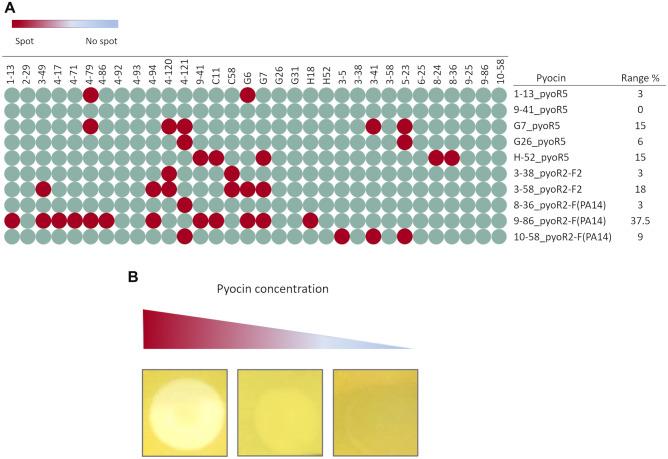
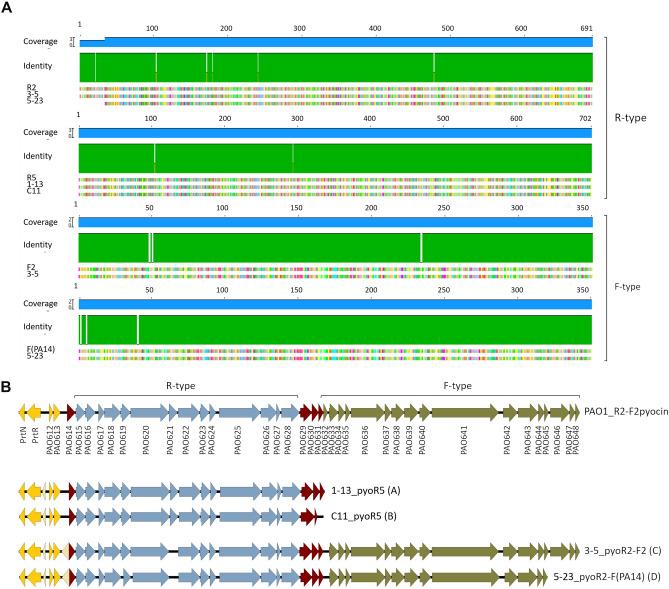
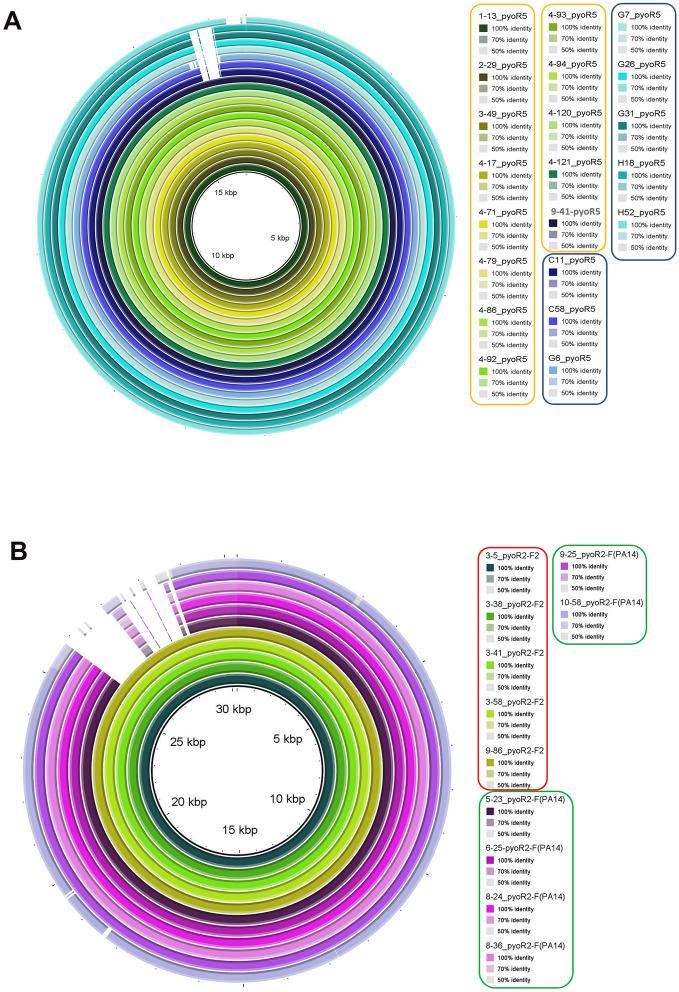
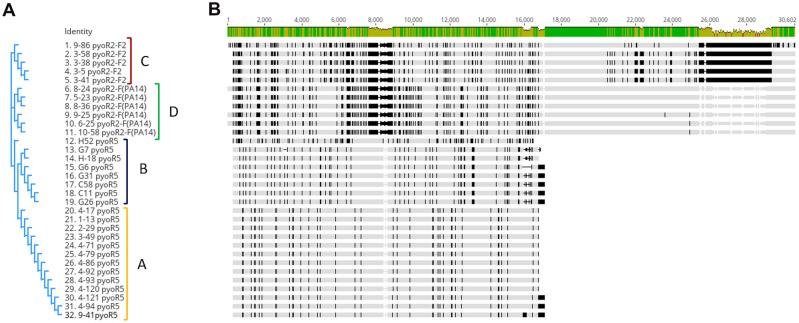
Phage tail-like bacteriocins (PTLBs) are large proteomic structures similar to the tail phages. These structures function in bacterial competition by making pores in the membrane of their competitors. The PTLBs identified in Pseudomonas aeruginosa are known as R-type and F-type pyocins, which have a narrow spectrum of action. Their specificity is determined by the tail fiber and is closely related to the lipopolysaccharide type of the target competitor strain. In this study, the genome sequences of 32 clinical of P. aeruginosa clinical isolates were analysed to investigate the presence of R-type and F-type pyocins, and one was detected in all strains tested. The pyocins were classified into 4 groups on the basis of the tail fiber and also the homology, phylogeny and structure of the cluster components. A relationship was established between these groups and the sequence type and serotype of the strain of origin and finally the killing spectrum of the representative pyocins was determined showing a variable range of activity between 0 and 37.5%. The findings showed that these pyocins could potentially be used for typing of P. aeruginosa clinical isolates, on the basis of their genomic sequence and cluster structure, and also as antimicrobial agents.
噬菌体尾状细菌素(PTLBs)是类似于尾噬菌体的大型蛋白质结构。这些结构通过在其竞争细菌的膜上打孔来发挥作用。在铜绿假单胞菌中鉴定出的 PTLBs 被称为 R 型和 F 型噬菌体,它们的作用范围较窄。它们的特异性由尾纤维决定,与目标竞争菌株的脂多糖类型密切相关。在这项研究中,分析了 32 株临床铜绿假单胞菌临床分离株的基因组序列,以研究 R 型和 F 型噬菌体的存在情况,在所有测试的菌株中都检测到了一种噬菌体。根据尾纤维以及簇成分的同源性、系统发育和结构,将噬菌体分为 4 组。建立了这些组与原始菌株的序列型和血清型之间的关系,最后确定了代表性噬菌体的杀菌谱,显示出 0 到 37.5%之间的可变活性范围。研究结果表明,这些噬菌体可以根据其基因组序列和簇结构,作为潜在的用于铜绿假单胞菌临床分离株的分型方法,也可用作抗菌剂。

 Zotero 插件