
中年高正常血清钠是加速生物衰老、慢性疾病和过早死亡的一个危险因素。
Middle-age high normal serum sodium as a risk factor for accelerated biological aging, chronic diseases, and premature mortality.
机构信息
The Laboratory of Cardiovascular Regenerative Medicine, National Heart Lung and Blood Institute, Bethesda, MD, 20892, USA.
The Laboratory of Cardiovascular Regenerative Medicine, National Heart Lung and Blood Institute, Bethesda, MD, 20892, USA.
出版信息
EBioMedicine. 2023 Jan;87:104404. doi: 10.1016/j.ebiom.2022.104404. Epub 2023 Jan 2.
BACKGROUND
It is known that some people age faster than others, some people live into old age disease-free, while others develop age-related chronic diseases. With a rapidly aging population and an emerging chronic diseases epidemic, finding mechanisms and implementing preventive measures that could slow down the aging process has become a new challenge for biomedical research and public health. In mice, lifelong water restriction shortens the lifespan and promotes degenerative changes. Here, we test the hypothesis that optimal hydration may slow down the aging process in humans.
METHODS
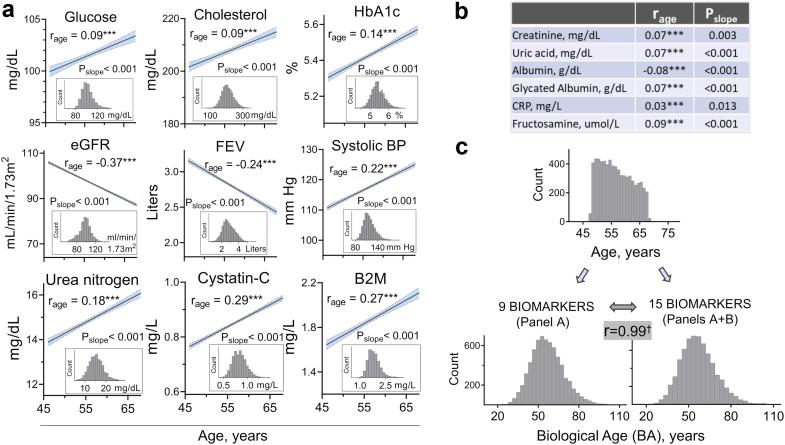
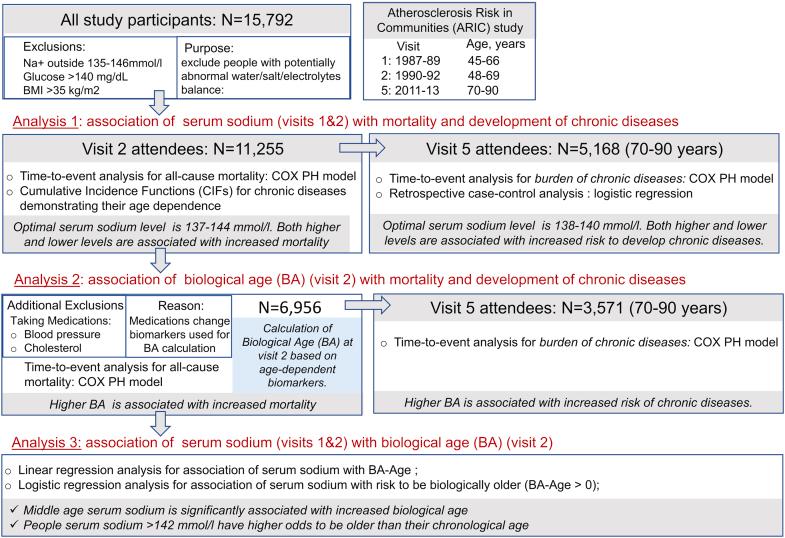
We performed a cohort analysis of data from the Atherosclerosis Risk in Communities study with middle-age enrollment (45-66 years, n = 15,752) and 25 years follow-up. We used serum sodium, as a proxy for hydration habits. To estimate the relative speed of aging, we calculated the biological age (BA) from age-dependent biomarkers and assessed risks of chronic diseases and premature mortality.
FINDINGS
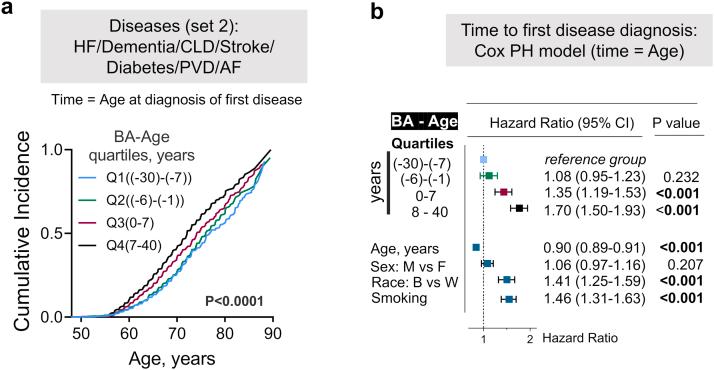
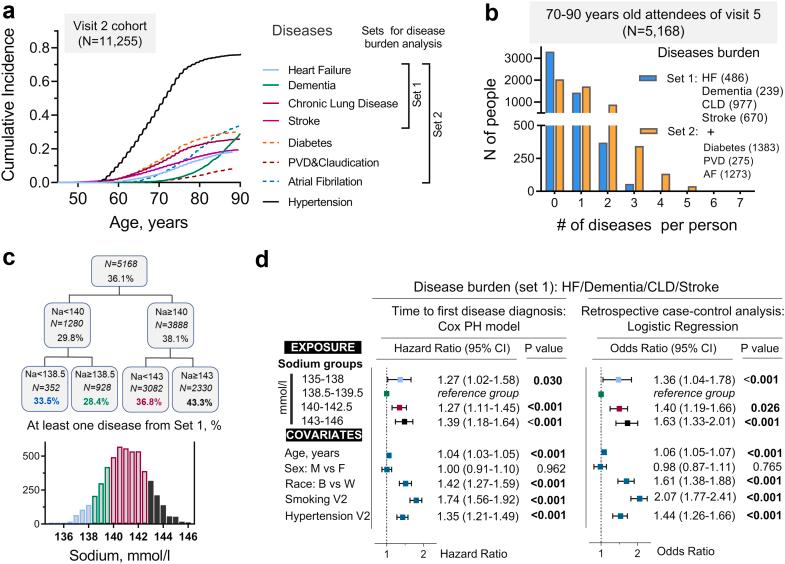
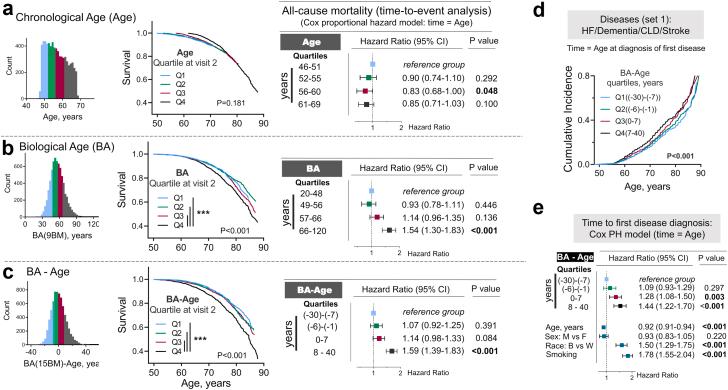
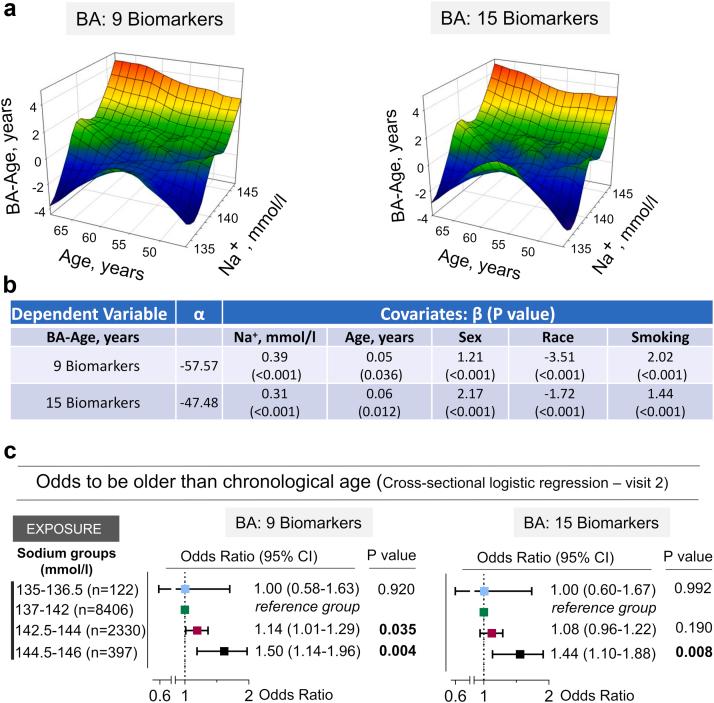
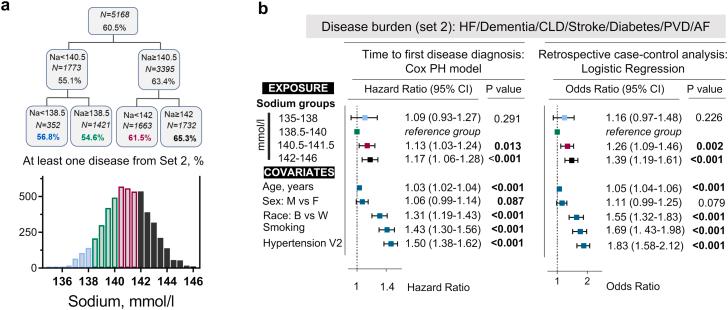
The analysis showed that middle age serum sodium >142 mmol/l is associated with a 39% increased risk to develop chronic diseases (hazard ratio [HR] = 1.39, 95% confidence interval [CI]:1.18-1.63) and >144 mmol/l with 21% elevated risk of premature mortality (HR = 1.21, 95% CI:1.02-1.45). People with serum sodium >142 mmol/l had up to 50% higher odds to be older than their chronological age (OR = 1.50, 95% CI:1.14-1.96). A higher BA was associated with an increased risk of chronic diseases (HR = 1.70, 95% CI:1.50-1.93) and premature mortality (HR = 1.59, 95% CI 1.39-1.83).
INTERPRETATION
People whose middle-age serum sodium exceeds 142 mmol/l have increased risk to be biologically older, develop chronic diseases and die at younger age. Intervention studies are needed to confirm the link between hydration and aging.
FUNDING
This work was funded by Intramural Research program of the National Heart, Lung, and Blood Institute (NHLBI). The ARIC study has been funded in whole or in part with federal funds from the NHLBI; the National Institutes of Health (NIH); and the Department of Health and Human Services.
背景
众所周知,有些人衰老得比其他人快,有些人长寿且无病,而另一些人则患上与年龄相关的慢性疾病。随着人口老龄化的加速和新兴慢性疾病的流行,寻找能够减缓衰老过程的机制并实施预防措施已成为生物医学研究和公共卫生领域的新挑战。在老鼠中,终生限制水的摄入会缩短寿命并促进退行性变化。在这里,我们检验了这样一个假设,即最佳水合作用可能会减缓人类的衰老过程。
方法
我们对动脉粥样硬化风险社区研究(Atherosclerosis Risk in Communities study)中的数据进行了队列分析,该研究的入组年龄为中年(45-66 岁,n=15752),随访时间为 25 年。我们使用血清钠作为水合习惯的替代指标。为了估计相对衰老速度,我们从年龄相关的生物标志物中计算出生物年龄(BA),并评估慢性疾病和过早死亡的风险。
结果
分析表明,中年血清钠>142mmol/L 与患慢性疾病的风险增加 39%相关(风险比[HR]为 1.39,95%置信区间[CI]:1.18-1.63),血清钠>144mmol/L 与过早死亡的风险增加 21%相关(HR 为 1.21,95% CI:1.02-1.45)。血清钠>142mmol/L 的人比其实际年龄大的可能性要高出 50%(OR 为 1.50,95% CI:1.14-1.96)。较高的 BA 与慢性疾病风险增加相关(HR 为 1.70,95% CI:1.50-1.93)和过早死亡风险增加相关(HR 为 1.59,95% CI 1.39-1.83)。
结论
中年血清钠超过 142mmol/L 的人患生物性衰老、慢性疾病和早逝的风险增加。需要进行干预研究来证实水合作用与衰老之间的联系。
资助
这项工作得到了美国国立心肺血液研究所(NHLBI)内部研究计划的资助。ARIC 研究得到了 NHLBI、美国国立卫生研究院(NIH)和美国卫生与公众服务部的部分或全部联邦资金支持。

 Zotero 插件