
多发性骨髓瘤临床试验中虚弱老年患者的患病率和结局:系统评价。
The prevalence and outcomes of frail older adults in clinical trials in multiple myeloma: A systematic review.
机构信息
Department of Oncology, McMaster University, Hamilton, ON, Canada.
Department of Medicine, The Ottawa Hospital, Ottawa, ON, Canada.
出版信息
Blood Cancer J. 2023 Jan 5;13(1):6. doi: 10.1038/s41408-022-00779-2.
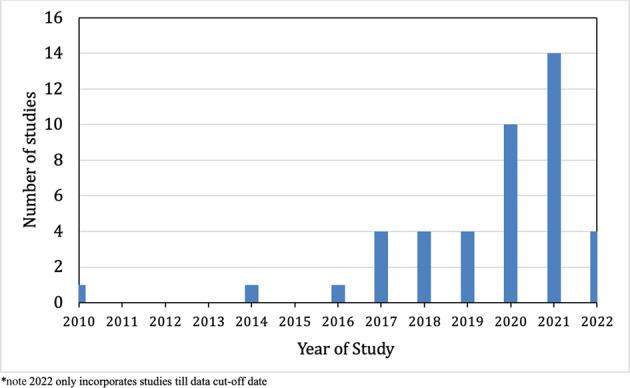
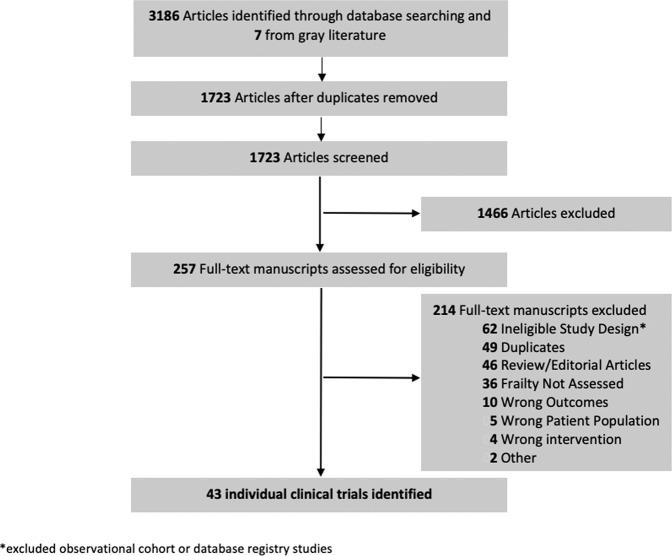
Multiple myeloma (MM) is an incurable blood cancer that primarily affects older adults. Several frailty tools have been developed to address the heterogeneity of aging in this population. Uptake of these measures has been variable, leading to a gap in knowledge regarding the proportion of enrolled trial participants considered frail and uncertainty in the treatment-related effects and outcomes among this high-risk population. We performed a systematic review of therapeutic interventional MM clinical trials reporting on frailty. We included 43 clinical trials (24 randomized controlled trials and 19 non-randomized trials) which met eligibility criteria. Frailty was increasingly incorporated in studies in more recent years with 41.9% of included studies being reported in the last two years. Commonly used frailty tools included the International Myeloma Working Group (IMWG) frailty index (41.8%), and the simplified frailty score (39.5%). Frailty status was categorized with 3 levels as (frail, intermediate fit, or fit) in 51.2% of the studies and dichotomized (frail, non-frail) in 18.6% of studies. Frailty prevalence greatly varied across trials ranging from 17.2% to 73.6% of the cohort. Of the included studies, 72.0% conducted subgroup analysis (planned or post-hoc) based on frailty status. Most studies demonstrated a consistent benefit of MM interventions among the frail and non-frail populations, however in general, frail patients had worse outcomes compared to the fit. Although frailty is increasingly being incorporated in MM clinical trials, due to the variation in both the definition and categorization of frailty, there remains heterogeneity in the prevalence of frailty and its potential associated impact on outcomes.
多发性骨髓瘤(MM)是一种无法治愈的血液癌,主要影响老年人。已经开发了几种虚弱工具来解决该人群中衰老的异质性。这些措施的采用情况各不相同,导致人们对参加试验的参与者中被认为虚弱的比例以及在这一高风险人群中与治疗相关的效果和结果存在知识差距。我们对报告虚弱情况的治疗干预性 MM 临床试验进行了系统评价。我们纳入了 43 项符合入选标准的临床试验(24 项随机对照试验和 19 项非随机试验)。近年来,虚弱情况越来越多地纳入研究,其中 41.9%的纳入研究是在过去两年内报告的。常用的虚弱工具包括国际骨髓瘤工作组(IMWG)虚弱指数(41.8%)和简化虚弱评分(39.5%)。虚弱状态在 51.2%的研究中分为 3 个级别(虚弱、中度健康或健康),在 18.6%的研究中分为 2 个级别(虚弱、非虚弱)。虚弱的患病率在不同的试验中差异很大,从队列的 17.2%到 73.6%不等。在纳入的研究中,72.0%的研究根据虚弱状态进行了亚组分析(计划或事后)。大多数研究表明,MM 干预措施在虚弱和非虚弱人群中均具有一致的益处,然而,一般来说,虚弱患者的结局比健康患者差。尽管虚弱情况在 MM 临床试验中越来越多地被纳入,但由于虚弱的定义和分类存在差异,虚弱的患病率及其对结局的潜在影响仍存在异质性。
 Zotero 插件