
维持神经病理性疼痛的核心:神经胶质细胞与神经元之间的串扰(脊髓中的神经细胞串扰)。
The core of maintaining neuropathic pain: Crosstalk between glial cells and neurons (neural cell crosstalk at spinal cord).
机构信息
Department of Pharmacology of Traditional Chinese Medicine, Beijing University of Chinese Medicine, Beijing, China.
出版信息
Brain Behav. 2023 Feb;13(2):e2868. doi: 10.1002/brb3.2868. Epub 2023 Jan 5.
BACKGROUND
Neuropathic pain (NP) caused by the injury or dysfunction of the nervous system is a chronic pain state accompanied by hyperalgesia, and the available clinical treatment is relatively scarce. Hyperalgesia mediated by pro-inflammatory factors and chemokines plays an important role in the occurrence and maintenance of NP.
DATA TREATMENT
Therefore, we conducted a systematic literature review of experimental NP (PubMed Medline), in order to find the mechanism of inducing central sensitization and explore the intervention methods of hyperalgesia caused by real or simulated injury.
RESULT
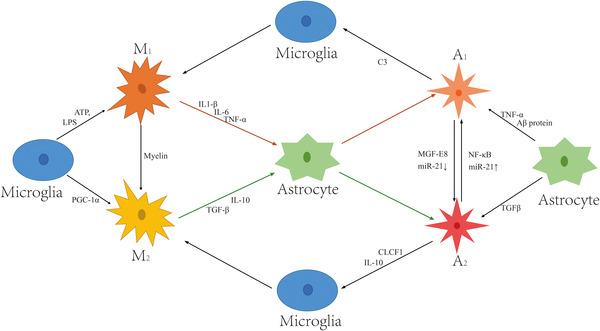
In this review, we sorted out the activation pathways of microglia, astrocytes and neurons, and the process of crosstalk among them. It was found that in NP, the microglia P2X4 receptor is the key target, which can activate the mitogen-activated protein kinase pathway inward and then activate astrocytes and outwardly activate neuronal tropomyosin receptor kinase B receptor to activate neurons. At the same time, activated neurons continue to maintain the activation of astrocytes and microglia through chemokines on CXCL13/CXCR5 and CX3CL1/CX3CR1. This crosstalk process is the key to maintaining NP.
CONCLUSION
We summarize the further research on crosstalk among neurons, microglia, and astrocytes in the central nervous system, elaborate the ways and connections of relevant crosstalk, and find potential crosstalk targets, which provides a reference for drug development and preclinical research.
背景
由神经系统损伤或功能障碍引起的神经性疼痛(NP)是一种伴有痛觉过敏的慢性疼痛状态,现有的临床治疗方法相对匮乏。促炎因子和趋化因子介导的痛觉过敏在 NP 的发生和维持中起着重要作用。
数据处理
因此,我们对实验性 NP(PubMed Medline)进行了系统的文献回顾,以寻找诱导中枢敏化的机制,并探索针对真实或模拟损伤引起的痛觉过敏的干预方法。
结果
在本综述中,我们梳理了小胶质细胞、星形胶质细胞和神经元的激活途径,以及它们之间的串扰过程。结果发现,在 NP 中,小胶质细胞 P2X4 受体是关键靶点,它可以通过细胞内的丝裂原活化蛋白激酶途径激活,然后激活星形胶质细胞,通过细胞外激活神经元原肌球蛋白受体激酶 B 受体来激活神经元。同时,激活的神经元通过 CXCL13/CXCR5 和 CX3CL1/CX3CR1 上的趋化因子继续维持星形胶质细胞和小胶质细胞的激活。这种串扰过程是维持 NP 的关键。
结论
我们总结了神经元、小胶质细胞和星形胶质细胞在中枢神经系统中的进一步串扰研究,阐述了相关串扰的途径和联系,并找到了潜在的串扰靶点,为药物开发和临床前研究提供了参考。

 Zotero 插件