
通过下一代转录组测序分析鉴定犬尿氨酸诱导的胃癌来源AGS细胞凋亡生物标志物
Identification of Kynurenic Acid-Induced Apoptotic Biomarkers in Gastric Cancer-Derived AGS Cells through Next-Generation Transcriptome Sequencing Analysis.
作者信息
Kim Hun Hwan, Ha Sang Eun, Park Min Yeong, Jeong Se Hyo, Bhosale Pritam Bhagwan, Abusaliya Abuyaseer, Won Chung Kil, Heo Jeong Doo, Ahn Meejung, Seong Je Kyung, Kim Hyun Wook, Kim Gon Sup
机构信息
Department of Veterinary Medicine, Research Institute of Life Science, Gyeongsang National University, Jinju-daero, Jinju 52828, Republic of Korea.
Biological Resources Research Group, Gyeongnam Department of Environment Toxicology and Chemistry, Korea Institute of Toxicology, 17 Jegok-gil, Jinju 52834, Republic of Korea.
出版信息
Nutrients. 2022 Dec 30;15(1):193. doi: 10.3390/nu15010193.
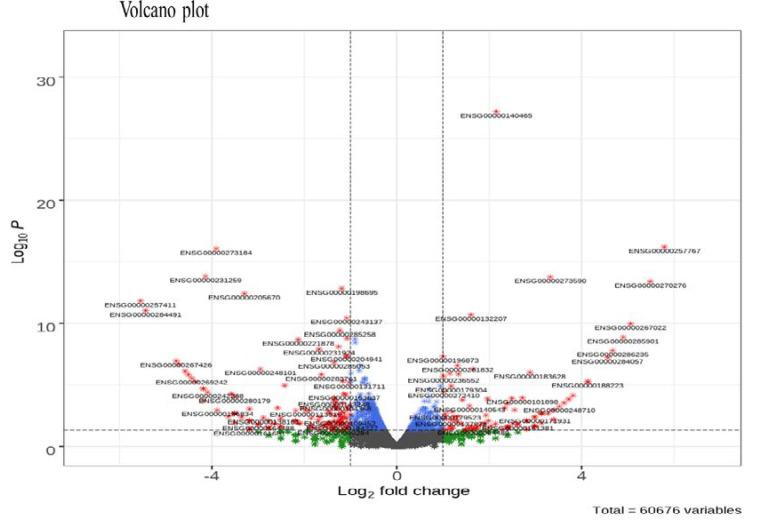
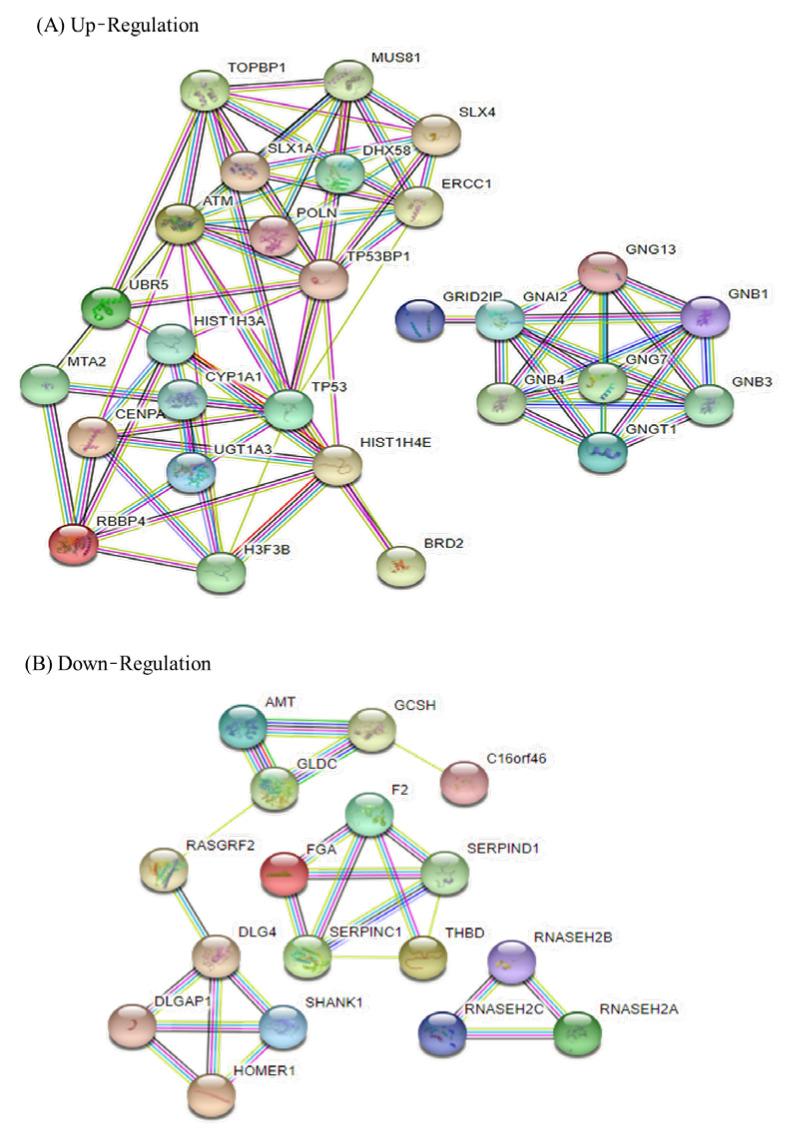
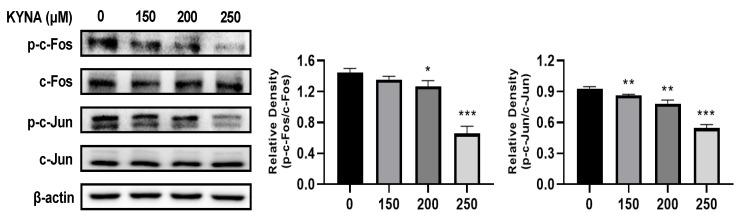
Understanding the triggers and therapeutic targets for gastric cancer, one of the most common cancers worldwide, can provide helpful information for the development of therapeutics. RNA sequencing technology can be utilized to identify complex disease targets and therapeutic applications. In the present study, we aimed to establish the pharmacological target of Kynurenic acid (KYNA) for gastric cancer AGS cells and to identify the biological network. RNA sequencing identified differentially expressed genes (DEGs) between KYNA-treated and untreated cells. A total of 278 genes were differentially expressed, of which 120 genes were up-regulated, and 158 genes were down-regulated. Gene ontology results confirmed that KYNA had effects such as a reduction in genes related to DNA replication and nucleosome organization on AGS cells. Protein-protein interaction was confirmed through STRING analysis, and it was confirmed that cancer cell growth and proliferation were inhibited through KEGG, Reactome, and Wiki pathway analysis, and various signaling pathways related to cancer cell death were induced. It was confirmed that KYNA treatment reduced the gene expression of cancer-causing AP-1 factors (Fos, Jun, ATF, and JDP) in AGS cell lines derived from gastric cancer. Overall, using next-generation transcriptome sequencing data and bioinformatics tools, we confirmed that KYNA had an apoptosis effect by inducing changes in various genes, including factor AP-1, in gastric cancer AGS cells. This study can identify pharmacological targets for gastric cancer treatment and provide a valuable resource for drug development.
了解全球最常见癌症之一胃癌的触发因素和治疗靶点,可为治疗方法的开发提供有用信息。RNA测序技术可用于识别复杂的疾病靶点和治疗应用。在本研究中,我们旨在确定犬尿氨酸(KYNA)对胃癌AGS细胞的药理靶点并识别生物网络。RNA测序确定了KYNA处理细胞和未处理细胞之间的差异表达基因(DEG)。共有278个基因差异表达,其中120个基因上调,158个基因下调。基因本体结果证实,KYNA对AGS细胞具有降低与DNA复制和核小体组织相关基因等作用。通过STRING分析证实了蛋白质-蛋白质相互作用,并且通过KEGG、Reactome和Wiki通路分析证实癌细胞生长和增殖受到抑制,并且诱导了与癌细胞死亡相关的各种信号通路。证实KYNA处理降低了源自胃癌的AGS细胞系中致癌AP-1因子(Fos、Jun、ATF和JDP)的基因表达。总体而言,使用下一代转录组测序数据和生物信息学工具,我们证实KYNA通过诱导包括AP-1因子在内的各种基因变化,对胃癌AGS细胞具有凋亡作用。本研究可以识别胃癌治疗的药理靶点,并为药物开发提供有价值的资源。


 Zotero 插件