
急性髓系白血病中氨基酸代谢基因的预后及免疫治疗反应预测
Prediction of prognosis and immunotherapy response of amino acid metabolism genes in acute myeloid leukemia.
作者信息
Zhou Hui, Wang Fengjuan, Niu Ting
机构信息
Department of Hematology and Research Laboratory of Hematology, West China Hospital, Sichuan University, Chengdu, Sichuan, China.
Department of Hematology, The First Affiliated Hospital of Zhengzhou University, Zhengzhou, Henan, China.
出版信息
Front Nutr. 2022 Dec 22;9:1056648. doi: 10.3389/fnut.2022.1056648. eCollection 2022.
BACKGROUND
Amino acid (AA) metabolism plays a crucial role in cancer. However, its role in acute myeloid leukemia (AML) is still unavailable. We screened out AA metabolic genes, which related to prognosis, and analyzed their correlation with tumor immune microenvironment in AML.
METHODS
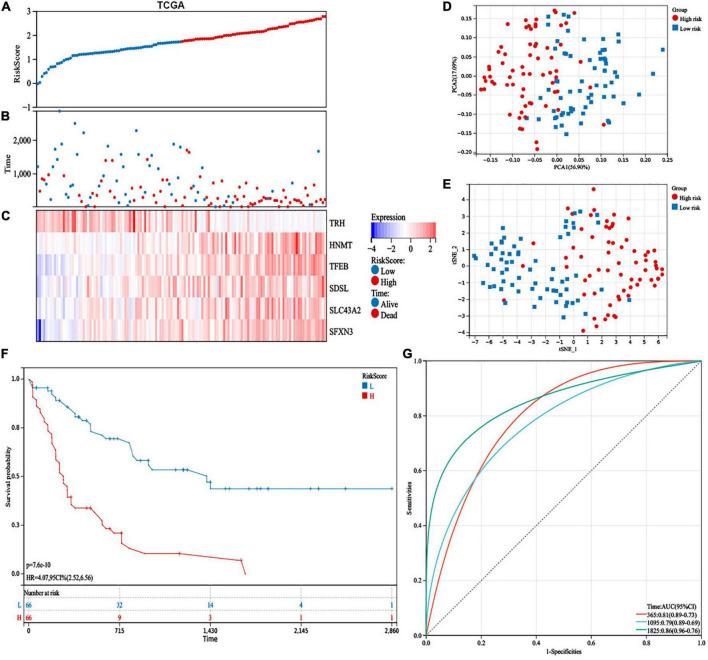
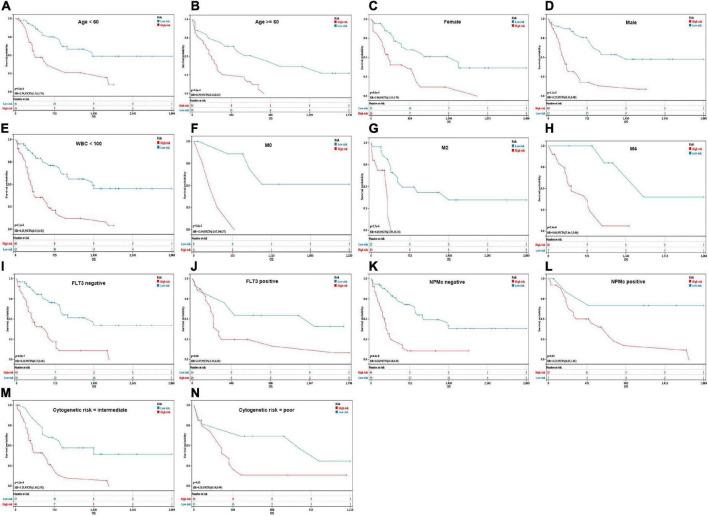
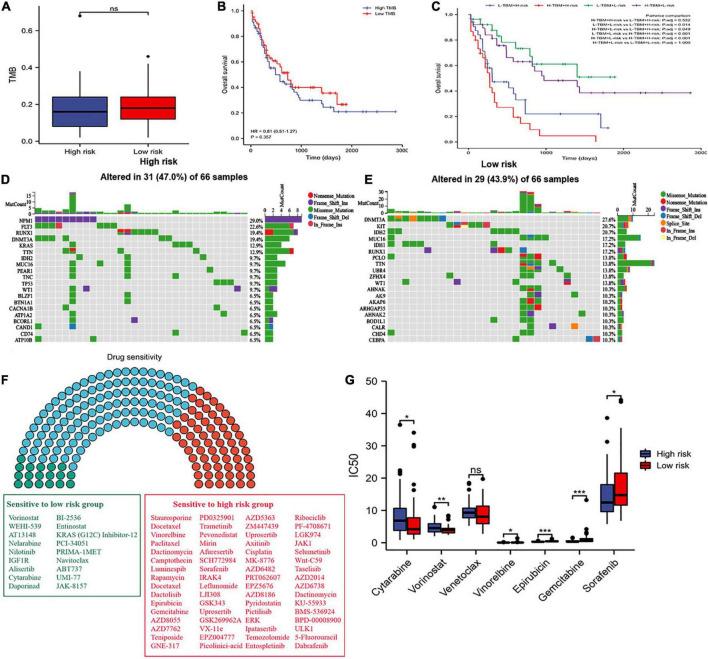
We evaluated 472 amino acid metabolism-related genes in 132 AML patients. The predictive risk model was developed according to differentially expressed genes, univariate Cox and LASSO analyses. We validated the risk signature by survival analysis and independence tests. Single-sample gene set enrichment analysis (ssGSEA), tumor immune microenvironment (TME), tumor mutation burden (TMB), functional enrichment, and the IC50 of drugs were assessed to explore the correlations among the risk model, immunity, and drug sensitivity of AML.
RESULTS
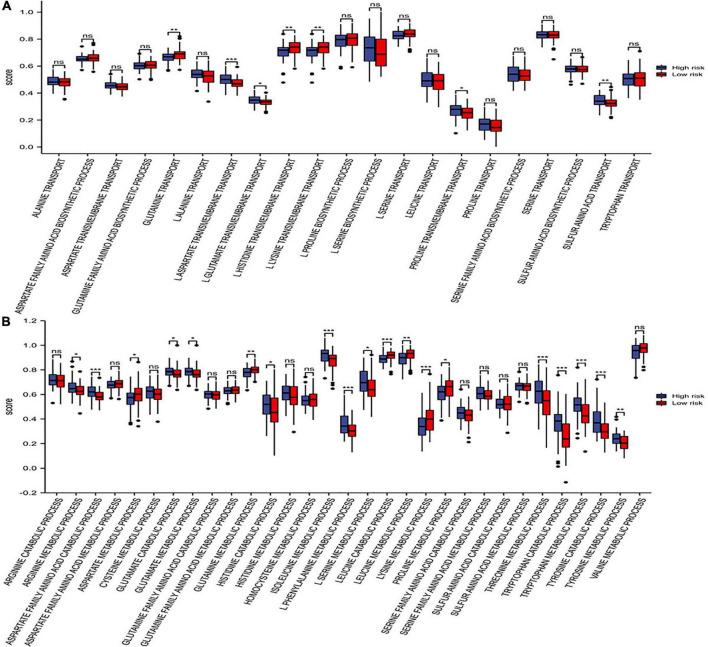
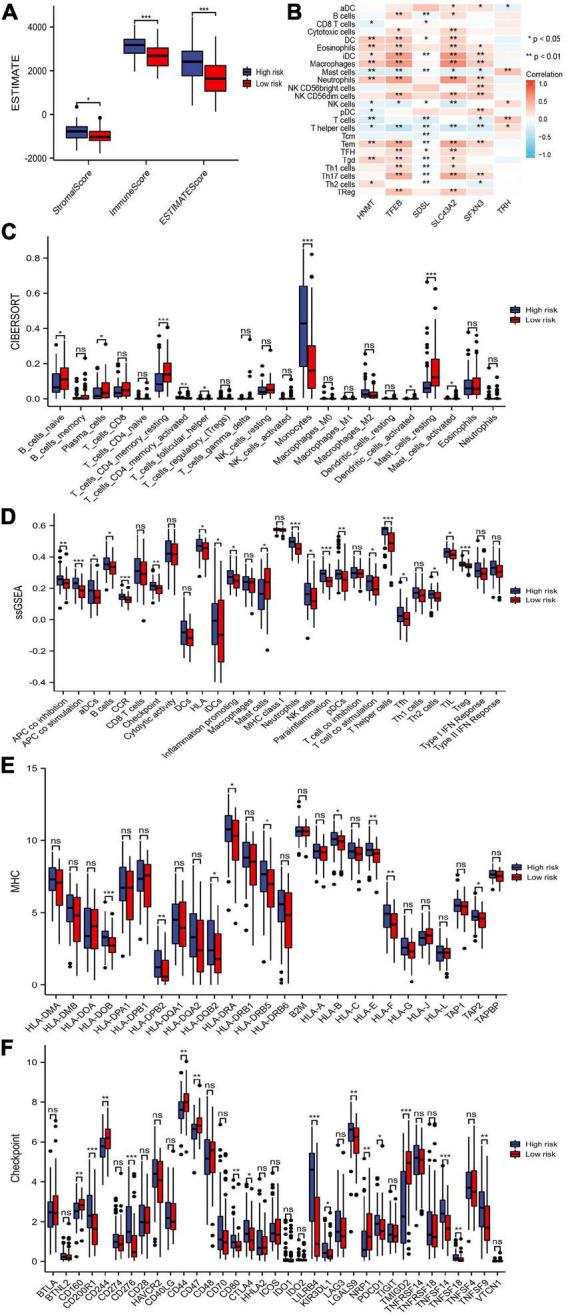
Six amino acid metabolism-related genes were confirmed to develop the risk model, including , , , , , and . The high-risk subgroup had an immune "hot" phenotype and was related to a poor prognosis. The high-risk group was also associated with more activity of immune cells, such as Tregs, had higher expression of some immune checkpoints, including PD1 and CTLA4, and might be more susceptible to immunotherapy. Xenobiotic metabolism, the reactive oxygen species (ROS) pathway, fatty acid metabolism, JAK/STAT3, and the inflammatory response were active in the high-risk subgroup. Furthermore, the high-risk subgroup was sensitive to sorafenib, selumetinib, and entospletinib. ssGSEA discovered that the processes of glutamine, arginine, tryptophan, cysteine, histidine, L-serine, isoleucine, threonine, tyrosine, and L-phenylalanine metabolism were more active in the high-risk subgroup.
CONCLUSION
This study revealed that AA metabolism-related genes were correlated with the immune microenvironment of AML patients and could predict the prognosis and immunotherapy response of AML patients.
背景
氨基酸(AA)代谢在癌症中起关键作用。然而,其在急性髓系白血病(AML)中的作用仍不清楚。我们筛选出与预后相关的AA代谢基因,并分析它们与AML肿瘤免疫微环境的相关性。
方法
我们评估了132例AML患者中的472个氨基酸代谢相关基因。根据差异表达基因、单变量Cox分析和LASSO分析建立预测风险模型。我们通过生存分析和独立性检验验证风险特征。进行单样本基因集富集分析(ssGSEA)、肿瘤免疫微环境(TME)、肿瘤突变负担(TMB)、功能富集分析以及药物的半数抑制浓度(IC50)评估,以探讨AML风险模型、免疫和药物敏感性之间的相关性。
结果
确认六个氨基酸代谢相关基因用于建立风险模型,包括 , , , , ,和 。高危亚组具有免疫“热”表型,且与预后不良相关。高危组还与更多免疫细胞活性相关,如调节性T细胞(Tregs),某些免疫检查点(包括程序性死亡受体1(PD1)和细胞毒性T淋巴细胞相关蛋白4(CTLA4))的表达较高,并且可能对免疫治疗更敏感。异生物代谢、活性氧(ROS)途径、脂肪酸代谢、Janus激酶/信号转导和转录激活因子3(JAK/STAT3)以及炎症反应在高危亚组中活跃。此外,高危亚组对索拉非尼、司美替尼和恩托司他尼敏感。ssGSEA发现谷氨酰胺、精氨酸、色氨酸、半胱氨酸、组氨酸、L-丝氨酸、异亮氨酸、苏氨酸、酪氨酸和L-苯丙氨酸代谢过程在高危亚组中更活跃。
结论
本研究表明,AA代谢相关基因与AML患者的免疫微环境相关,并可预测AML患者的预后和免疫治疗反应。




 Zotero 插件