
COVID-19大流行背景下口罩的碳足迹评估:基于不同防护性能和适用场景
Carbon footprint assessment of face masks in the context of the COVID-19 pandemic: Based on different protective performance and applicable scenarios.
作者信息
Luo Yan, Yu Mengfan, Wu Xiongying, Ding Xuemei, Wang Laili
机构信息
State Key Laboratory for Modification of Chemical Fibers and Polymer Materials, China.
College of Fashion and Design, Donghua University, Shanghai, 200051, China.
出版信息
J Clean Prod. 2023 Feb 10;387:135854. doi: 10.1016/j.jclepro.2023.135854. Epub 2023 Jan 2.
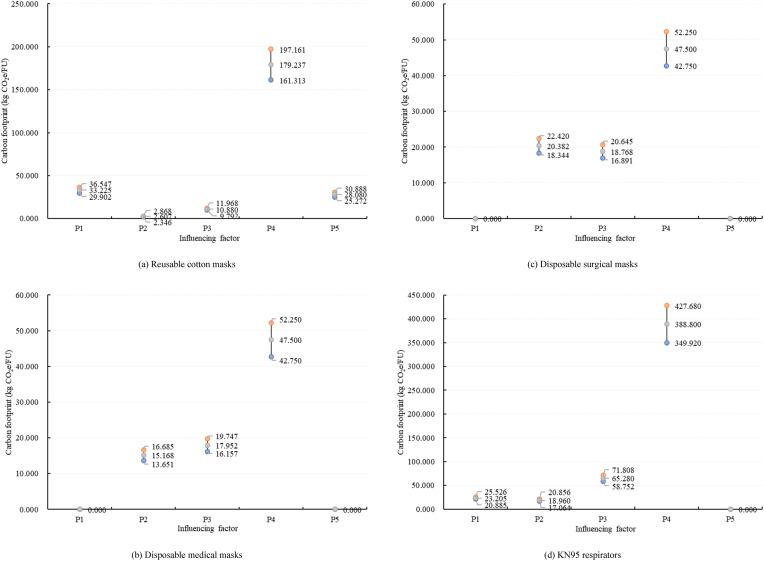
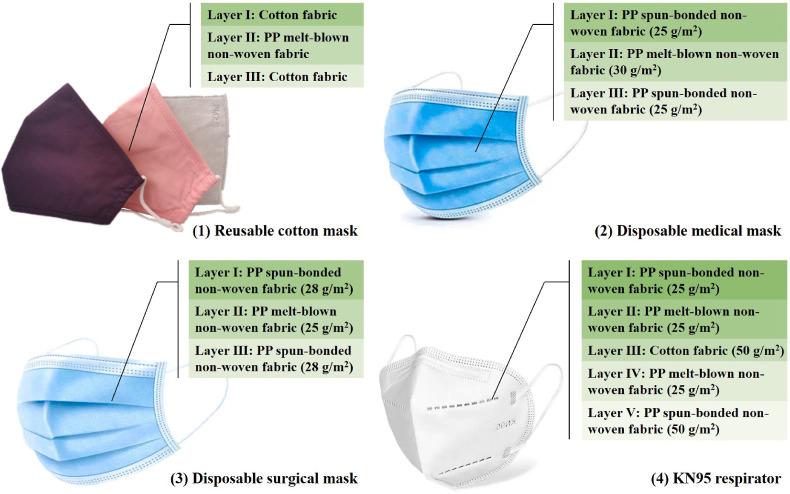
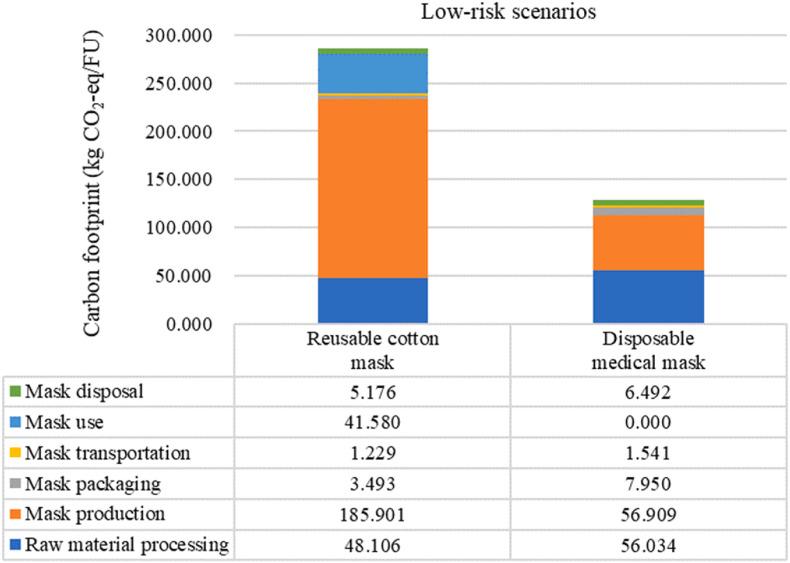
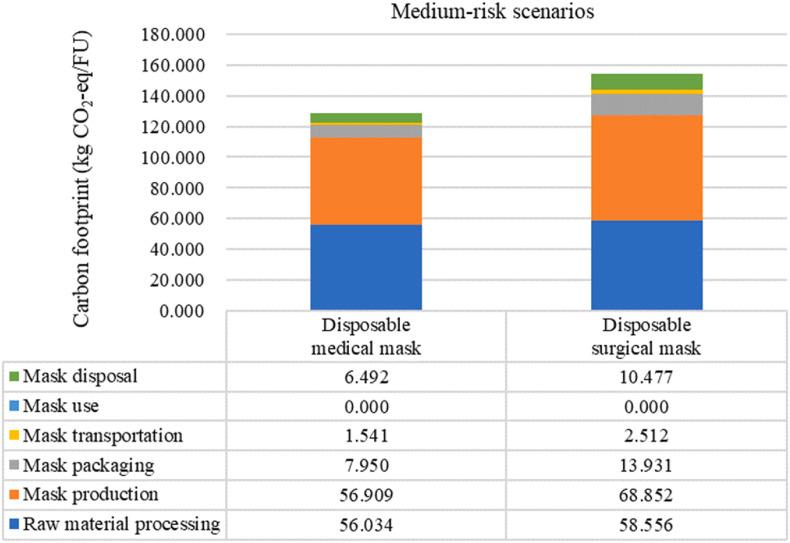
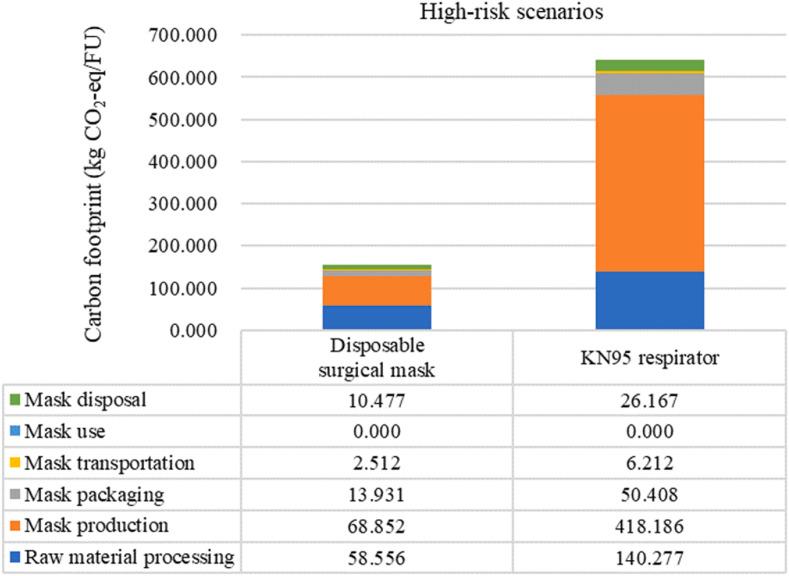
Widespread concerns have been raised about the huge environmental burden caused by massive consumption of face masks in the context of the COVID-19 pandemic. However, most of the existing studies only focus on the environmental impact associated with the product itself regardless of the actual usage scenarios and protective performance of products, resulting in unrealistic conclusions and poor applicability. In this context, this study integrated the product performance into the existing carbon footprint assessment methodology, with focus on the current global concerns regarding climate change. Computational case studies were conducted for different mask products applicable to the scenarios of low-, medium- and high-risk levels. The results showed that reusable cotton masks and disposable medical masks suitable for low-risk settings have a total carbon footprint of 285.484 kgCO-eq/FU and 128.926 kgCO-eq/FU respectively, with a break-even point of environmental performance between them of 16.886, which implies that cotton masks will reverse the trend and become more environmentally friendly after 17 washes, emphasizing the importance of improving the washability of cotton masks. Additionally, the total carbon footprints of disposable surgical masks and KN95 respirators were 154.328 kg CO-eq/FU and 641.249 kg CO-eq/FU respectively, while disposable medical masks and disposable surgical masks were identified as alternatives with better environmental performance in terms of medium- and high-risk environments respectively. The whole-life-cycle oriented carbon footprint evaluation further indicated that the four masks have greater potential for carbon emission reduction in the raw material processing and production processes. The results obtained in this study can provide scientific guidance for manufacturers and consumers on the production and use of protective masks. Moreover, the proposed model can be applied to other personal protective equipment with similar properties, such as protective clothing, in the future.
在新冠疫情背景下,大量使用口罩所造成的巨大环境负担引发了广泛关注。然而,现有的大多数研究仅关注与产品本身相关的环境影响,而忽略了产品的实际使用场景和防护性能,导致得出的结论不切实际且适用性较差。在此背景下,本研究将产品性能纳入现有的碳足迹评估方法中,重点关注当前全球对气候变化的担忧。针对适用于低、中、高风险场景的不同口罩产品进行了计算案例研究。结果表明,适用于低风险环境的可重复使用棉质口罩和一次性医用口罩的总碳足迹分别为285.484千克二氧化碳当量/功能单位和128.926千克二氧化碳当量/功能单位,它们之间的环境性能平衡点为16.886,这意味着棉质口罩在洗涤17次后将扭转趋势并变得更加环保,强调了提高棉质口罩可洗性的重要性。此外,一次性外科口罩和KN95口罩的总碳足迹分别为154.328千克二氧化碳当量/功能单位和641.249千克二氧化碳当量/功能单位,而一次性医用口罩和一次性外科口罩分别被确定为在中、高风险环境中具有更好环境性能的替代品。面向全生命周期的碳足迹评估进一步表明,这四种口罩在原材料加工和生产过程中具有更大的碳排放减少潜力。本研究所得结果可为制造商和消费者在生产和使用防护口罩方面提供科学指导。此外,所提出的模型未来可应用于其他具有类似特性的个人防护装备,如防护服。





 Zotero 插件