
SARS-CoV-2 在长期 COVID-19 期间逃避细胞毒性 T 细胞。
SARS-CoV-2 escape from cytotoxic T cells during long-term COVID-19.
机构信息
Smorodintsev Research Institute of Influenza, Saint-Petersburg, Russia.
Skolkovo Institute of Science and Technology (Skoltech), Moscow, Russia.
出版信息
Nat Commun. 2023 Jan 10;14(1):149. doi: 10.1038/s41467-022-34033-x.
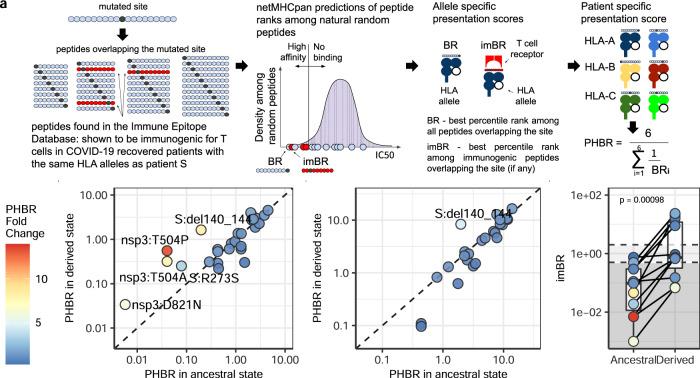
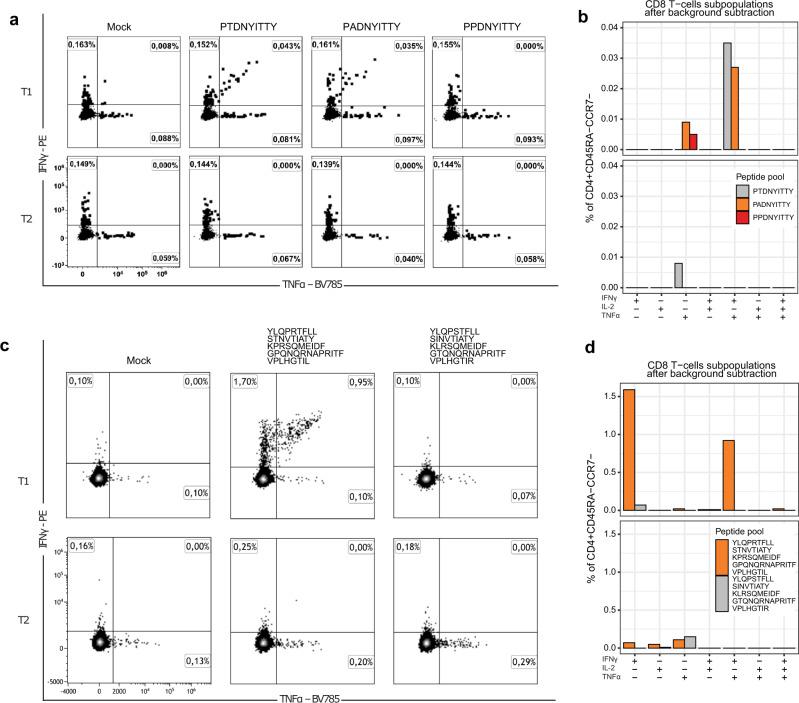
Evolution of SARS-CoV-2 in immunocompromised hosts may result in novel variants with changed properties. While escape from humoral immunity certainly contributes to intra-host evolution, escape from cellular immunity is poorly understood. Here, we report a case of long-term COVID-19 in an immunocompromised patient with non-Hodgkin's lymphoma who received treatment with rituximab and lacked neutralizing antibodies. Over the 318 days of the disease, the SARS-CoV-2 genome gained a total of 40 changes, 34 of which were present by the end of the study period. Among the acquired mutations, 12 reduced or prevented the binding of known immunogenic SARS-CoV-2 HLA class I antigens. By experimentally assessing the effect of a subset of the escape mutations, we show that they resulted in a loss of as much as ~1% of effector CD8 T cell response. Our results indicate that CD8 T cell escape represents a major underappreciated contributor to SARS-CoV-2 evolution in humans.
在免疫功能低下的宿主中,SARS-CoV-2 的进化可能导致具有改变特性的新型变体。虽然逃避体液免疫肯定有助于宿主内进化,但对逃避细胞免疫的了解甚少。在这里,我们报告了一例免疫功能低下的非霍奇金淋巴瘤患者的长期 COVID-19 病例,该患者接受了利妥昔单抗治疗且缺乏中和抗体。在疾病的 318 天中,SARS-CoV-2 基因组总共获得了 40 个变化,其中 34 个在研究结束时存在。在获得的突变中,有 12 个降低或阻止了已知免疫原性 SARS-CoV-2 HLA 类 I 抗原的结合。通过实验评估逃逸突变的子集的影响,我们表明它们导致效应 CD8 T 细胞反应丧失了多达约 1%。我们的结果表明,CD8 T 细胞逃逸是导致人类 SARS-CoV-2 进化的一个主要被低估的因素。


 Zotero 插件