
脓毒症中的中性粒细胞、中性粒细胞胞外陷阱和内皮细胞功能障碍。
Neutrophil, neutrophil extracellular traps and endothelial cell dysfunction in sepsis.
机构信息
Department of Anesthesiology, Zhongshan Hospital, Fudan University, Shanghai, China.
Shanghai Key laboratory of Perioperative Stress and Protection, Shanghai, China.
出版信息
Clin Transl Med. 2023 Jan;13(1):e1170. doi: 10.1002/ctm2.1170.
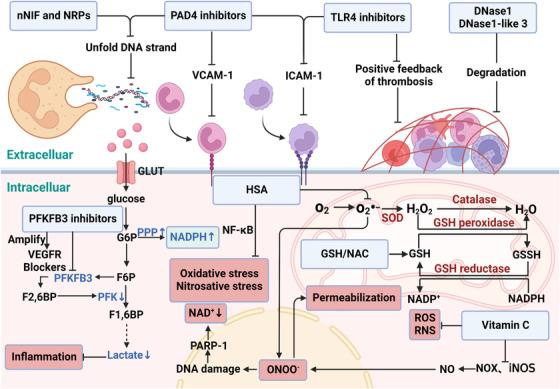
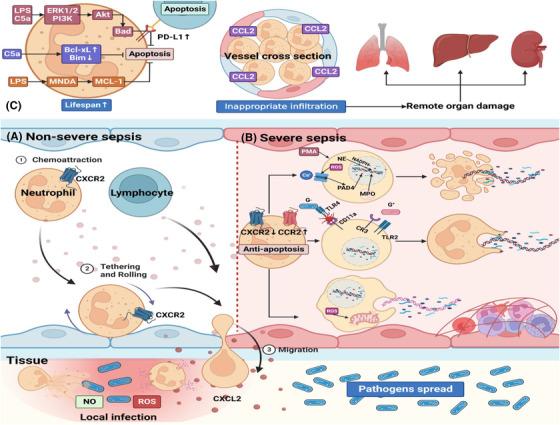
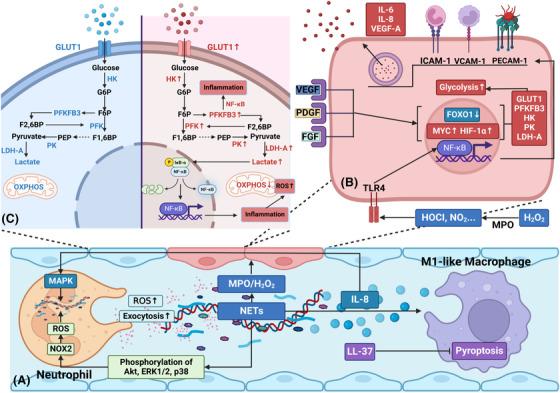
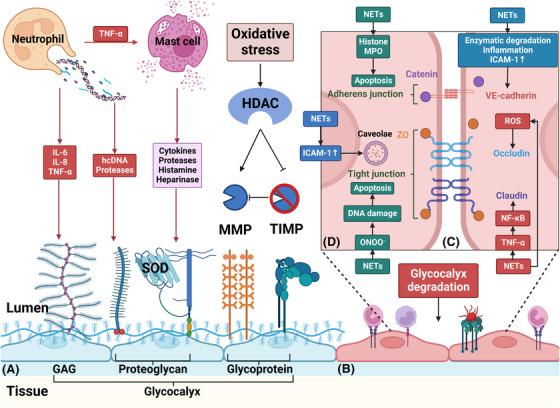
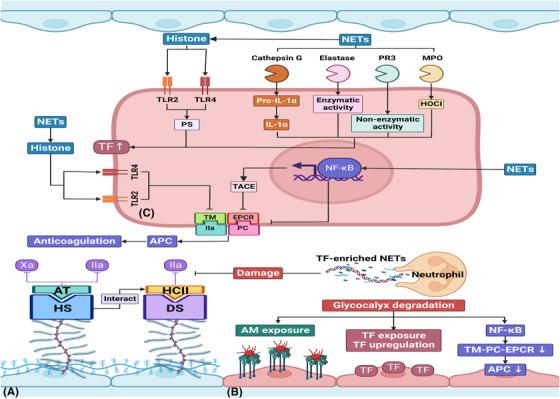
Sepsis is a persistent systemic inflammatory condition involving multiple organ failures resulting from a dysregulated immune response to infection, and one of the hallmarks of sepsis is endothelial dysfunction. During its progression, neutrophils are the first line of innate immune defence against infection. Aside from traditional mechanisms, such as phagocytosis or the release of inflammatory cytokines, reactive oxygen species and other antibacterial substances, activated neutrophils also release web-like structures composed of tangled decondensed DNA, histone, myeloperoxidase and other granules called neutrophil extracellular traps (NETs), which can efficiently ensnare bacteria in the circulation. In contrast, excessive neutrophil activation and NET release may induce endothelial cells to shift toward a pro-inflammatory and pro-coagulant phenotype. Furthermore, neutrophils and NETs can degrade glycocalyx on the endothelial cell surface and increase endothelium permeability. Consequently, the endothelial barrier collapses, contributing to impaired microcirculatory blood flow, tissue hypoperfusion and life-threatening organ failure in the late phase of sepsis.
脓毒症是一种持续的全身炎症性疾病,涉及多种器官衰竭,是由感染引起的免疫反应失调引起的,其特征之一是内皮功能障碍。在其进展过程中,中性粒细胞是针对感染的先天免疫防御的第一道防线。除了传统的机制,如吞噬作用或释放炎症细胞因子、活性氧和其他抗菌物质外,活化的中性粒细胞还释放由纠缠的去凝聚 DNA、组蛋白、髓过氧化物酶和其他颗粒组成的网状结构,称为中性粒细胞胞外陷阱 (NETs),可以有效地在循环中捕获细菌。相比之下,过度的中性粒细胞活化和 NET 释放可能导致内皮细胞向促炎和促凝表型转变。此外,中性粒细胞和 NETs 可以降解内皮细胞表面的糖萼并增加内皮细胞通透性。因此,内皮屏障崩溃,导致微循环血流受损、组织灌注不足和脓毒症晚期危及生命的器官衰竭。
 Zotero 插件