
分离细胞溶质的不稳定铁池可能包含 Fe-ATP 和 Fe-柠檬酸,但不包含 Fe-谷胱甘肽或水合态的 Fe。
Labile Iron Pool of Isolated Cytosol Likely Includes Fe-ATP and Fe-Citrate but not Fe-Glutathione or Aqueous Fe.
机构信息
Department of Chemistry, Texas A&M University, College Station, Texas 77843-3255, United States.
Department of Biochemistry and Biophysics, Texas A&M University, College Station, Texas 77843, United States.
出版信息
J Am Chem Soc. 2023 Feb 1;145(4):2104-2117. doi: 10.1021/jacs.2c06625. Epub 2023 Jan 20.
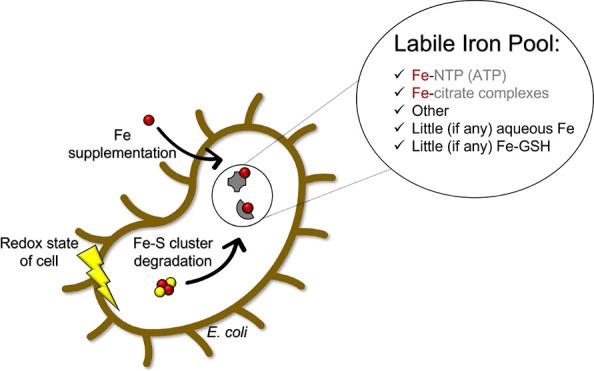
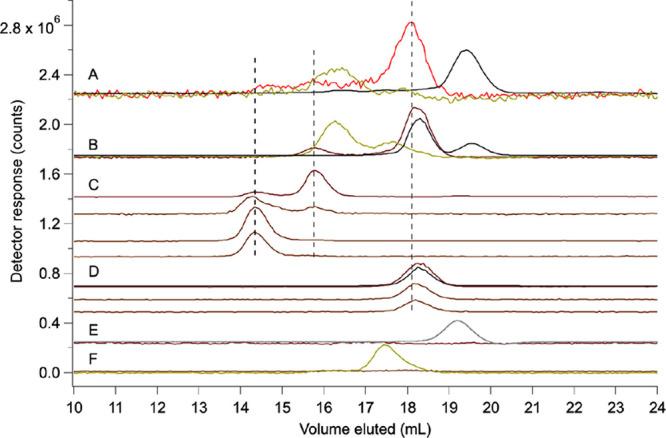
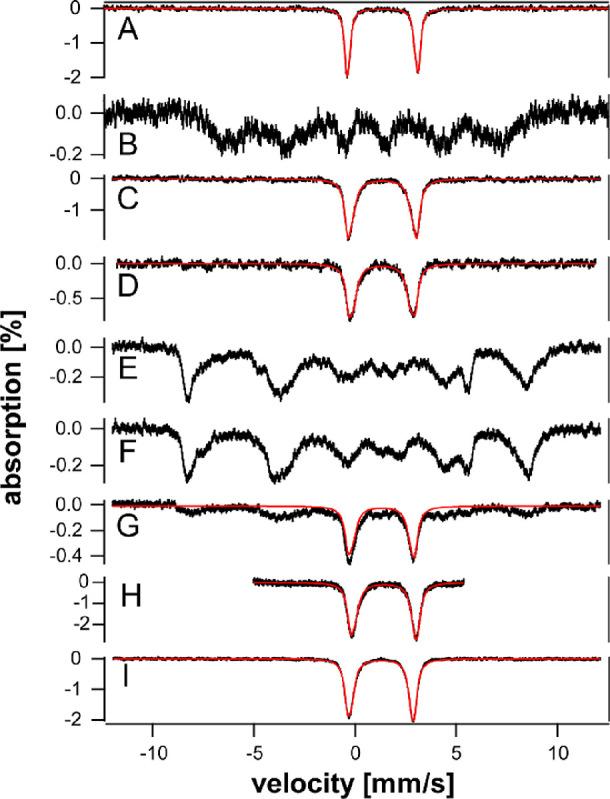
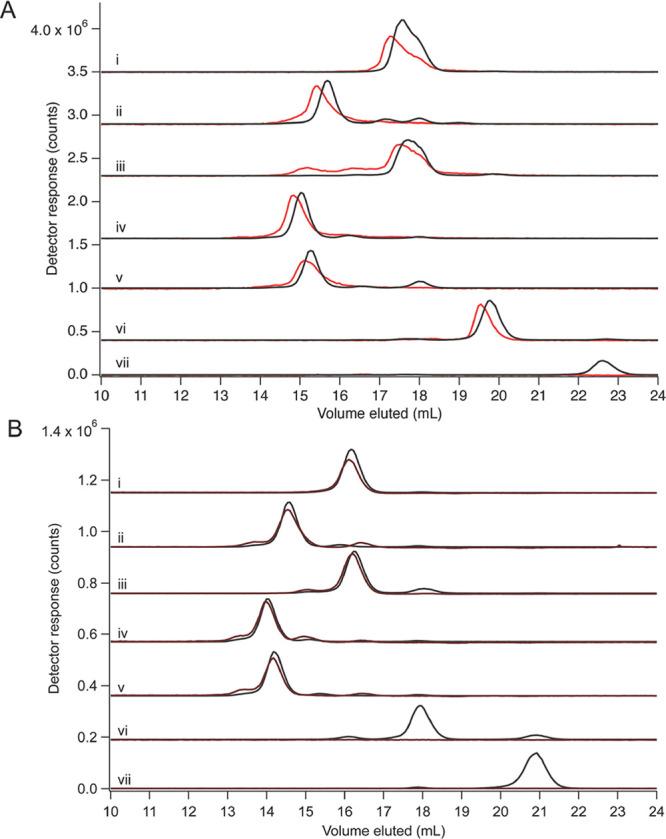
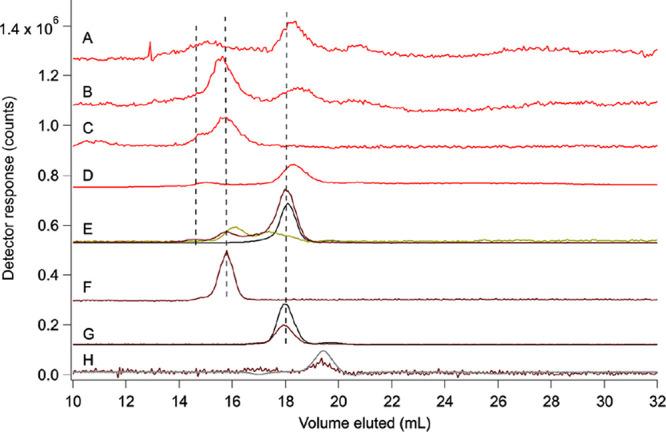
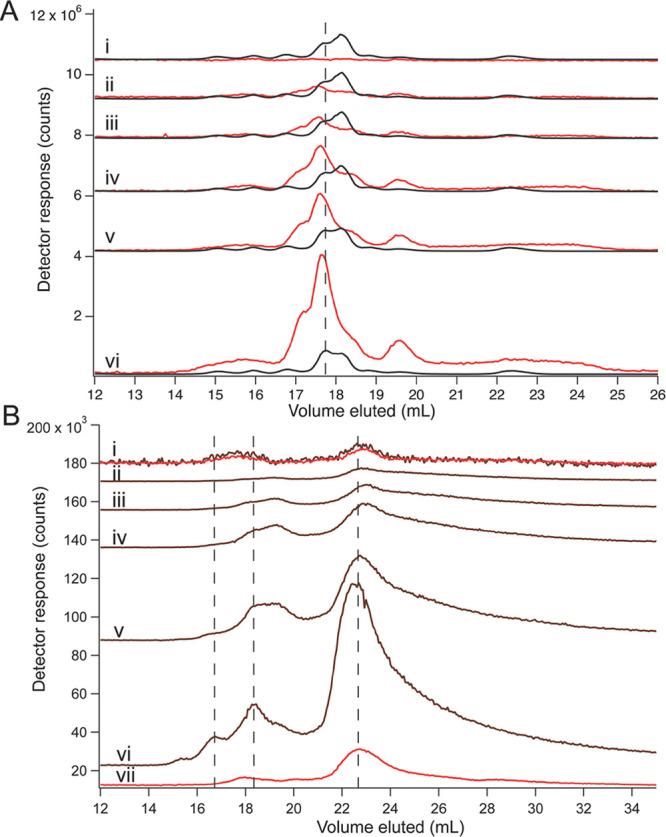
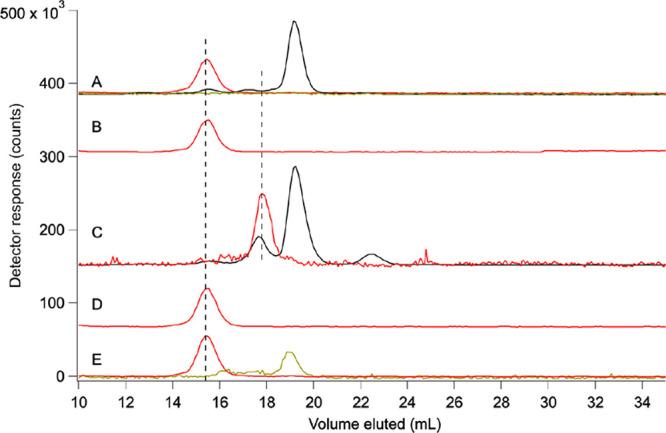
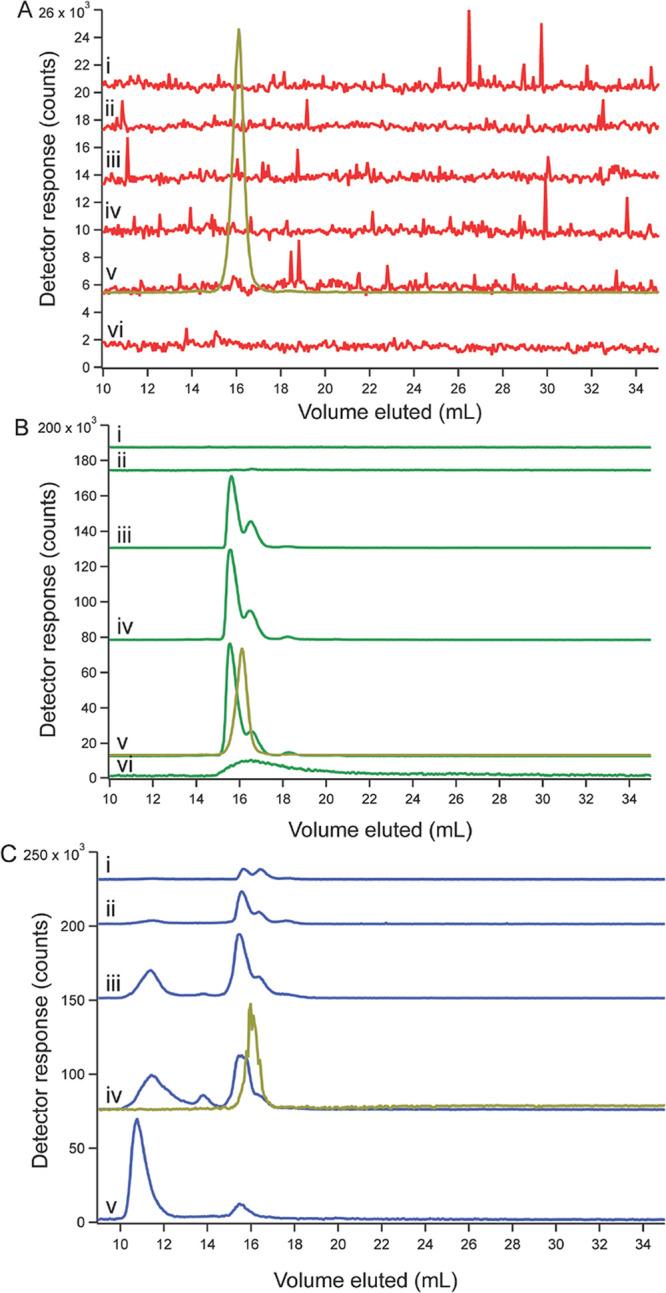
The existence of labile iron pools (LFePs) in biological systems has been recognized for decades, but their chemical composition remains uncertain. Here, the LFeP in cytosol from was investigated. Mössbauer spectra of whole vs lysed cells indicated significant degradation of iron-sulfur clusters (ISCs), even using an unusually gentle lysis procedure; this demonstrated the fragility of ISCs. Moreover, the released iron contributed to the non-heme high-spin Fe(II) species in the cell, which likely included the LFeP. Cytosol batches isolated from cells grown with different levels of iron supplementation were passed through a 3 kDa cutoff membrane, and resulting flow-through-solutions (FTSs) were subjected to SEC-ICP-MS. Mössbauer spectroscopy was used to evaluate the oxidation states of standards. FTSs exhibited iron-detected peaks likely due to different forms of Fe-citrate and Fe-nucleotide triphosphate complexes. Fe-Glutathione (GSH) complexes were not detected using physiological concentrations of GSH mixed with either Fe(II) or Fe(III); Fe(II)-GSH was concluded not to be a significant component of the LFeP in under physiological conditions. Aqueous iron was also not present in significant concentrations in isolated cytosol and is unlikely a major component of the pool. Fe appeared to bind ATP more tightly than citrate, but ATP also hydrolyzed on the timescale of tens of hours. Isolated cytosol contained excess ligands that coordinated the added Fe(II) and Fe(III). The LFeP in healthy metabolically active cells is undoubtedly dominated by the Fe(II) state, but the LFeP is redox-active such that a fraction might be present as stable and soluble Fe(III) complexes especially under oxidatively stressed cellular conditions.
生物体系中不稳定铁池(LFeP)的存在已被人们认识了几十年,但它们的化学组成仍不确定。本文研究了 细胞质中的 LFeP。全细胞与裂解细胞的穆斯堡尔谱表明,即使使用异常温和的裂解程序,铁硫簇(ISC)也会发生显著降解;这证明了 ISC 的脆弱性。此外,释放的铁有助于细胞中非血红素高自旋 Fe(II)物种的形成,其中可能包括 LFeP。从不同铁补充水平培养的细胞中分离的细胞质批次通过 3 kDa 截止膜,所得的透过液(FTS)进行 SEC-ICP-MS 分析。穆斯堡尔光谱用于评估标准品的氧化态。FTS 显示出可能由于不同形式的 Fe-柠檬酸盐和 Fe-核苷酸三磷酸复合物而检测到的铁峰。用生理浓度的 GSH 与 Fe(II)或 Fe(III)混合,未检测到 Fe-GSH 复合物;因此,在生理条件下,Fe-GSH 不是 中 LFeP 的重要组成部分。在分离的细胞质中也没有以显著浓度存在的游离铁,并且不太可能是该池的主要组成部分。Fe 似乎比柠檬酸更紧密地结合 ATP,但 ATP 也在数十小时的时间尺度上发生水解。分离的细胞质中含有多余的配体,可与添加的 Fe(II)和 Fe(III)配位。在健康代谢活跃的细胞中,LFeP 无疑由 Fe(II)状态主导,但 LFeP 具有氧化还原活性,因此在细胞氧化应激条件下,一部分可能以稳定且可溶的 Fe(III)复合物形式存在。




 Zotero 插件