
生物膜形成及其调控机制综述。
A Review of Biofilm Formation of and Its Regulation Mechanism.
作者信息
Peng Qi, Tang Xiaohua, Dong Wanyang, Sun Ning, Yuan Wenchang
机构信息
Guangzhou Key Laboratory for Clinical Rapid Diagnosis and Early Warning of Infectious Diseases, KingMed School of Laboratory Medicine, Guangzhou Medical University, Guangzhou 510180, China.
Guangzhou First People's Hospital, School of Medicine, South China University of Technology, Guangzhou 510180, China.
出版信息
Antibiotics (Basel). 2022 Dec 22;12(1):12. doi: 10.3390/antibiotics12010012.
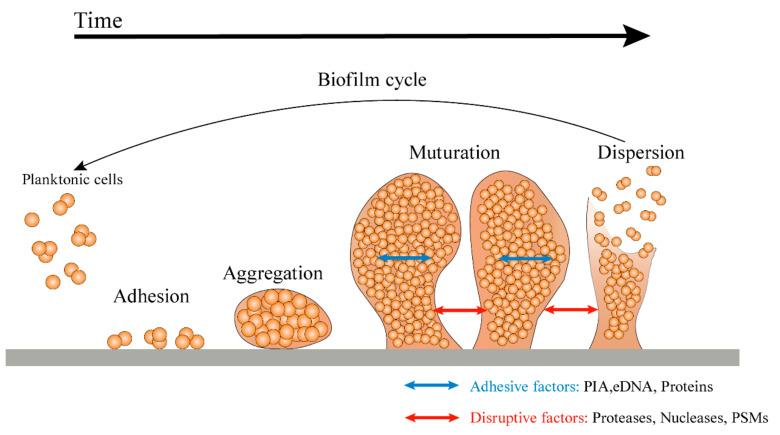
Bacteria can form biofilms in natural and clinical environments on both biotic and abiotic surfaces. The bacterial aggregates embedded in biofilms are formed by their own produced extracellular matrix. () is one of the most common pathogens of biofilm infections. The formation of biofilm can protect bacteria from being attacked by the host immune system and antibiotics and thus bacteria can be persistent against external challenges. Therefore, clinical treatments for biofilm infections are currently encountering difficulty. To address this critical challenge, a new and effective treatment method needs to be developed. A comprehensive understanding of bacterial biofilm formation and regulation mechanisms may provide meaningful insights against antibiotic resistance due to bacterial biofilms. In this review, we discuss an overview of biofilms including the formation process, structural and functional properties of biofilm matrix, and the mechanism regulating biofilm formation.
细菌能够在自然和临床环境中的生物和非生物表面形成生物膜。嵌入生物膜中的细菌聚集体由其自身产生的细胞外基质形成。()是生物膜感染最常见的病原体之一。生物膜的形成可以保护细菌免受宿主免疫系统和抗生素的攻击,从而使细菌能够抵御外部挑战。因此,目前生物膜感染的临床治疗面临困难。为应对这一严峻挑战,需要开发一种新的有效治疗方法。全面了解细菌生物膜的形成和调控机制可能为对抗细菌生物膜引起的抗生素耐药性提供有意义的见解。在这篇综述中,我们讨论了生物膜的概述,包括形成过程、生物膜基质的结构和功能特性以及调节生物膜形成的机制。



 Zotero 插件