
小肠微生物群振荡、宿主效应与调控——聚焦三种关键效应分子
Small Intestinal Microbiota Oscillations, Host Effects and Regulation-A Zoom into Three Key Effector Molecules.
作者信息
Ratiner Karina, Fachler-Sharp Tahel, Elinav Eran
机构信息
Systems Immunology Department, Weisman Institute of Science, Rehovot 7610001, Israel.
Department of Dermatology, Hadassah-Hebrew University Medical Center, Jerusalem 9987500, Israel.
出版信息
Biology (Basel). 2023 Jan 16;12(1):142. doi: 10.3390/biology12010142.
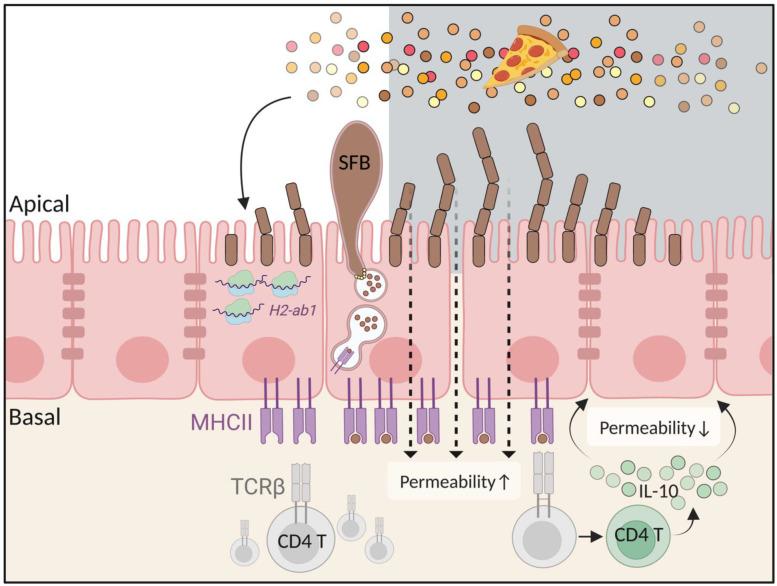
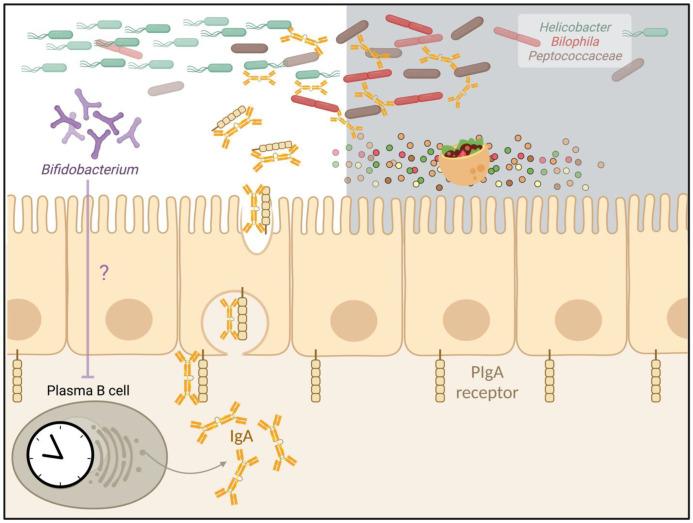
The gut microbiota features a unique diurnal rhythmicity which contributes to modulation of host physiology and homeostasis. The composition and activity of the microbiota and its secreted molecules influence the intestinal milieu and neighboring organs, such as the liver. Multiple immune-related molecules have been linked to the diurnal microbiota-host interaction, including Reg3γ, IgA, and MHCII, which are secreted or expressed on the gut surface and directly interact with intestinal bacteria. These molecules are also strongly influenced by dietary patterns, such as high-fat diet and time-restricted feeding, which are already known to modulate microbial rhythms and peripheral clocks. Herein, we use Reg3γ, IgA, and MHCII as test cases to highlight the divergent effects mediated by the diurnal activity of the gut microbiota and their downstream host effects. We further highlight current challenges and conflicts, remaining questions, and perspectives toward a holistic understanding of the microbiome's impacts on circadian human behavior.
肠道微生物群具有独特的昼夜节律,这有助于调节宿主生理和体内平衡。微生物群的组成、活性及其分泌分子会影响肠道环境和邻近器官,如肝脏。多种免疫相关分子与昼夜微生物群-宿主相互作用有关,包括Reg3γ、免疫球蛋白A(IgA)和主要组织相容性复合体II类分子(MHCII),它们在肠道表面分泌或表达,并直接与肠道细菌相互作用。这些分子也受到饮食模式的强烈影响,如高脂饮食和限时进食,已知这些饮食模式会调节微生物节律和外周生物钟。在此,我们以Reg3γ、IgA和MHCII为例,强调肠道微生物群昼夜活动介导的不同效应及其下游宿主效应。我们还进一步强调了当前的挑战与冲突、遗留问题以及对微生物群如何影响人类昼夜行为进行全面理解的展望。


 Zotero 插件