
养殖方式影响养猪业中非金黄色葡萄球菌的耐药负担。
Farming Practice Influences Antimicrobial Resistance Burden of Non-Aureus Staphylococci in Pig Husbandries.
作者信息
Soundararajan Manonmani, Marincola Gabriella, Liong Olivia, Marciniak Tessa, Wencker Freya D R, Hofmann Franka, Schollenbruch Hannah, Kobusch Iris, Linnemann Sabrina, Wolf Silver A, Helal Mustafa, Semmler Torsten, Walther Birgit, Schoen Christoph, Nyasinga Justin, Revathi Gunturu, Boelhauve Marc, Ziebuhr Wilma
机构信息
Institute of Molecular Infection Biology, University of Würzburg, 97080 Würzburg, Germany.
Department of Agriculture; South Westphalia University of Applied Sciences, 59494 Soest, Germany.
出版信息
Microorganisms. 2022 Dec 22;11(1):31. doi: 10.3390/microorganisms11010031.
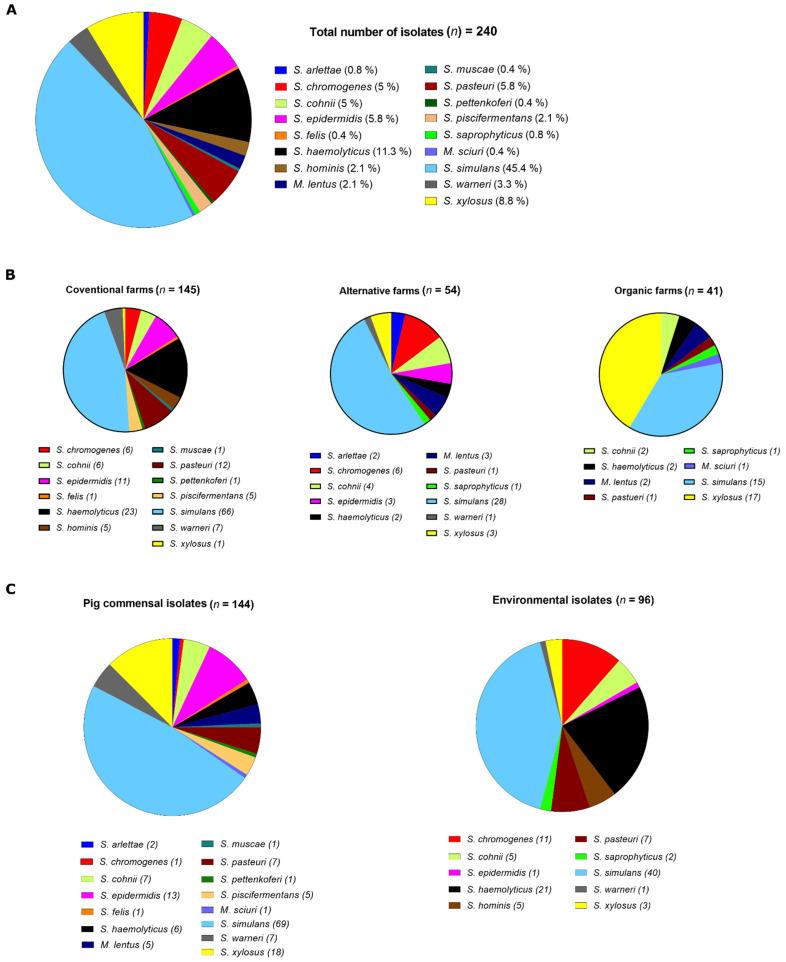
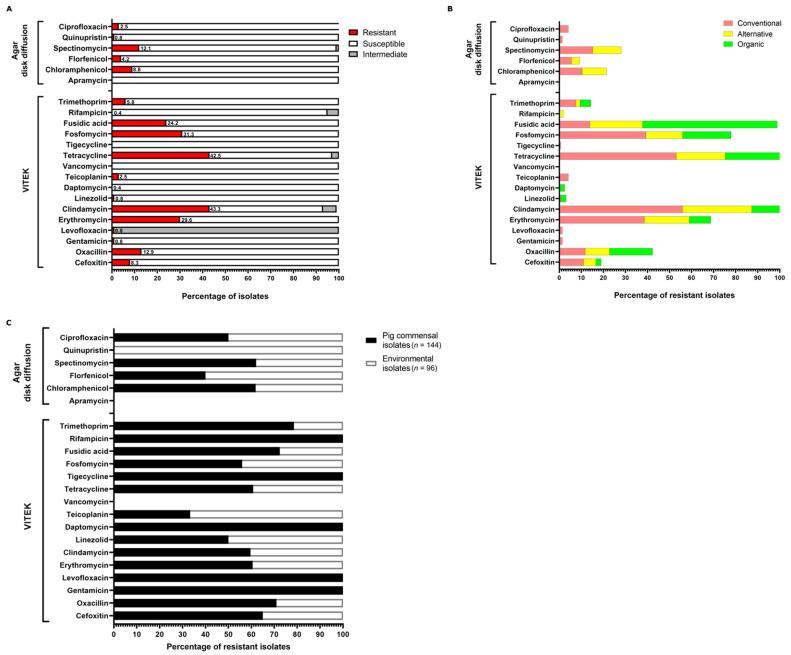
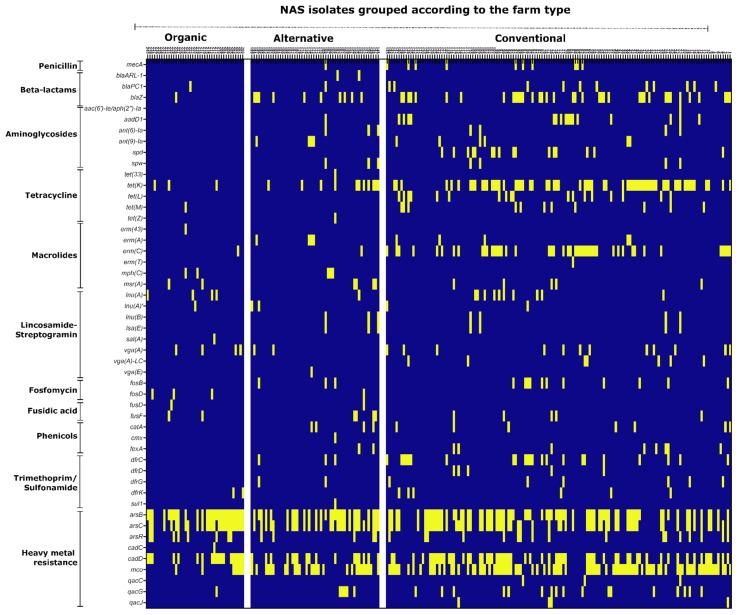
Non-aureus staphylococci (NAS) are ubiquitous bacteria in livestock-associated environments where they may act as reservoirs of antimicrobial resistance (AMR) genes for pathogens such as . Here, we tested whether housing conditions in pig farms could influence the overall AMR-NAS burden. Two hundred and forty porcine commensal and environmental NAS isolates from three different farm types (conventional, alternative, and organic) were tested for phenotypic antimicrobial susceptibility and subjected to whole genome sequencing. Genomic data were analysed regarding species identity and AMR gene carriage. Seventeen different NAS species were identified across all farm types. In contrast to conventional farms, no AMR genes were detectable towards methicillin, aminoglycosides, and phenicols in organic farms. Additionally, AMR genes to macrolides and tetracycline were rare among NAS in organic farms, while such genes were common in conventional husbandries. No differences in AMR detection existed between farm types regarding fosfomycin, lincosamides, fusidic acid, and heavy metal resistance gene presence. The combined data show that husbandry conditions influence the occurrence of resistant and multidrug-resistant bacteria in livestock, suggesting that changing husbandry practices may be an appropriate means of limiting the spread of AMR bacteria on farms.
非金黄色葡萄球菌(NAS)是家畜相关环境中普遍存在的细菌,在这些环境中它们可能作为诸如……等病原体的抗菌药物耐药性(AMR)基因库。在此,我们测试了猪场的饲养条件是否会影响总体AMR-NAS负担。对来自三种不同农场类型(传统型、替代型和有机型)的240株猪共生和环境NAS分离株进行了表型抗菌药物敏感性测试,并进行了全基因组测序。对基因组数据进行了物种鉴定和AMR基因携带情况分析。在所有农场类型中鉴定出了17种不同的NAS物种。与传统农场相比,有机农场中未检测到对甲氧西林、氨基糖苷类和酚类药物的AMR基因。此外,有机农场的NAS中对大环内酯类和四环素的AMR基因很少见,而这些基因在传统养殖中很常见。在农场类型之间,关于磷霉素、林可酰胺类、夫西地酸和重金属抗性基因的存在,AMR检测没有差异。综合数据表明,饲养条件会影响家畜中耐药和多重耐药细菌的出现,这表明改变饲养方式可能是限制农场中AMR细菌传播的一种合适方法。


 Zotero 插件