
靶向自噬与活性氧的相互作用用于癌症治疗:植物化学物质的最新综述
Targeting the Interplay of Autophagy and ROS for Cancer Therapy: An Updated Overview on Phytochemicals.
作者信息
Dong Lixia, He Jingqiu, Luo Li, Wang Kui
机构信息
West China School of Basic Medical Sciences and Forensic Medicine, Sichuan University, Chengdu 610041, China.
Center for Reproductive Medicine, Department of Gynecology and Obstetrics, West China Second University Hospital, Sichuan University, Chengdu 610041, China.
出版信息
Pharmaceuticals (Basel). 2023 Jan 8;16(1):92. doi: 10.3390/ph16010092.
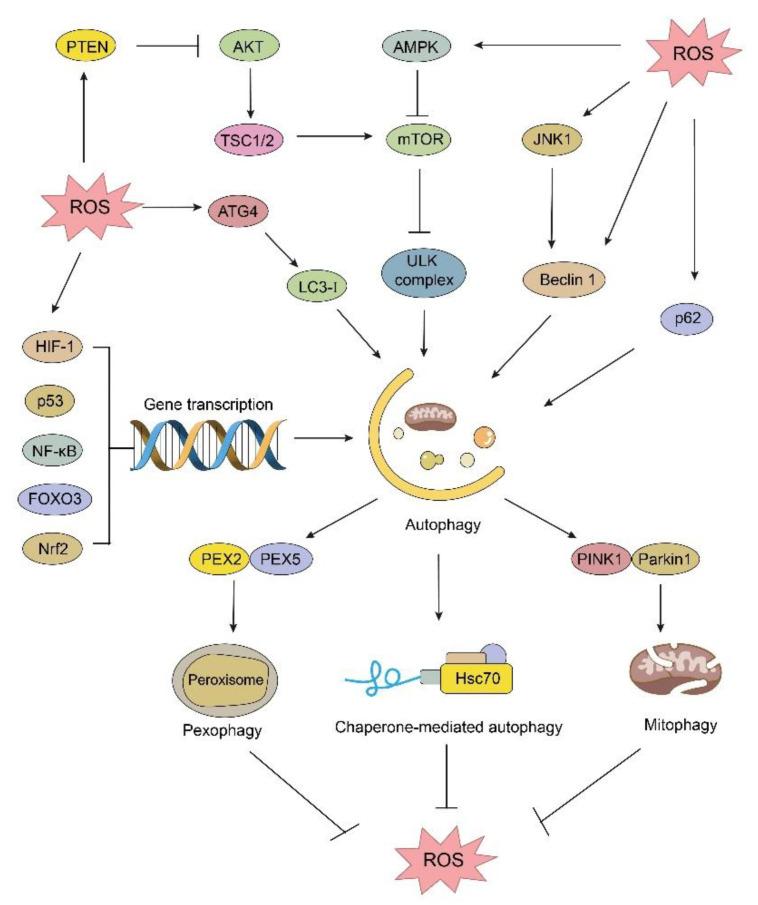
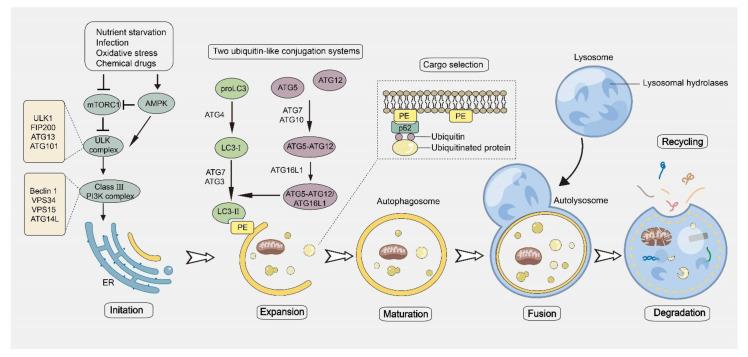
Autophagy is an evolutionarily conserved self-degradation system that recycles cellular components and damaged organelles, which is critical for the maintenance of cellular homeostasis. Intracellular reactive oxygen species (ROS) are short-lived molecules containing unpaired electrons that are formed by the partial reduction of molecular oxygen. It is widely known that autophagy and ROS can regulate each other to influence the progression of cancer. Recently, due to the wide potent anti-cancer effects with minimal side effects, phytochemicals, especially those that can modulate ROS and autophagy, have attracted great interest of researchers. In this review, we afford an overview of the complex regulatory relationship between autophagy and ROS in cancer, with an emphasis on phytochemicals that regulate ROS and autophagy for cancer therapy. We also discuss the effects of ROS/autophagy inhibitors on the anti-cancer effects of phytochemicals, and the challenges associated with harnessing the regulation potential on ROS and autophagy of phytochemicals for cancer therapy.
自噬是一种进化上保守的自我降解系统,可循环利用细胞成分和受损细胞器,这对维持细胞内稳态至关重要。细胞内活性氧(ROS)是含有未配对电子的短寿命分子,由分子氧的部分还原形成。众所周知,自噬和ROS可以相互调节以影响癌症进展。最近,由于具有广泛的强效抗癌作用且副作用极小,植物化学物质,尤其是那些能够调节ROS和自噬的物质,引起了研究人员的极大兴趣。在本综述中,我们概述了癌症中自噬与ROS之间复杂的调控关系,重点介绍了调节ROS和自噬用于癌症治疗的植物化学物质。我们还讨论了ROS/自噬抑制剂对植物化学物质抗癌作用的影响,以及利用植物化学物质对ROS和自噬的调节潜力进行癌症治疗所面临的挑战。
 Zotero 插件