
噬菌体吸附到革兰氏阳性菌上。
Phage Adsorption to Gram-Positive Bacteria.
机构信息
Laboratory of Food and Environmental Microbiology, Earth and Life Institute, UCLouvain, 1348 Louvain-la-Neuve, Belgium.
出版信息
Viruses. 2023 Jan 10;15(1):196. doi: 10.3390/v15010196.
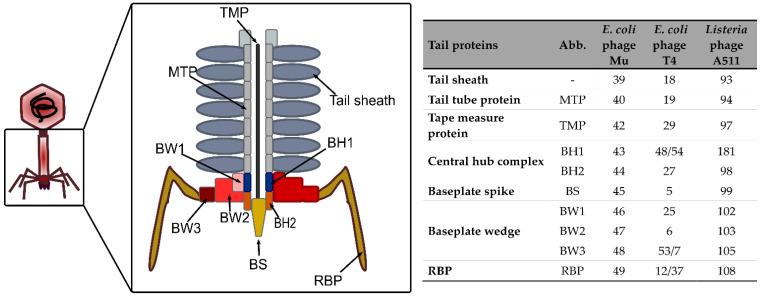
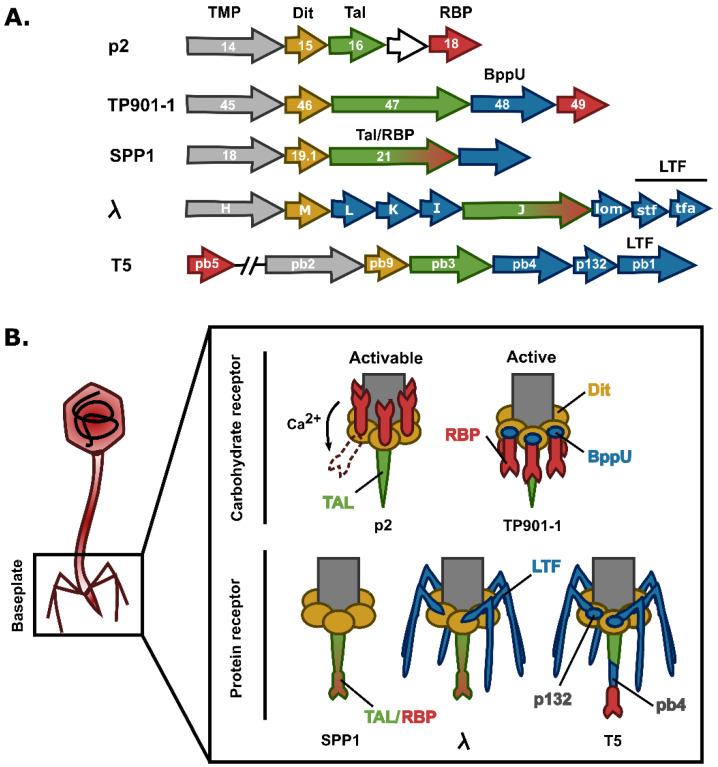
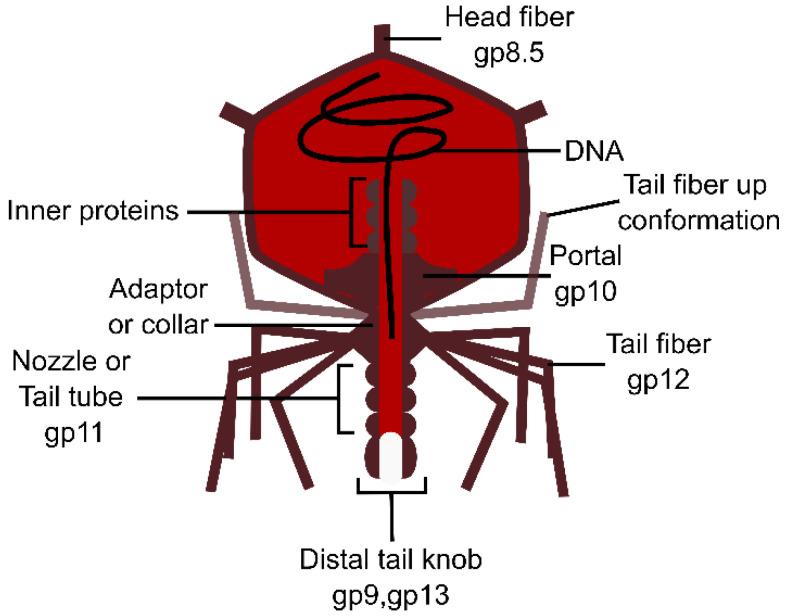
The phage life cycle is a multi-stage process initiated by the recognition and attachment of the virus to its bacterial host. This adsorption step depends on the specific interaction between bacterial structures acting as receptors and viral proteins called Receptor Binding Proteins (RBP). The adsorption process is essential as it is the first determinant of phage host range and a sine qua non condition for the subsequent conduct of the life cycle. In phages belonging to the class, the capsid is attached to a tail, which is the central player in the adsorption as it comprises the RBP and accessory proteins facilitating phage binding and cell wall penetration prior to genome injection. The nature of the viral proteins involved in host adhesion not only depends on the phage morphology (i.e., myovirus, siphovirus, or podovirus) but also the targeted host. Here, we give an overview of the adsorption process and compile the available information on the type of receptors that can be recognized and the viral proteins taking part in the process, with the primary focus on phages infecting Gram-positive bacteria.
噬菌体生命周期是一个多阶段的过程,由病毒识别和附着到其细菌宿主开始。这个吸附步骤取决于作为受体的细菌结构和称为受体结合蛋白(RBP)的病毒蛋白之间的特定相互作用。吸附过程是至关重要的,因为它是噬菌体宿主范围的第一个决定因素,也是生命周期后续进行的必要条件。在属于 类的噬菌体中,衣壳附着在尾部上,尾部是吸附的核心部分,因为它包含 RBP 和辅助蛋白,有助于噬菌体在基因组注入之前结合和穿透细胞壁。参与宿主附着的病毒蛋白的性质不仅取决于噬菌体的形态(即肌病毒、丝病毒或 Podovirus),还取决于目标宿主。在这里,我们概述了吸附过程,并汇编了有关可识别的受体类型和参与该过程的病毒蛋白的现有信息,主要关注感染革兰氏阳性细菌的噬菌体。






 Zotero 插件