
用于阿霉素递送的壳聚糖基纳米系统:探索在癌症治疗中的生物医学应用。
Chitosan-based nanoscale systems for doxorubicin delivery: Exploring biomedical application in cancer therapy.
作者信息
Ashrafizadeh Milad, Hushmandi Kiavash, Mirzaei Sepideh, Bokaie Saied, Bigham Ashkan, Makvandi Pooyan, Rabiee Navid, Thakur Vijay Kumar, Kumar Alan Prem, Sharifi Esmaeel, Varma Rajender S, Aref Amir Reza, Wojnilowicz Marcin, Zarrabi Ali, Karimi-Maleh Hassan, Voelcker Nicolas H, Mostafavi Ebrahim, Orive Gorka
机构信息
Faculty of Engineering and Natural Sciences Sabanci University, Üniversite Caddesi Tuzla, Istanbul Turkey.
Department of Food Hygiene and Quality Control, Division of Epidemiology, Faculty of Veterinary Medicine University of Tehran Tehran Iran.
出版信息
Bioeng Transl Med. 2022 Sep 13;8(1):e10325. doi: 10.1002/btm2.10325. eCollection 2023 Jan.
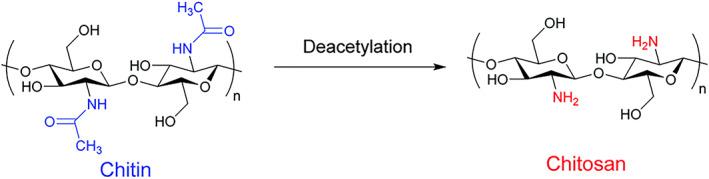
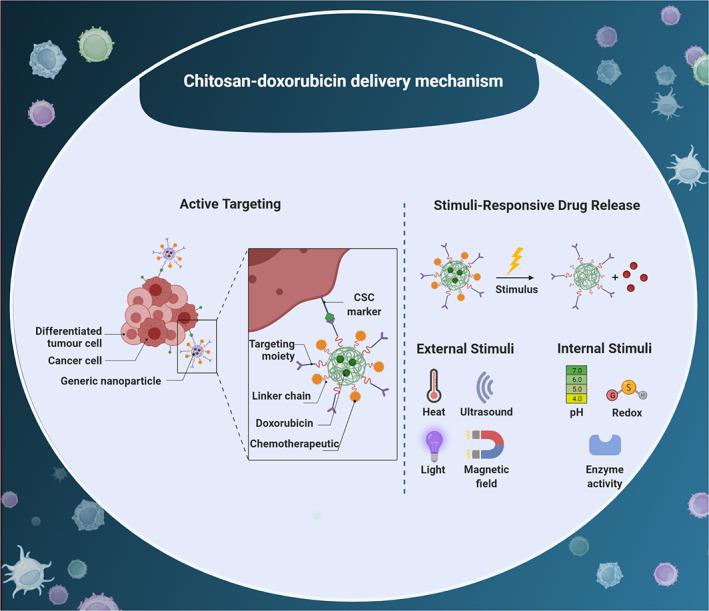
Green chemistry has been a growing multidisciplinary field in recent years showing great promise in biomedical applications, especially for cancer therapy. Chitosan (CS) is an abundant biopolymer derived from chitin and is present in insects and fungi. This polysaccharide has favorable characteristics, including biocompatibility, biodegradability, and ease of modification by enzymes and chemicals. CS-based nanoparticles (CS-NPs) have shown potential in the treatment of cancer and other diseases, affording targeted delivery and overcoming drug resistance. The current review emphasizes on the application of CS-NPs for the delivery of a chemotherapeutic agent, doxorubicin (DOX), in cancer therapy as they promote internalization of DOX in cancer cells and prevent the activity of P-glycoprotein (P-gp) to reverse drug resistance. These nanoarchitectures can provide co-delivery of DOX with antitumor agents such as curcumin and cisplatin to induce synergistic cancer therapy. Furthermore, co-loading of DOX with siRNA, shRNA, and miRNA can suppress tumor progression and provide chemosensitivity. Various nanostructures, including lipid-, carbon-, polymeric- and metal-based nanoparticles, are modifiable with CS for DOX delivery, while functionalization of CS-NPs with ligands such as hyaluronic acid promotes selectivity toward tumor cells and prevents DOX resistance. The CS-NPs demonstrate high encapsulation efficiency and due to protonation of amine groups of CS, pH-sensitive release of DOX can occur. Furthermore, redox- and light-responsive CS-NPs have been prepared for DOX delivery in cancer treatment. Leveraging these characteristics and in view of the biocompatibility of CS-NPs, we expect to soon see significant progress towards clinical translation.
近年来,绿色化学已成为一个不断发展的多学科领域,在生物医学应用中,尤其是癌症治疗方面展现出巨大潜力。壳聚糖(CS)是一种源自几丁质的丰富生物聚合物,存在于昆虫和真菌中。这种多糖具有良好的特性,包括生物相容性、生物可降解性,以及易于通过酶和化学物质进行修饰。基于壳聚糖的纳米颗粒(CS-NPs)在癌症和其他疾病的治疗中已显示出潜力,可实现靶向递送并克服耐药性。本综述重点强调了CS-NPs在癌症治疗中用于递送化疗药物阿霉素(DOX)的应用,因为它们能促进DOX在癌细胞中的内化,并抑制P-糖蛋白(P-gp)的活性以逆转耐药性。这些纳米结构可以将DOX与姜黄素和顺铂等抗肿瘤药物共同递送,以诱导协同癌症治疗。此外,将DOX与小干扰RNA(siRNA)、短发夹RNA(shRNA)和微小RNA(miRNA)共同负载可以抑制肿瘤进展并提供化疗敏感性。各种纳米结构,包括脂质、碳、聚合物和金属基纳米颗粒,都可以用CS进行修饰以用于DOX递送,而用透明质酸等配体对CS-NPs进行功能化可促进对肿瘤细胞的选择性并防止DOX耐药。CS-NPs表现出高包封效率,并且由于CS胺基的质子化,DOX可发生pH敏感释放。此外,还制备了氧化还原和光响应性CS-NPs用于癌症治疗中的DOX递送。鉴于CS-NPs的生物相容性并利用这些特性,我们期望很快能在临床转化方面取得重大进展。


 Zotero 插件