
情绪障碍中的内溶酶体与自噬途径及泛素-蛋白酶体系统:一篇综述文章
Endo-Lysosomal and Autophagy Pathway and Ubiquitin-Proteasome System in Mood Disorders: A Review Article.
作者信息
Matutino Santos Petala, Pereira Campos Giovanna, Nascimento Camila
机构信息
Center for Mathematics, Computing and Cognition (CMCC), Federal University of ABC (UFABC), São Paulo, Brazil.
Department of Psychiatry, University of São Paulo Medical School, São Paulo, Brazil.
出版信息
Neuropsychiatr Dis Treat. 2023 Jan 14;19:133-151. doi: 10.2147/NDT.S376380. eCollection 2023.
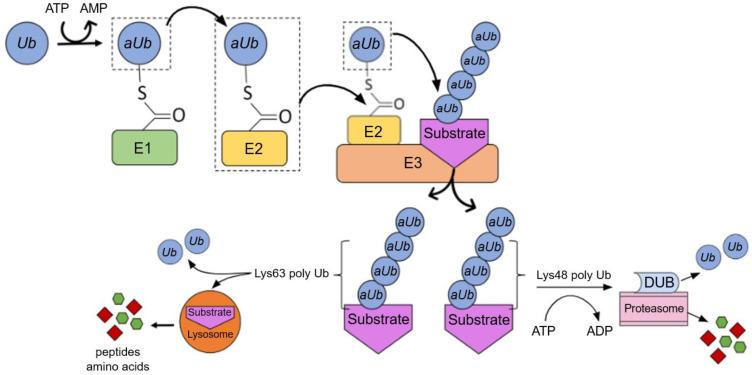
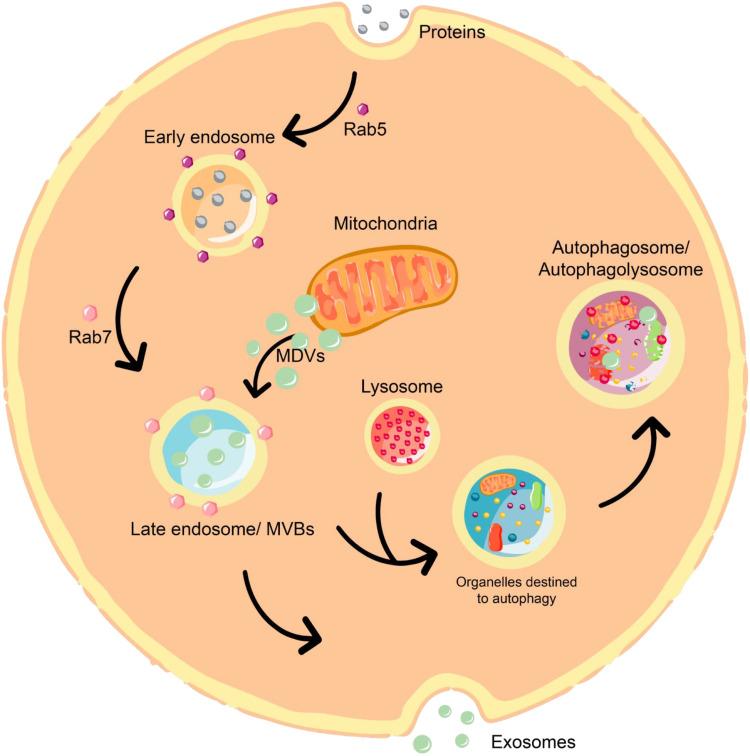
Mood disorders are disabling conditions that cause significant functional impairment. Due to the clinical heterogeneity and complex nature of these disorders, diagnostic and treatment strategies face challenges. The etiology of mood disorders is multifactorial, involving genetic and environmental aspects that are associated with specific biological pathways including inflammation, oxidative stress, and neuroprotection. Alterations in these pathways may reduce the cell's ability to recover from stress conditions occurring during mood episodes. The endo-lysosomal and autophagy pathway (ELAP) and the ubiquitin-proteasome system (UPS) play critical roles in protein homeostasis, impacting neuroplasticity and neurodevelopment. Thus, emerging evidence has suggested a role for these pathways in mental disorders. In the case of neurodegenerative diseases (NDDs), a deeper understanding in the role of ELAP and UPS has been critical to discover new treatment targets. Since it is suggested that NDDs and mood disorders share clinical symptomatology and risk factors, it has been hypothesized that there might be common underlying molecular pathways. Here, we review the importance of the ELAP and UPS for the central nervous system and for mood disorders. Finally, we discuss potential translational strategies for the diagnosis and treatment of major depressive disorder and bipolar disorder associated with these pathways.
情绪障碍是导致严重功能损害的致残性疾病。由于这些疾病的临床异质性和复杂性,诊断和治疗策略面临挑战。情绪障碍的病因是多因素的,涉及与特定生物学途径相关的遗传和环境因素,包括炎症、氧化应激和神经保护。这些途径的改变可能会降低细胞从情绪发作期间出现的应激状态中恢复的能力。内溶酶体和自噬途径(ELAP)以及泛素-蛋白酶体系统(UPS)在蛋白质稳态中起关键作用,影响神经可塑性和神经发育。因此,新出现的证据表明这些途径在精神障碍中发挥作用。在神经退行性疾病(NDDs)方面,深入了解ELAP和UPS的作用对于发现新的治疗靶点至关重要。由于有人提出NDDs和情绪障碍具有共同的临床症状和风险因素,因此有人推测可能存在共同的潜在分子途径。在此,我们综述ELAP和UPS对中枢神经系统及情绪障碍的重要性。最后,我们讨论与这些途径相关的重度抑郁症和双相情感障碍诊断和治疗的潜在转化策略。

 Zotero 插件