
表观遗传学修饰相关机制导致肝癌对免疫检查点抑制的耐药性。
Epigenetic modification-related mechanisms of hepatocellular carcinoma resistance to immune checkpoint inhibition.
机构信息
Department of Hepatobiliary Surgery, The First Affiliated Hospital of University of Science and Technology of China (USTC), Division of Life Sciences and Medicine, University of Science and Technology of China, Hefei, Anhui, China.
Department of Gastrointestinal Surgery, The First Affiliated Hospital of University of Science and Technology of China (USTC), Division of Life Sciences and Medicine, University of Science and Technology of China, Hefei, Anhui, China.
出版信息
Front Immunol. 2023 Jan 4;13:1043667. doi: 10.3389/fimmu.2022.1043667. eCollection 2022.
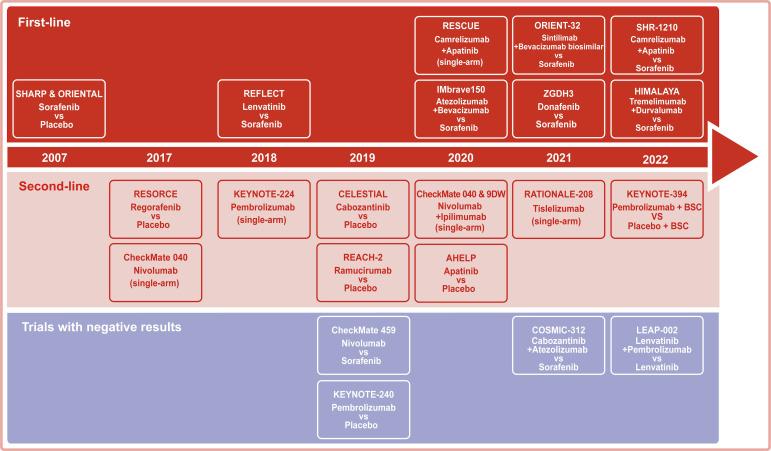
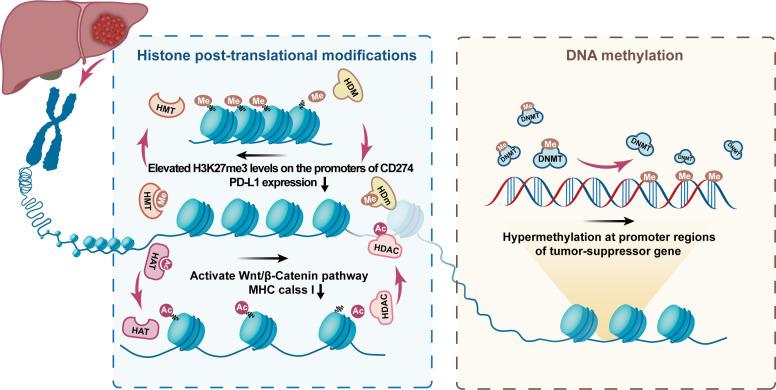
Hepatocellular carcinoma (HCC) constitutes most primary liver cancers and is one of the most lethal and life-threatening malignancies globally. Unfortunately, a substantial proportion of HCC patients are identified at an advanced stage that is unavailable for curative surgery. Thus, palliative therapies represented by multi-tyrosine kinase inhibitors (TKIs) sorafenib remained the front-line treatment over the past decades. Recently, the application of immune checkpoint inhibitors (ICIs), especially targeting the PD-1/PD-L1/CTLA-4 axis, has achieved an inspiring clinical breakthrough for treating unresectable solid tumors. However, many HCC patients with poor responses lead to limited benefits in clinical applications, which has quickly drawn researchers' attention to the regulatory mechanisms of immune checkpoints in HCC immune evasion. Evasion of immune surveillance by cancer is attributed to intricate reprogramming modulation in the tumor microenvironment. Currently, more and more studies have found that epigenetic modifications, such as chromatin structure remodeling, DNA methylation, histone post-translational modifications, and non-coding RNA levels, may contribute significantly to remodeling the tumor microenvironment to avoid immune clearance, affecting the efficacy of immunotherapy for HCC. This review summarizes the rapidly emerging progress of epigenetic-related changes during HCC resistance to ICIs and discusses the mechanisms of underlying epigenetic therapies available for surmounting immune resistance. Finally, we summarize the clinical advances in combining epigenetic therapies with immunotherapy, aiming to promote the formation of immune combination therapy strategies.
肝细胞癌(HCC)构成了大多数原发性肝癌,是全球最致命和威胁生命的恶性肿瘤之一。不幸的是,相当一部分 HCC 患者被发现处于晚期,无法进行治愈性手术。因此,多酪氨酸激酶抑制剂(TKIs)索拉非尼等姑息疗法在过去几十年中一直是一线治疗方法。最近,免疫检查点抑制剂(ICIs)的应用,特别是针对 PD-1/PD-L1/CTLA-4 轴的应用,为治疗不可切除的实体肿瘤取得了令人鼓舞的临床突破。然而,许多 HCC 患者反应不佳,导致临床应用中的获益有限,这迅速引起了研究人员对 HCC 免疫逃逸中免疫检查点调节机制的关注。癌症逃避免疫监视归因于肿瘤微环境中复杂的重编程调节。目前,越来越多的研究发现,表观遗传修饰,如染色质结构重塑、DNA 甲基化、组蛋白翻译后修饰和非编码 RNA 水平,可能对重塑肿瘤微环境以避免免疫清除有重要贡献,影响 HCC 免疫治疗的疗效。本综述总结了 HCC 对 ICI 耐药过程中与表观遗传相关的变化的快速涌现的进展,并讨论了克服免疫抵抗的潜在表观遗传治疗机制。最后,我们总结了将表观遗传疗法与免疫疗法相结合的临床进展,旨在促进免疫联合治疗策略的形成。




 Zotero 插件