
利用 RIG-I 样受体通路进行癌症免疫治疗。
Exploiting RIG-I-like receptor pathway for cancer immunotherapy.
机构信息
Laboratory of Oncogene, State Key Laboratory of Biotherapy, West China Hospital, Sichuan University, Chengdu, 610041, China.
School of Basic Medicine, Chengdu University of Traditional Chinese Medicine, Chengdu, 610075, China.
出版信息
J Hematol Oncol. 2023 Feb 8;16(1):8. doi: 10.1186/s13045-023-01405-9.
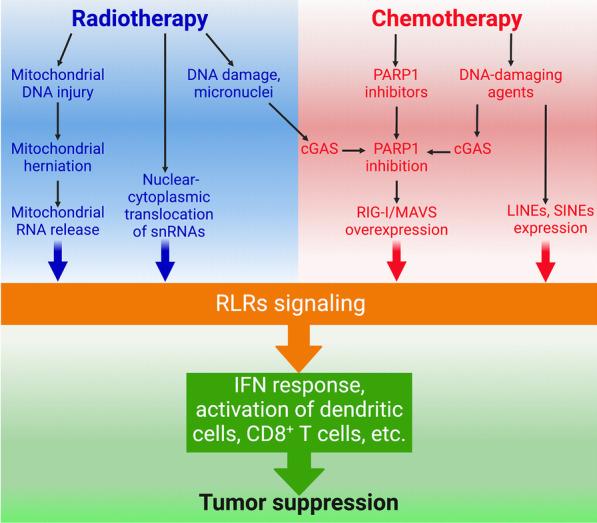
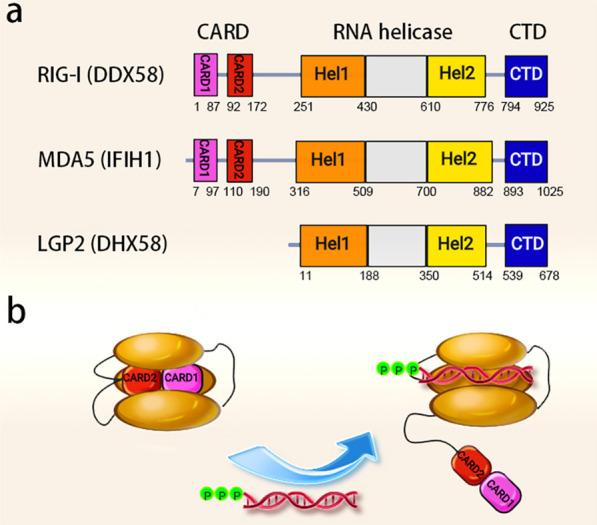
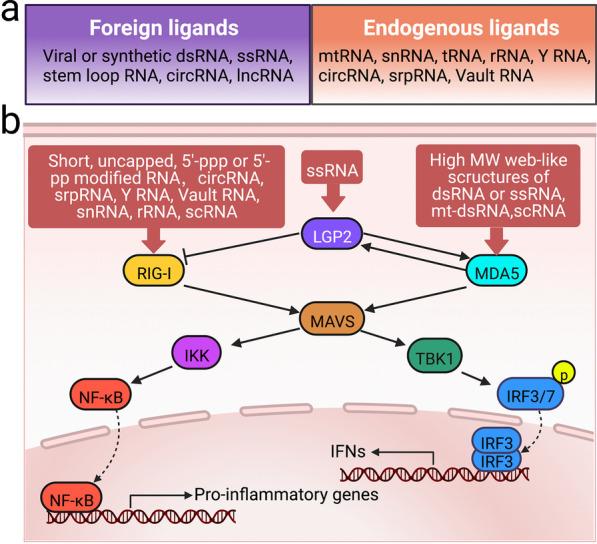
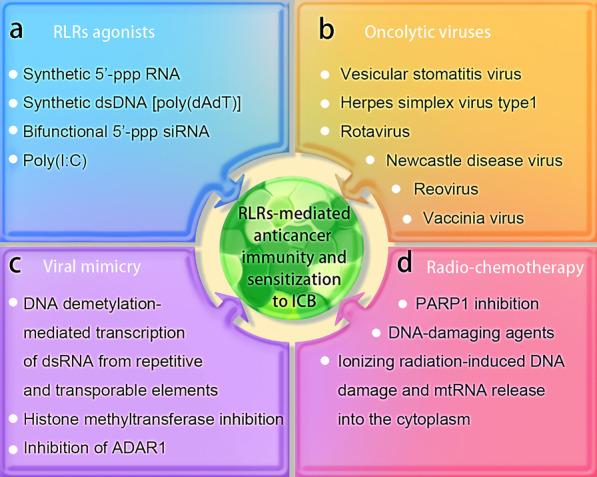
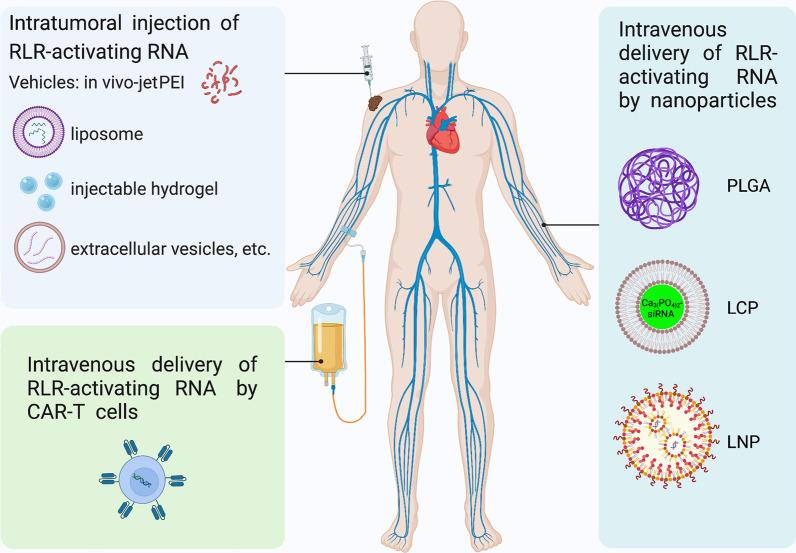
RIG-I-like receptors (RLRs) are intracellular pattern recognition receptors that detect viral or bacterial infection and induce host innate immune responses. The RLRs family comprises retinoic acid-inducible gene 1 (RIG-I), melanoma differentiation-associated gene 5 (MDA5) and laboratory of genetics and physiology 2 (LGP2) that have distinctive features. These receptors not only recognize RNA intermediates from viruses and bacteria, but also interact with endogenous RNA such as the mislocalized mitochondrial RNA, the aberrantly reactivated repetitive or transposable elements in the human genome. Evasion of RLRs-mediated immune response may lead to sustained infection, defective host immunity and carcinogenesis. Therapeutic targeting RLRs may not only provoke anti-infection effects, but also induce anticancer immunity or sensitize "immune-cold" tumors to immune checkpoint blockade. In this review, we summarize the current knowledge of RLRs signaling and discuss the rationale for therapeutic targeting RLRs in cancer. We describe how RLRs can be activated by synthetic RNA, oncolytic viruses, viral mimicry and radio-chemotherapy, and how the RNA agonists of RLRs can be systemically delivered in vivo. The integration of RLRs agonism with RNA interference or CAR-T cells provides new dimensions that complement cancer immunotherapy. Moreover, we update the progress of recent clinical trials for cancer therapy involving RLRs activation and immune modulation. Further studies of the mechanisms underlying RLRs signaling will shed new light on the development of cancer therapeutics. Manipulation of RLRs signaling represents an opportunity for clinically relevant cancer therapy. Addressing the challenges in this field will help develop future generations of cancer immunotherapy.
RLR 样受体(RLRs)是细胞内模式识别受体,可检测病毒或细菌感染并诱导宿主固有免疫反应。RLRs 家族包括视黄酸诱导基因 1(RIG-I)、黑色素瘤分化相关基因 5(MDA5)和遗传与生理学实验室 2(LGP2),它们具有不同的特征。这些受体不仅识别来自病毒和细菌的 RNA 中间体,还与内源性 RNA 相互作用,如线粒体 RNA 错位、人类基因组中异常重新激活的重复或转座元件。RLRs 介导的免疫反应的逃避可能导致持续感染、宿主免疫缺陷和癌变。靶向 RLRs 的治疗不仅可能引发抗感染作用,还可能诱导抗癌免疫或使“免疫冷”肿瘤对免疫检查点阻断敏感。在这篇综述中,我们总结了 RLRs 信号通路的现有知识,并讨论了在癌症中靶向 RLRs 的治疗合理性。我们描述了 RLRs 如何被合成 RNA、溶瘤病毒、病毒模拟物和放化疗激活,以及如何在体内系统地递送 RLRs 的 RNA 激动剂。RLRs 激动剂与 RNA 干扰或 CAR-T 细胞的整合提供了补充癌症免疫治疗的新维度。此外,我们更新了最近涉及 RLRs 激活和免疫调节的癌症治疗的临床试验进展。对 RLRs 信号通路的机制的进一步研究将为癌症治疗的发展提供新的思路。对 RLRs 信号通路的操纵为具有临床相关性的癌症治疗提供了机会。解决该领域的挑战将有助于开发下一代癌症免疫疗法。
 Zotero 插件