
SARS-CoV-2 刺突蛋白的趋同进化导致了新的 COVID-19 浪潮的变体汤的出现。
Convergent Evolution in SARS-CoV-2 Spike Creates a Variant Soup from Which New COVID-19 Waves Emerge.
机构信息
North-Western Tuscany Blood Bank, Pisa University Hospital, 56124 Pisa, Italy.
Instituto de Investigaciones en Físico-Química de Córdoba (INFIQC-CONICET), Facultad de Ciencias Químicas, Universidad Nacional de Córdoba, Cordova 5000, Argentina.
出版信息
Int J Mol Sci. 2023 Jan 23;24(3):2264. doi: 10.3390/ijms24032264.
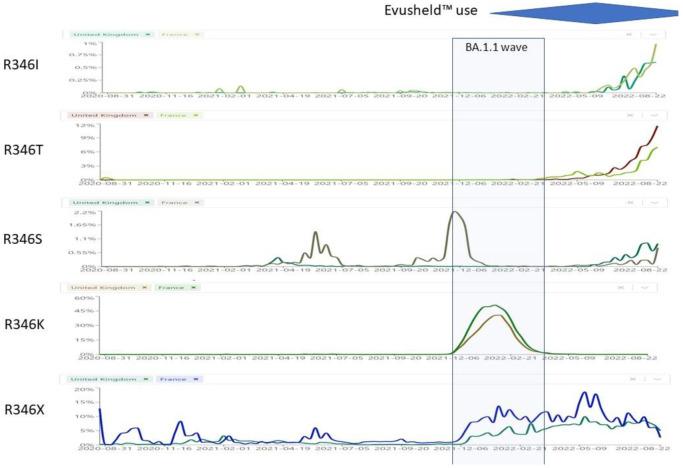
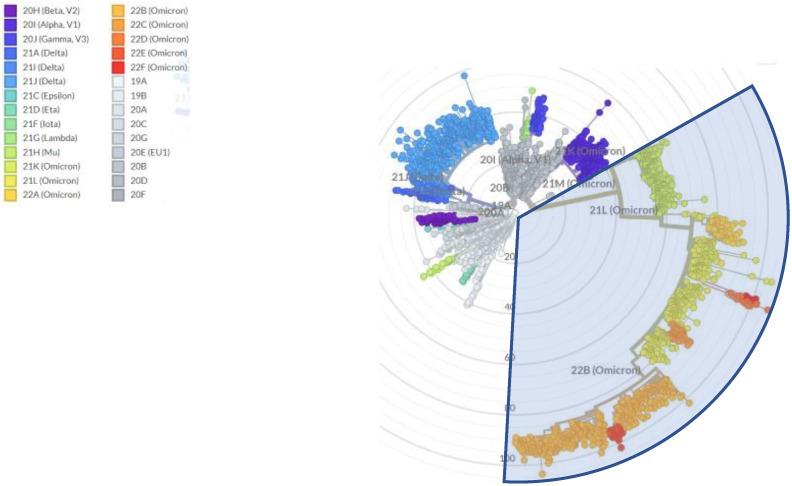
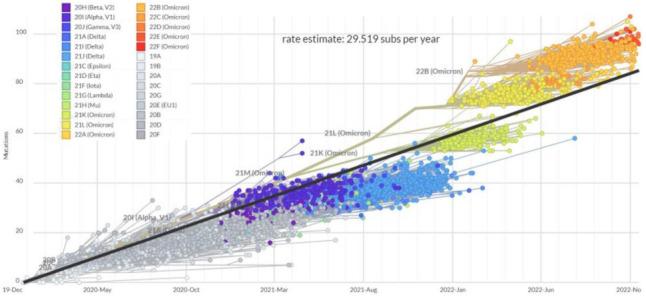
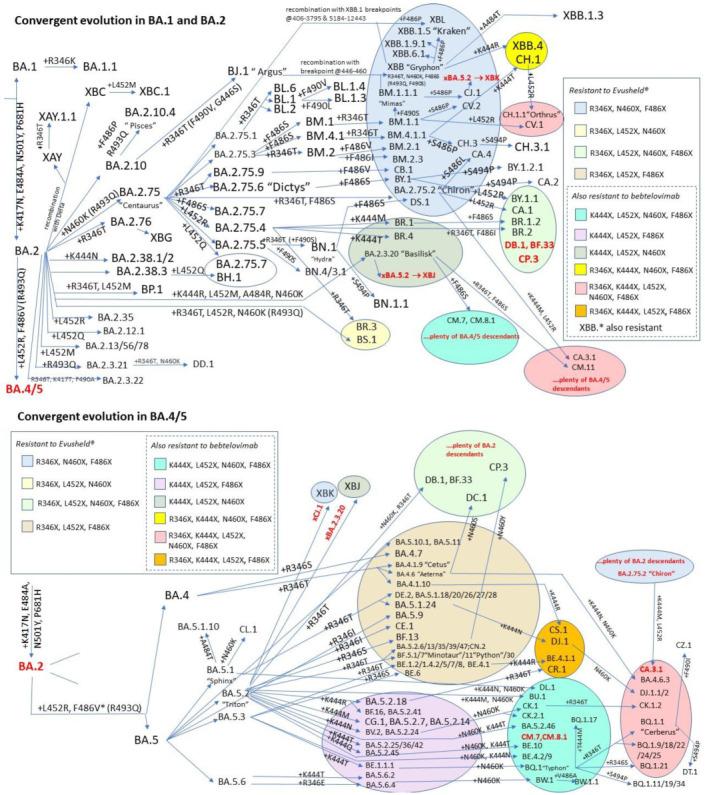
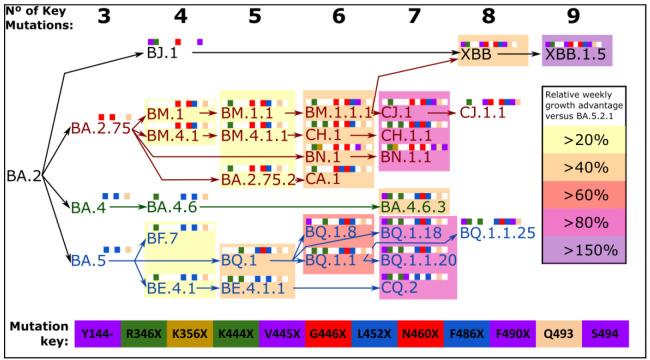
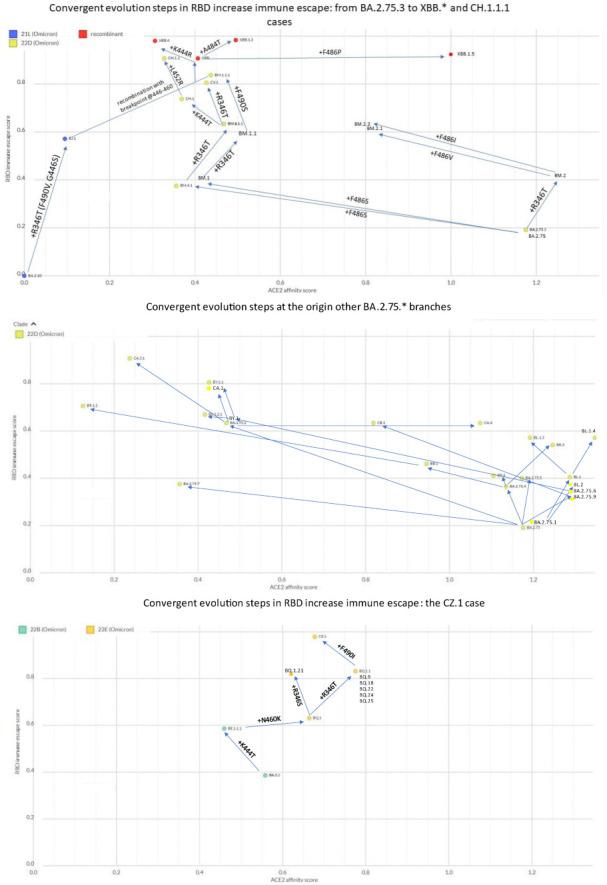
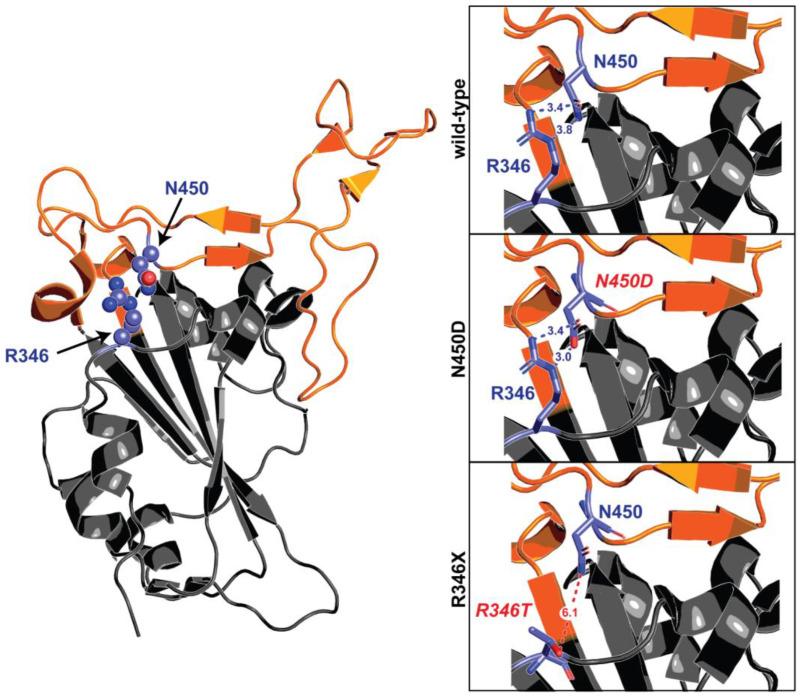
The first 2 years of the COVID-19 pandemic were mainly characterized by recurrent mutations of SARS-CoV-2 Spike protein at residues K417, L452, E484, N501 and P681 emerging independently across different variants of concern (Alpha, Beta, Gamma, and Delta). Such homoplasy is a marker of convergent evolution. Since Spring 2022 and the third year of the pandemic, with the advent of Omicron and its sublineages, convergent evolution has led to the observation of different lineages acquiring an additional group of mutations at different amino acid residues, namely R346, K444, N450, N460, F486, F490, Q493, and S494. Mutations at these residues have become increasingly prevalent during Summer and Autumn 2022, with combinations showing increased fitness. The most likely reason for this convergence is the selective pressure exerted by previous infection- or vaccine-elicited immunity. Such accelerated evolution has caused failure of all anti-Spike monoclonal antibodies, including bebtelovimab and cilgavimab. While we are learning how fast coronaviruses can mutate and recombine, we should reconsider opportunities for economically sustainable escape-proof combination therapies, and refocus antibody-mediated therapeutic efforts on polyclonal preparations that are less likely to allow for viral immune escape.
在 COVID-19 大流行的前 2 年,SARS-CoV-2 刺突蛋白主要以独立于不同关注变种(Alpha、Beta、Gamma 和 Delta)的 K417、L452、E484、N501 和 P681 残基的反复突变为特征。这种同型性是趋同进化的标志。自 2022 年春季和大流行的第三年以来,随着奥密克戎及其亚系的出现,趋同进化导致观察到不同谱系在不同氨基酸残基上获得额外的一组突变,即 R346、K444、N450、N460、F486、F490、Q493 和 S494。这些残基的突变在 2022 年夏季和秋季变得越来越普遍,并且具有增加适应性的组合。这种趋同的最可能原因是先前感染或疫苗引起的免疫所施加的选择压力。这种加速进化导致所有抗刺突单克隆抗体(包括 bebtelovimab 和 cilgavimab)失效。虽然我们正在了解冠状病毒可以多快发生突变和重组,但我们应该重新考虑具有经济可持续性的防逃逸组合疗法的机会,并将抗体介导的治疗努力重新集中在不太可能允许病毒免疫逃逸的多克隆制剂上。

 Zotero 插件