
基于阳离子聚苯乙烯的水凝胶作为高效吸附剂,用于去除工业废水中的甲基橙和荧光素染料污染物。
Cationic Polystyrene-Based Hydrogels as Efficient Adsorbents to Remove Methyl Orange and Fluorescein Dye Pollutants from Industrial Wastewater.
机构信息
Department of Pharmacy, University of Genoa, Viale Cembrano, 16148 Genoa, Italy.
出版信息
Int J Mol Sci. 2023 Feb 2;24(3):2948. doi: 10.3390/ijms24032948.
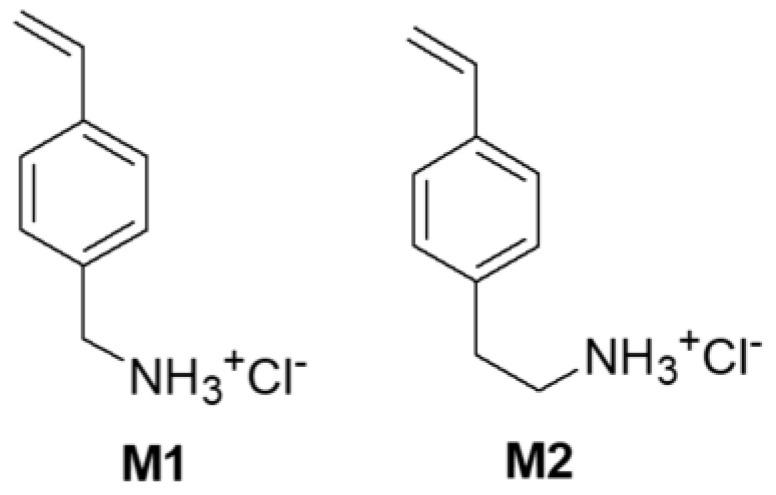
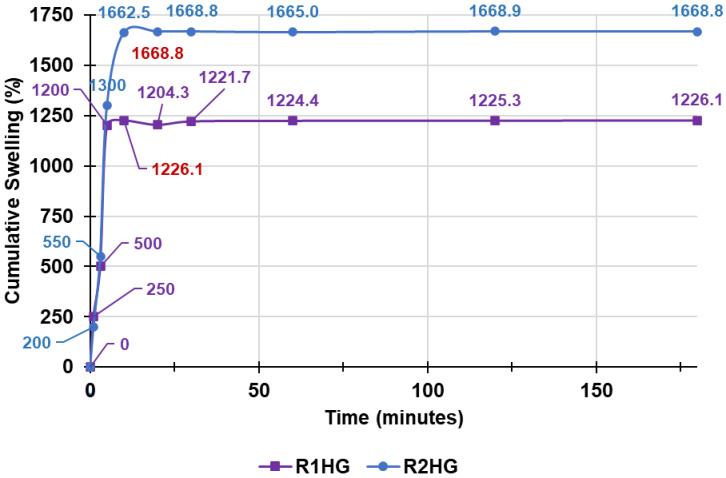
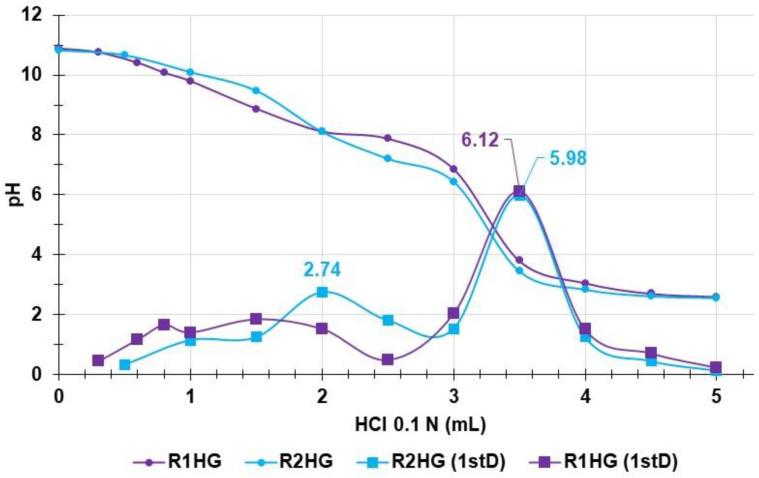
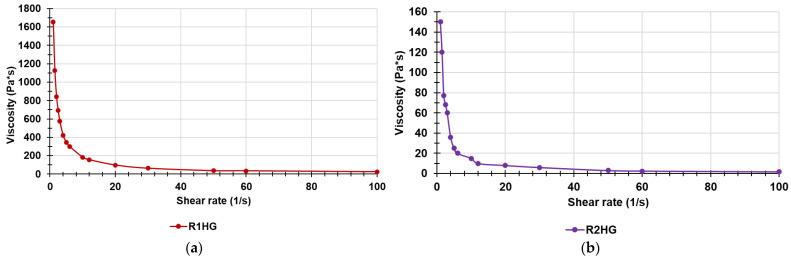
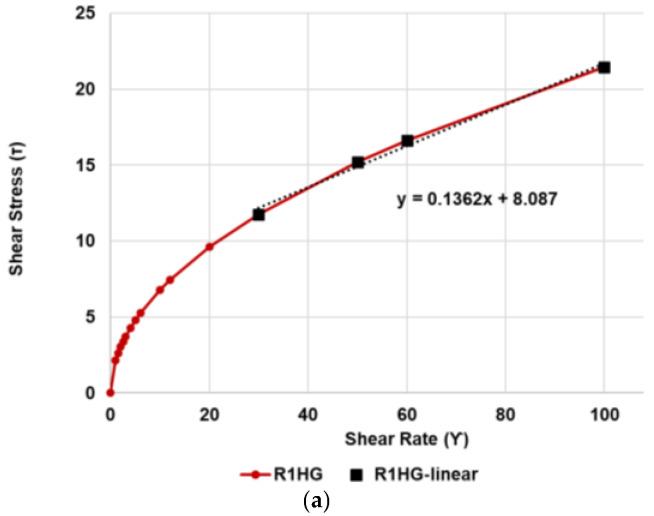
Water pollution from dyes is harmful to the environment, plants, animals, and humans and is one of the most widespread problems afflicting people throughout the world. Adsorption is a widely used method to remove contaminants derived from the textile industry, food colorants, printing, and cosmetic manufacturing from water. Here, aiming to develop new low-cost and up-scalable adsorbent materials for anionic dye remediation and water decontamination by electrostatic interactions, two cationic resins (R1 and R2) were prepared. In particular, they were obtained by copolymerizing 4-ammonium methyl and ethyl styrene monomers (M1 and M2) with dimethylacrylamide (DMAA), using N-(2-acryloylamino-ethyl)-acrylamide (AAEA) as cross-linker. Once characterized by several analytical techniques, upon their dispersion in an excess of water, R1 and R2 provided the R1- and R2-based hydrogels (namely R1HG and R2HG) with equilibrium degrees of swelling (EDS) of 900% and 1000% and equilibrium water contents (EWC) of 90 and 91%, respectively. By applying Cross' rheology equation to the data of R1HG and R2HG's viscosity vs. shear rate, it was established that both hydrogels are shear thinning fluids with pseudoplastic/Bingham plastic behavior depending on share rate. The equivalents of -NH groups, essential for the electrostatic-based absorbent activity, were estimated by the method of Gaur and Gupta on R1 and R2 and by potentiometric titrations on R1HG and R2HG. In absorption experiments in bulk, R1HG and R2HG showed high removal efficiency (97-100%) towards methyl orange (MO) azo dye, fluorescein (F), and their mixture (MOF). Using F or MO solutions (pH = 7.5, room temperature), the maximum absorption was 47.8 mg/g in 90' (F) and 47.7 mg/g in 120' (MO) for R1, while that of R2 was 49.0 mg/g in 20' (F) and 48.5 mg/g in 30' (MO). Additionally, R1HG and R2HG-based columns, mimicking decontamination systems by filtration, were capable of removing MO, F, and MOF from water with a 100% removal efficiency, in different conditions of use. R1HG and R2HG represent low-cost and up-scalable column packing materials that are promising for application in industrial wastewater treatment.
水污染染料对环境、植物、动物和人类都有害,是全世界最普遍的问题之一。吸附是一种广泛应用的方法,用于从纺织工业、食品色素、印刷和化妆品制造中去除水中的污染物。在这里,为了开发新的低成本和可扩展的吸附剂材料,用于通过静电相互作用修复阴离子染料和水净化,制备了两种阳离子树脂(R1 和 R2)。特别是,它们是通过共聚 4-氨甲基和乙基苯乙烯单体(M1 和 M2)与二甲基丙烯酰胺(DMAA),使用 N-(2-丙烯酰胺基-乙基)-丙烯酰胺(AAEA)作为交联剂而得到的。一旦通过几种分析技术进行了表征,R1 和 R2 在分散于过量水中时,提供了 R1-和 R2-基水凝胶(即 R1HG 和 R2HG),其平衡溶胀度(EDS)分别为 900%和 1000%,平衡含水量(EWC)分别为 90%和 91%。通过将 Cross 流变方程应用于 R1HG 和 R2HG 的粘度与剪切速率的数据,发现两种水凝胶都是剪切稀化流体,具有取决于剪切速率的假塑性/宾汉塑性行为。通过 Gaur 和 Gupta 对 R1 和 R2 的方法以及通过 R1HG 和 R2HG 的电位滴定法,估算了对于静电基吸附剂活性必不可少的-NH 基团的当量。在批量吸收实验中,R1HG 和 R2HG 对甲基橙(MO)偶氮染料、荧光素(F)及其混合物(MOF)表现出高去除效率(97-100%)。使用 F 或 MO 溶液(pH = 7.5,室温),R1 在 90'(F)时的最大吸收量为 47.8 mg/g,在 120'(MO)时为 47.7 mg/g,而 R2 在 20'(F)时的最大吸收量为 49.0 mg/g,在 30'(MO)时为 48.5 mg/g。此外,R1HG 和 R2HG 基柱模拟过滤净化系统,能够以 100%的去除效率从水中去除 MO、F 和 MOF,在不同的使用条件下。R1HG 和 R2HG 代表低成本和可扩展的柱填充材料,有望应用于工业废水处理。






 Zotero 插件