
基于网络药理学和实验验证的桃红汤治疗动脉粥样硬化的机制
Mechanism of Tao Hong Decoction in the treatment of atherosclerosis based on network pharmacology and experimental validation.
作者信息
Li SiJin, Liu Ping, Feng Xiaoteng, Du Min, Zhang Yifan, Wang YiRu, Wang JiaRou
机构信息
Longhua Hospital, Shanghai University of Traditional Chinese Medicine, Shanghai, China.
出版信息
Front Cardiovasc Med. 2023 Jan 26;10:1111475. doi: 10.3389/fcvm.2023.1111475. eCollection 2023.
BACKGROUND
Atherosclerosis (AS) has long been recognized as a cardiovascular disease and stroke risk factor. A well-known traditional Chinese medicine prescription, Tao Hong decoction (THD), has been proven effective in treating AS, but its mechanism of action is still unclear.
OBJECTIVE
To assess the effects, explore THD's primary mechanism for treating AS, and provide a basis for rational interpretation of its prescription compatibility.
METHODS
Based on network pharmacology, we evaluated the mechanism of THD on AS by data analysis, target prediction, the construction of PPI networks, and GO and KEGG analysis. AutoDockTools software to conduct Molecular docking. Then UPLC-Q-TOF-MS was used to identify significant constituents of THD. Furthermore, an AS mice model was constructed and intervened with THD. Immunofluorescence, RT-qPCR, and Western blot were used to verify the critical targets in animal experiments.
RESULTS
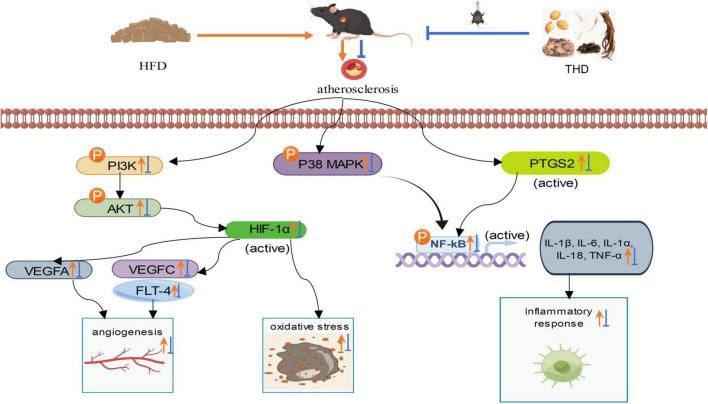
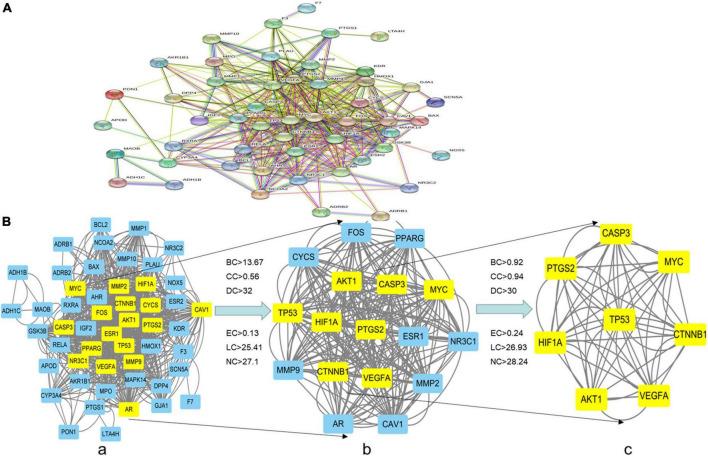
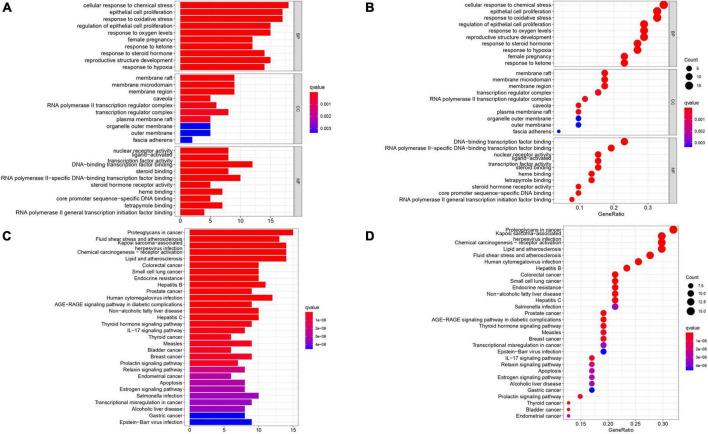
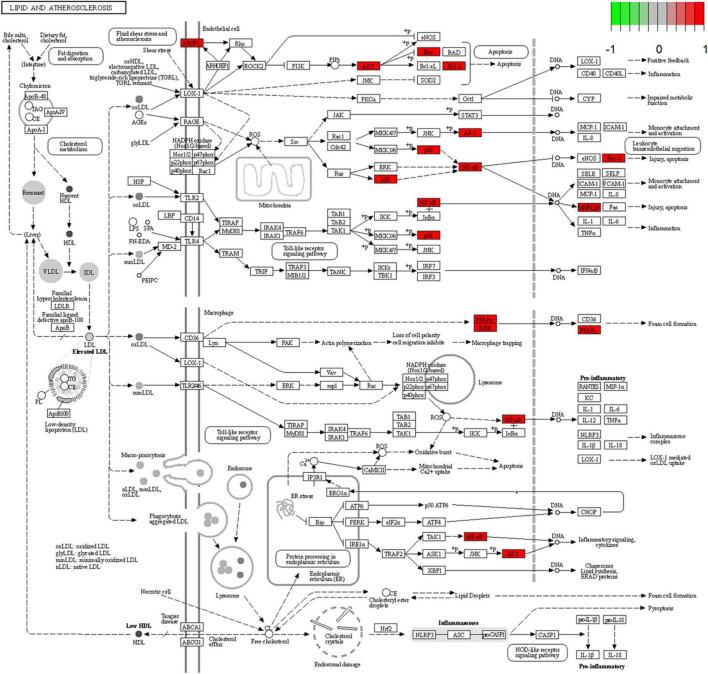
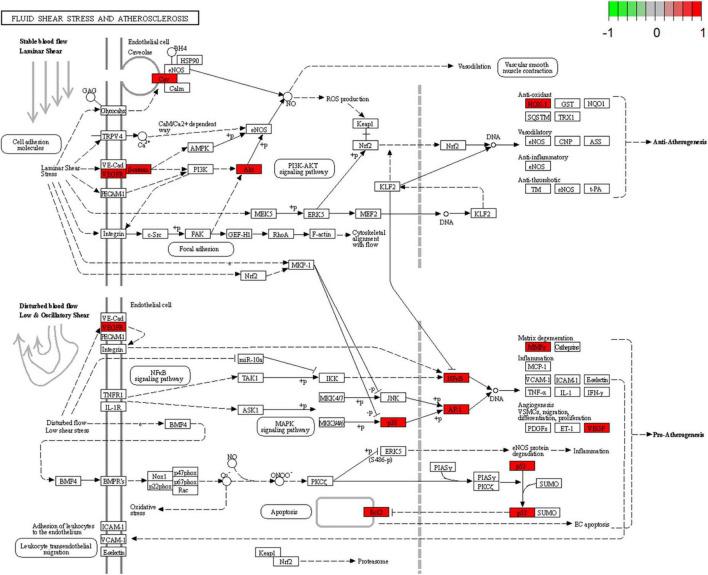
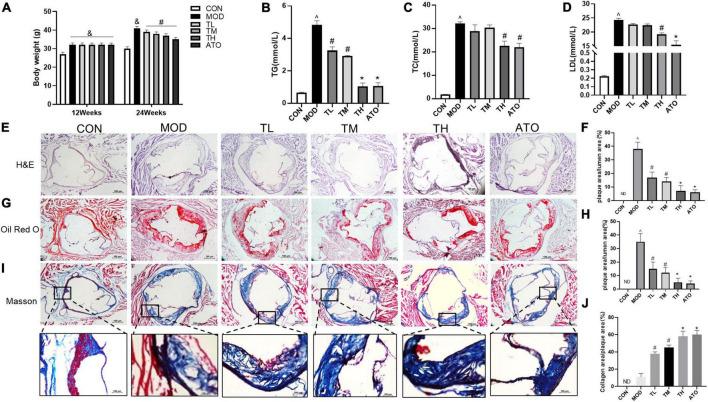
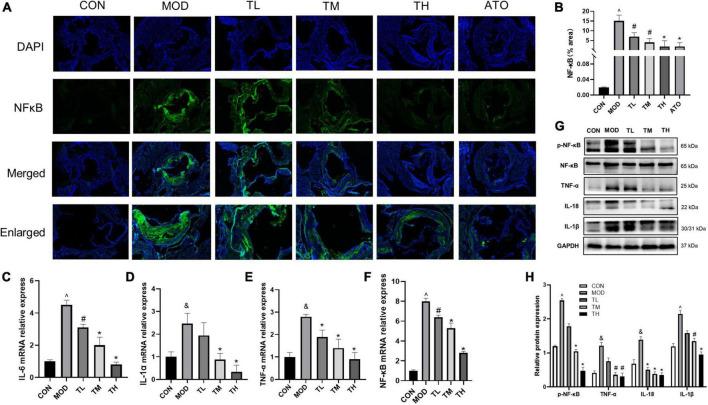
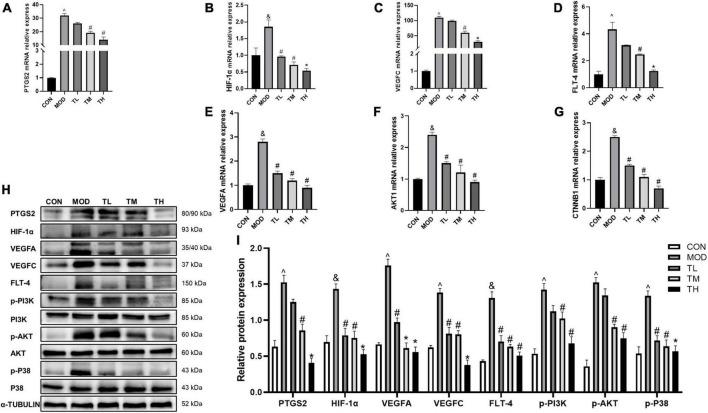
The network pharmacology results indicate that eight core targets and seven core active ingredients play an essential role in this process. The GO and KEGG analysis results suggested that the mechanism is mainly involved in Fluid shear stress and atherosclerosis and Lipid and atherosclerosis. The molecular docking results indicate a generally strong affinity. The animal experiment showed that THD reduced plaque area, increased plaque stability, and decreased the levels of inflammatory cytokines (NF-κB, IL-1α, TNF-α, IL-6, IL-18, IL-1β) in high-fat diet -induced ApoE-/-mice. Decreased levels of PTGS2, HIF-1α, VEGFA, VEGFC, FLT-4, and the phosphorylation of PI3K, AKT, and p38 were detected in the THD-treated group.
CONCLUSION
THD plays a vital role in treating AS with multiple targets and pathways. Angiogenesis regulation, oxidative stress regulation, and immunity regulation consist of the crucial regulation cores in the mechanism. This study identified essential genes and pathways associated with the prognosis and pathogenesis of AS from new insights, demonstrating a feasible method for researching THD's chemical basis and pharmacology.
背景
动脉粥样硬化(AS)长期以来一直被认为是一种心血管疾病和中风的危险因素。一种著名的中药方剂桃红汤(THD)已被证明对治疗AS有效,但其作用机制仍不清楚。
目的
评估桃红汤的疗效,探索其治疗AS的主要机制,并为合理解释其方剂配伍提供依据。
方法
基于网络药理学,通过数据分析、靶点预测、蛋白质-蛋白质相互作用(PPI)网络构建以及基因本体(GO)和京都基因与基因组百科全书(KEGG)分析,评估桃红汤对AS的作用机制。使用AutoDockTools软件进行分子对接。然后采用超高效液相色谱-四极杆飞行时间质谱(UPLC-Q-TOF-MS)鉴定桃红汤的主要成分。此外,构建AS小鼠模型并用桃红汤进行干预。在动物实验中,采用免疫荧光、逆转录-定量聚合酶链反应(RT-qPCR)和蛋白质免疫印迹法验证关键靶点。
结果
网络药理学结果表明,八个核心靶点和七种核心活性成分在此过程中起重要作用。GO和KEGG分析结果表明,其机制主要涉及流体切应力与动脉粥样硬化以及脂质与动脉粥样硬化。分子对接结果显示亲和力普遍较强。动物实验表明,桃红汤可减少高脂饮食诱导的载脂蛋白E基因敲除(ApoE-/-)小鼠的斑块面积,增加斑块稳定性,并降低炎症细胞因子(核因子κB(NF-κB)、白细胞介素-1α(IL-1α)、肿瘤坏死因子-α(TNF-α)、白细胞介素-6(IL-6)、白细胞介素-18(IL-18)、白细胞介素-1β(IL-1β))水平。在桃红汤治疗组中,检测到前列腺素内过氧化物合酶2(PTGS2)、缺氧诱导因子-1α(HIF-1α)、血管内皮生长因子A(VEGFA)、血管内皮生长因子C(VEGFC)、血管内皮生长因子受体-4(FLT-4)水平降低,以及磷脂酰肌醇-3激酶(PI3K)、蛋白激酶B(AKT)和p38的磷酸化水平降低。
结论
桃红汤在治疗AS中通过多个靶点和途径发挥重要作用。血管生成调节、氧化应激调节和免疫调节是该机制中的关键调节核心。本研究从新的角度确定了与AS预后和发病机制相关的关键基因和途径,为研究桃红汤的化学基础和药理学提供了一种可行的方法。



 Zotero 插件