
影响为需要康复的人提供家庭康复服务的因素:定性证据综合。
Factors that influence the provision of home-based rehabilitation services for people needing rehabilitation: a qualitative evidence synthesis.
机构信息
Facultad de Medicina, Universidad de Antioquia, Medellín, Colombia.
Department of Health Research Methods, Evidence and Impact, McMaster University, Hamilton, Canada.
出版信息
Cochrane Database Syst Rev. 2023 Feb 10;2(2):CD014823. doi: 10.1002/14651858.CD014823.
BACKGROUND
To increase people's access to rehabilitation services, particularly in the context of the COVID-19 pandemic, we need to explore how the delivery of these services can be adapted. This includes the use of home-based rehabilitation and telerehabilitation. Home-based rehabilitation services may become frequently used options in the recovery process of patients, not only as a solution to accessibility barriers, but as a complement to the usual in-person inpatient rehabilitation provision. Telerehabilitation is also becoming more viable as the usability and availability of communication technologies improve.
OBJECTIVES
To identify factors that influence the organisation and delivery of in-person home-based rehabilitation and home-based telerehabilitation for people needing rehabilitation.
SEARCH METHODS
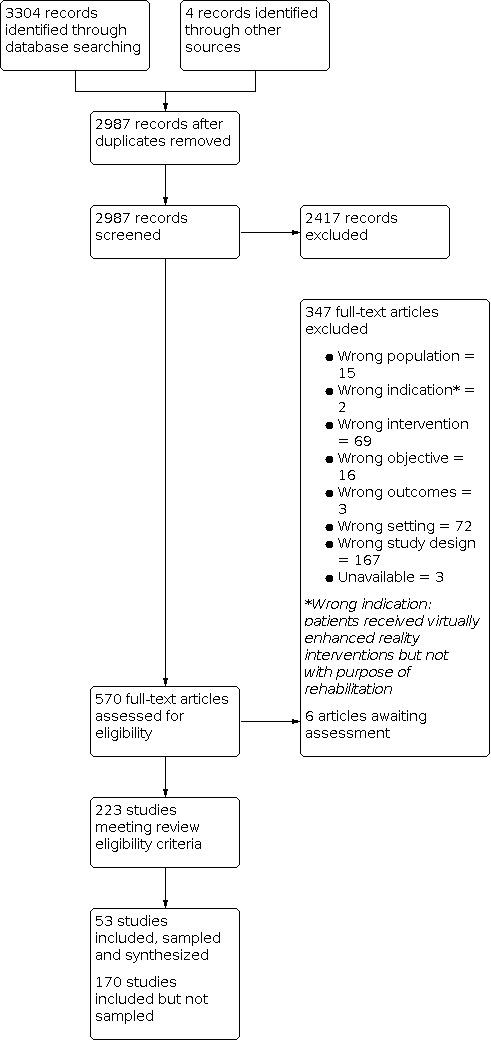
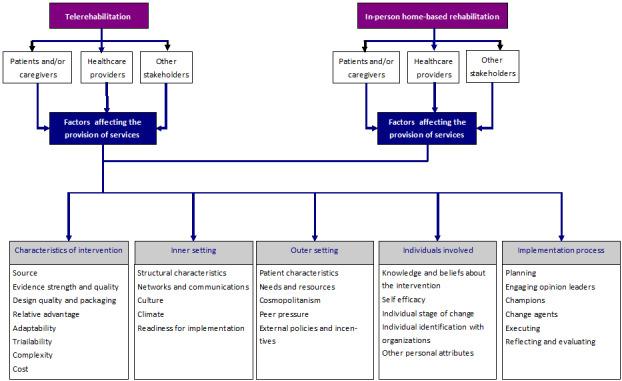
We searched PubMed, Global Health, the VHL Regional Portal, Epistemonikos, Health Systems Evidence, and EBM Reviews as well as preprints, regional repositories, and rehabilitation organisations websites for eligible studies, from database inception to search date in June 2022. SELECTION CRITERIA: We included studies that used qualitative methods for data collection and analysis; and that explored patients, caregivers, healthcare providers and other stakeholders' experiences, perceptions and behaviours about the provision of in-person home-based rehabilitation and home-based telerehabilitation services responding to patients' needs in different phases of their health conditions. DATA COLLECTION AND ANALYSIS: We used a purposive sampling approach and applied maximum variation sampling in a four-step sampling frame. We conducted a framework thematic analysis using the CFIR (Consolidated Framework for Implementation Research) framework as our starting point. We assessed our confidence in the findings using the GRADE-CERQual (Confidence in the Evidence from Reviews of Qualitative research) approach. MAIN RESULTS: We included 223 studies in the review and sampled 53 of these for our analysis. Forty-five studies were conducted in high-income countries, and eight in low-and middle-income countries. Twenty studies addressed in-person home-based rehabilitation, 28 studies addressed home-based telerehabilitation services, and five studies addressed both modes of delivery. The studies mainly explored the perspectives of healthcare providers, patients with a range of different health conditions, and their informal caregivers and family members. Based on our GRADE-CERQual assessments, we had high confidence in eight of the findings, and moderate confidence in five, indicating that it is highly likely or likely respectively that these findings are a reasonable representation of the phenomenon of interest. There were two findings with low confidence. High and moderate confidence findings Home-based rehabilitation services delivered in-person or through telerehabilitation Patients experience home-based services as convenient and less disruptive of their everyday activities. Patients and providers also suggest that these services can encourage patients' self-management and can make them feel empowered about the rehabilitation process. But patients, family members, and providers describe privacy and confidentiality issues when services are provided at home. These include the increased privacy of being able to exercise at home but also the loss of privacy when one's home life is visible to others. Patients and providers also describe other factors that can affect the success of home-based rehabilitation services. These include support from providers and family members, good communication with providers, the requirements made of patients and their surroundings, and the transition from hospital to home-based services. Telerehabilitation specifically Patients, family members and providers see telerehabilitation as an opportunity to make services more available. But providers point to practical problems when assessing whether patients are performing their exercises correctly. Providers and patients also describe interruptions from family members. In addition, providers complain of a lack of equipment, infrastructure and maintenance and patients refer to usability issues and frustration with digital technology. Providers have different opinions about whether telerehabilitation is cost-efficient for them. But many patients see telerehabilitation as affordable and cost-saving if the equipment and infrastructure have been provided. Patients and providers suggest that telerehabilitation can change the nature of their relationship. For instance, some patients describe how telerehabilitation leads to easier and more relaxed communication. Other patients describe feeling abandoned when receiving telerehabilitation services. Patients, family members and providers call for easy-to-use technologies and more training and support. They also suggest that at least some in-person sessions with the provider are necessary. They feel that telerehabilitation services alone can make it difficult to make meaningful connections. They also explain that some services need the provider's hands. Providers highlight the importance of personalising the services to each person's needs and circumstances.
AUTHORS' CONCLUSIONS: This synthesis identified several factors that can influence the successful implementation of in-person home-based rehabilitation and telerehabilitation services. These included factors that facilitate implementation, but also factors that can challenge this process. Healthcare providers, program planners and policymakers might benefit from considering these factors when designing and implementing programmes.
背景
为了增加人们获得康复服务的机会,特别是在 COVID-19 大流行的背景下,我们需要探索如何调整这些服务的提供方式。这包括使用基于家庭的康复和远程康复。基于家庭的康复服务可能成为患者康复过程中的常用选择,不仅是解决可及性障碍的解决方案,也是对常规住院康复服务的补充。随着通信技术的可用性和可用性的提高,远程康复也变得更加可行。
目的
确定影响需要康复的人进行面对面家庭康复和家庭远程康复服务的组织和提供的因素。
检索方法
我们从数据库成立到 2022 年 6 月的检索日期,在 PubMed、全球健康、VHL 区域门户、Epistemonikos、健康系统证据和 EBM 审查以及预印本、区域存储库和康复组织网站上搜索了符合条件的研究。选择标准:我们纳入了使用定性方法进行数据收集和分析的研究;并探讨了患者、护理人员、医疗保健提供者和其他利益相关者对提供满足患者在其健康状况不同阶段需求的面对面家庭康复和家庭远程康复服务的体验、看法和行为。
数据收集和分析
我们使用了有目的的抽样方法,并在四步抽样框架中应用了最大变化抽样。我们使用 CFIR(实施研究综合框架)框架作为起点,进行了框架主题分析。我们使用 GRADE-CERQual(定性研究证据的信心评估)方法评估了我们对研究结果的信心。
主要结果
我们对 223 项研究进行了综述,并对其中 53 项进行了分析。45 项研究在高收入国家进行,8 项在中低收入国家进行。20 项研究涉及面对面家庭康复,28 项研究涉及家庭远程康复服务,5 项研究涉及两种模式的交付。这些研究主要探讨了医疗保健提供者、患有各种不同健康状况的患者以及他们的非正式照顾者和家庭成员的观点。根据我们的 GRADE-CERQual 评估,我们对八项发现有高度信心,对五项发现有中度信心,表明这些发现很可能或很可能是对感兴趣现象的合理代表。有两项发现信心较低。高和中度信心的发现面对面家庭康复服务或通过远程康复提供给患者患者体验到家庭服务的便利性和对日常生活的干扰较小。患者和提供者还表示,这些服务可以鼓励患者的自我管理,并使他们对康复过程感到有能力。但是,患者、家庭成员和提供者在家庭服务提供时描述了隐私和保密性问题。这些问题包括在家中锻炼时增加的隐私,但也包括当一个人的家庭生活对他人可见时失去的隐私。患者和提供者还描述了影响家庭康复服务成功的其他因素。这些因素包括提供者和家庭成员的支持、与提供者的良好沟通、对患者及其周围环境的要求以及从医院到家庭服务的过渡。远程康复专门患者、家庭成员和提供者将远程康复视为使服务更具可及性的机会。但是,提供者在评估患者是否正确进行锻炼时指出了实际问题。提供者和患者还描述了家庭成员的干扰。此外,提供者抱怨设备、基础设施和维护方面的缺乏,患者提到了可用性问题和对数字技术的挫败感。提供者对远程康复对他们是否具有成本效益有不同的看法。但是许多患者认为如果提供了设备和基础设施,远程康复是负担得起的和节省成本的。患者和提供者建议使用易于使用的技术并提供更多的培训和支持。他们还建议至少与提供者进行一些面对面的会议。他们觉得远程康复服务本身很难建立有意义的联系。他们还解释说,一些服务需要提供者的手。提供者强调根据每个人的需求和情况个性化服务的重要性。
作者结论
本综合分析确定了一些可能影响面对面家庭康复和远程康复服务成功实施的因素。这些因素包括促进实施的因素,但也包括可能挑战这一过程的因素。医疗保健提供者、计划制定者和政策制定者在设计和实施方案时可能会受益于考虑这些因素。

 Zotero 插件