
我如何治疗 CAR T 细胞治疗后的血细胞减少症。
How I treat cytopenias after CAR T-cell therapy.
机构信息
Division of Hematological Malignancies and Bone Marrow Transplantation, Sidney Kimmel Comprehensive Cancer Center, Johns Hopkins University, Baltimore, MD.
Department of Pediatrics, Children's Hospital of Philadelphia, Perelman School of Medicine at The University of Pennsylvania, Philadelphia, PA.
出版信息
Blood. 2023 May 18;141(20):2460-2469. doi: 10.1182/blood.2022017415.
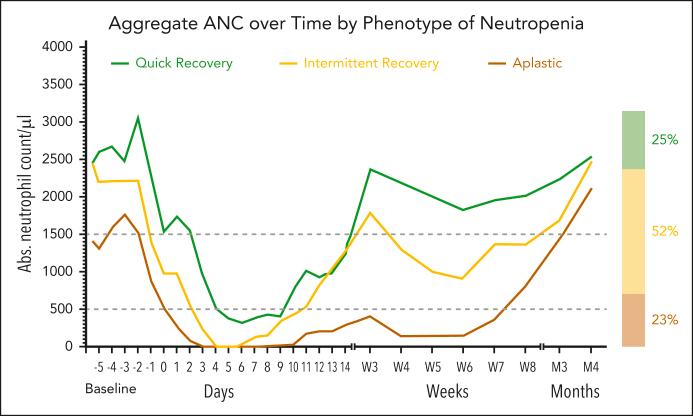
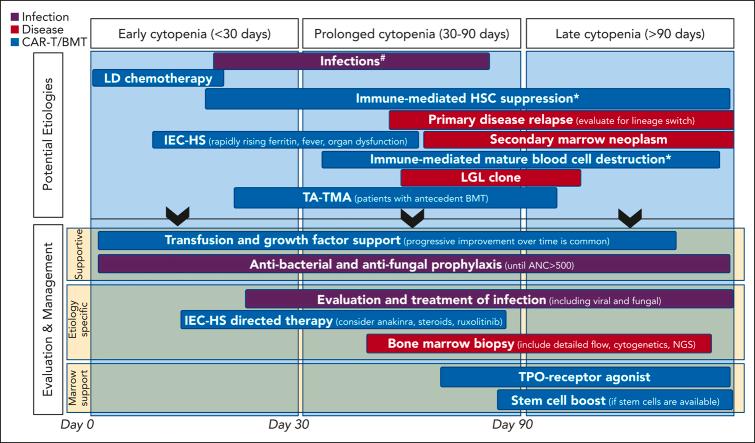
Increasing use of chimeric antigen receptor T-cell therapy (CAR-T) has unveiled diverse toxicities warranting specific recognition and management. Cytopenias occurring after CAR-T infusion invariably manifest early (<30 days), commonly are prolonged (30-90 days), and sometimes persist or occur late (>90 days). Variable etiologies of these cytopenias, some of which remain incompletely understood, create clinical conundrums and uncertainties about optimal management strategies. These cytopenias may cause additional sequelae, decreased quality of life, and increased resource use. Early cytopenias are typically attributed to lymphodepletion chemotherapy, however, infections and hyperinflammatory response such as immune effector cell-associated hemophagocytic lymphohistiocytosis-like syndrome may occur. Early and prolonged cytopenias often correlate with severity of cytokine release syndrome or immune effector cell-associated neurotoxicity syndrome. Bone marrow biopsy in patients with prolonged or late cytopenias is important to evaluate for primary disease and secondary marrow neoplasm in both pediatric and adult patients. Commonly, cytopenias resolve over time and evidence for effective interventions is often anecdotal. Treatment strategies, which are limited and require tailoring based upon likely underlying etiology, include growth factors, thrombopoietin-receptor agonist, stem cell boost, transfusion support, and abrogation of infection risk. Here we provide our approach, including workup and management strategies, for cytopenias after CAR-T.
嵌合抗原受体 T 细胞疗法 (CAR-T) 的应用日益增多,揭示了多种需要特异性识别和管理的毒性。CAR-T 输注后出现的细胞减少症总是早期(<30 天)发生,通常持续时间较长(30-90 天),有时持续或晚期(>90 天)发生。这些细胞减少症的病因多种多样,其中一些仍不完全清楚,这给最佳治疗策略的制定带来了临床难题和不确定性。这些细胞减少症可能导致其他后遗症、生活质量下降和资源使用增加。早期细胞减少症通常归因于淋巴细胞耗竭化疗,但感染和炎症反应如免疫效应细胞相关噬血细胞性淋巴组织细胞增多症样综合征也可能发生。早期和长期的细胞减少症通常与细胞因子释放综合征或免疫效应细胞相关神经毒性综合征的严重程度相关。对于长期或晚期细胞减少症患者,骨髓活检对于评估儿科和成人患者的原发性疾病和继发性骨髓肿瘤非常重要。通常,细胞减少症会随着时间的推移而缓解,有效的干预措施的证据往往只是传闻。治疗策略有限,需要根据可能的潜在病因进行定制,包括生长因子、血小板生成素受体激动剂、干细胞增强、输血支持和消除感染风险。在这里,我们提供了我们在 CAR-T 后处理细胞减少症的方法,包括检查和管理策略。

 Zotero 插件