
临床评估宏基因组下一代测序在严重社区获得性肺炎患者支气管肺泡灌洗液中病原体检测中的应用。
Clinical Evaluation of Metagenomic Next-Generation Sequencing for the detection of pathogens in BALF in severe community acquired pneumonia.
机构信息
Clinical School of Paediatrics, Tianjin Medical University, Tianjin, China.
Department of Respiratory Medicine, Tianjin Children's Hospital (Tianjin University Children's Hospital), Tianjin, China.
出版信息
Ital J Pediatr. 2023 Feb 18;49(1):25. doi: 10.1186/s13052-023-01431-w.
BACKGROUND
Rapid and accurate identification of pathogens is very important for the treatment of Severe community-acquired pneumonia (SCAP) in children. Metagenomic Next-generation sequencing (mNGS) has been applied in the detection of pathogenic bacteria in recent years, while the overall evaluation the application of SCAP in children is lacking.
METHODS
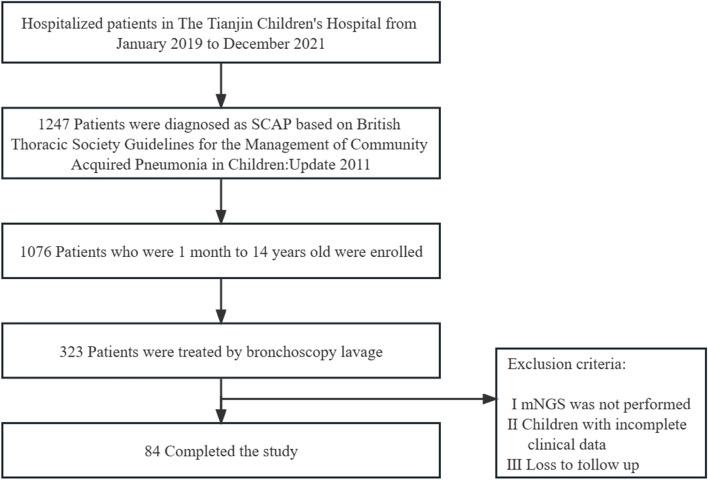
In our study, 84 cases of SCAP were enrolled. Bronchoalveolar lavage fluid (BALF) samples were analysed using mNGS; and sputum, blood, and BALF samples were analysed using conventional technology (CT).
RESULTS
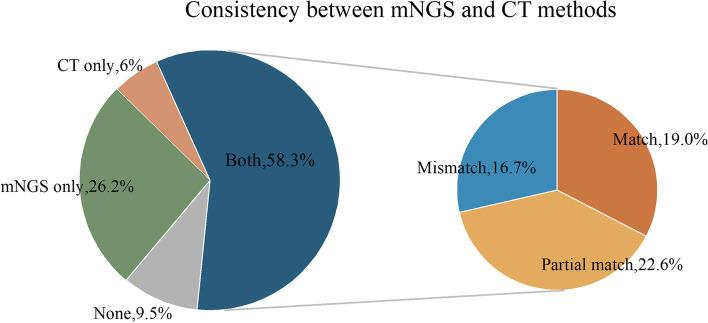
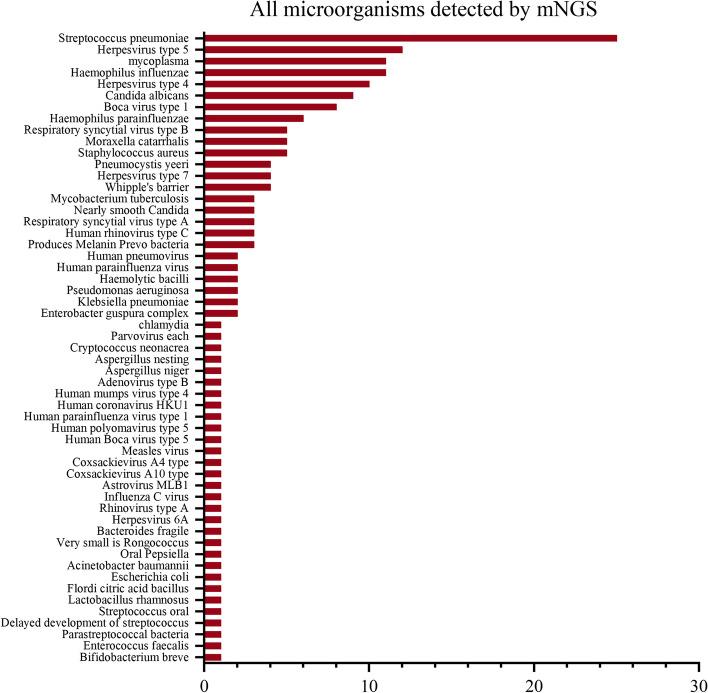
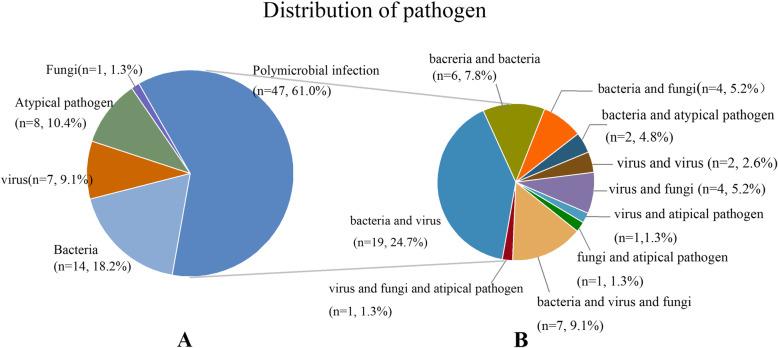
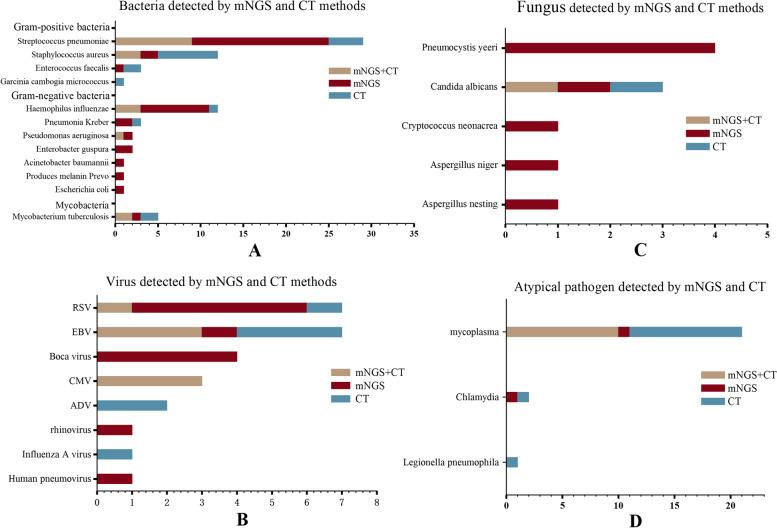
Among the 84 children, 41 were boys, and 43 were girls, with an average age ranging from 2 months to 14 years. The pathogen detection rate of mNGS was higher than that of CT (83.3% [70/84] vs. 63.1% [53/84], P = 0.003). The mNGS was much greater than that of the CT in detecting Streptococcus pneumoniae (89.2% [25/29] vs. 44.8% [13/29], P = 0.001) and Haemophilus influenzae (91.7% [11/12] vs. 33.3% [4/12], P < 0.005). The mNGS also showed superior fungal detection performance compared with that of the CT (81.8% [9/11] vs. 18.2% [2/11], P = 0.004). The mNGS test can detect viruses, such as bocavirus, rhinovirus, and human metapneumovirus, which are not frequently recognised using CT. However, the mNGS detection rate was lower than that of the CT (52.4% [11/21] vs. 95.2% [20/21], P = 0.004) for Mycoplasma pneumoniae (MP). The detection rate of mNGS for mixed infection was greater than that of the CT, although statistical significance was not observed (26.3% [20/39] vs. 21.1% [16/39], P > 0.005). Treatment for 26 (31.0%) children was changed based on mNGS results, and their symptoms were reduced; nine patients had their antibiotic modified, five had antibiotics added, nine had their antifungal medication, and seven had their antiviral medication.
CONCLUSION
mNGS has unique advantages in the detection of SCAP pathogens in children, especially S. pneumoniae, H. influenzae, and fungi. However, the detection rate of MP using mNGS was lower than that of the CT. Additionally, mNGS can detect pathogens that are not generally covered by CT, which is extremely important for the modification of the treatment strategy.
背景
快速准确地鉴定病原体对于儿童重症社区获得性肺炎(SCAP)的治疗非常重要。近年来,宏基因组下一代测序(mNGS)已应用于检测致病菌,而 SCAP 中应用的整体评估则较为缺乏。
方法
本研究纳入了 84 例 SCAP 患儿。采用 mNGS 分析支气管肺泡灌洗液(BALF)样本;采用传统技术(CT)分析痰、血和 BALF 样本。
结果
84 例患儿中,男 41 例,女 43 例,平均年龄 2 个月至 14 岁。mNGS 的病原体检测率高于 CT(83.3%[70/84]比 63.1%[53/84],P=0.003)。mNGS 在检测肺炎链球菌(89.2%[25/29]比 44.8%[13/29],P=0.001)和流感嗜血杆菌(91.7%[11/12]比 33.3%[4/12],P<0.005)方面明显优于 CT。mNGS 也显示出优于 CT 的真菌检测性能(81.8%[9/11]比 18.2%[2/11],P=0.004)。mNGS 检测可以检测到 CT 不常识别的病毒,如博卡病毒、鼻病毒和人偏肺病毒。然而,mNGS 的检测率低于 CT(52.4%[11/21]比 95.2%[20/21],P=0.004),用于检测肺炎支原体(MP)。mNGS 检测混合感染的阳性率大于 CT,但未达到统计学意义(26.3%[20/39]比 21.1%[16/39],P>0.005)。根据 mNGS 结果,26 例(31.0%)患儿的治疗发生了改变,症状减轻;9 例患儿改变了抗生素,5 例增加了抗生素,9 例增加了抗真菌药物,7 例增加了抗病毒药物。
结论
mNGS 在检测儿童 SCAP 病原体方面具有独特优势,特别是肺炎链球菌、流感嗜血杆菌和真菌。然而,mNGS 检测 MP 的阳性率低于 CT。此外,mNGS 可以检测 CT 通常无法检测到的病原体,这对于治疗策略的调整非常重要。
 Zotero 插件