Department of Gynecology, Obstetrics and Gynecology Hospital, Fudan University, Shanghai, China.
Front Endocrinol (Lausanne). 2023 Feb 3;14:1110995. doi: 10.3389/fendo.2023.1110995. eCollection 2023.
Sanjie Zhentong Capsule (SZC) is gradually becoming widely used in the treatment of endometriosis (EMs) and has demonstrated an excellent curative effect in the clinic. However, the active components and mechanisms of Sanjie Zhentong Capsule (SZC) in the treatment of endometriosis (EMs) remain unclear, and further research is needed to explore the effects of Sanjie Zhentong Capsule (SZC).
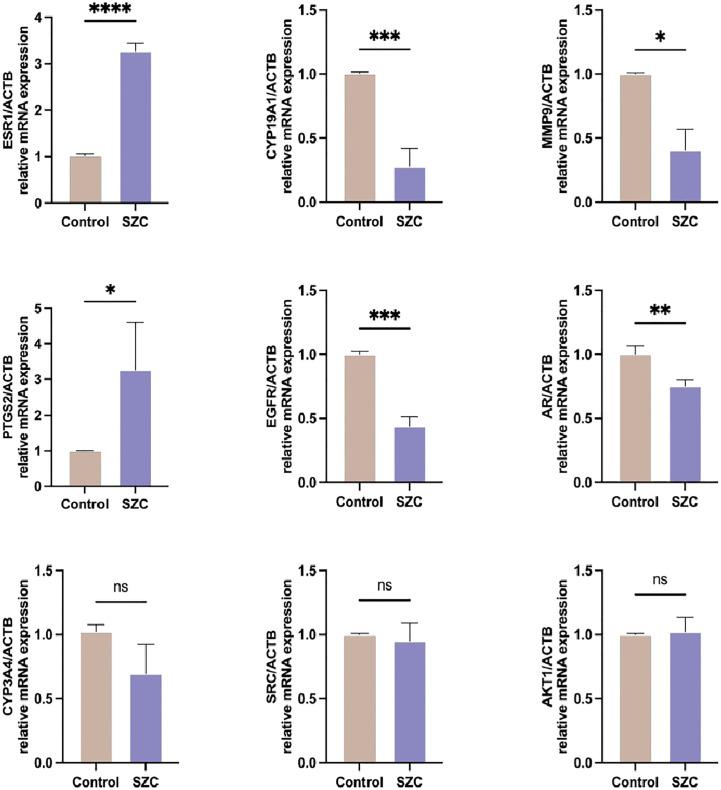
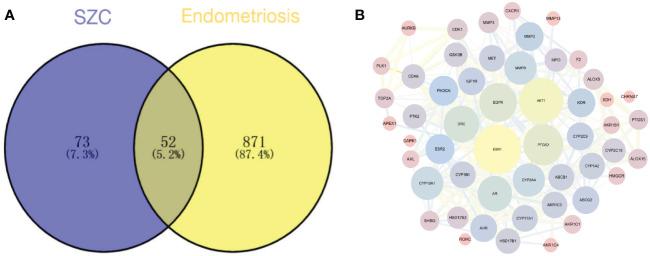
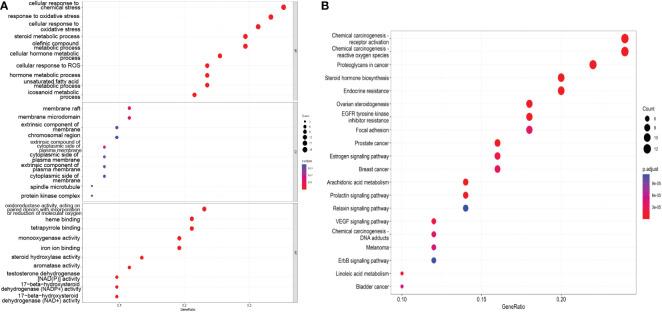
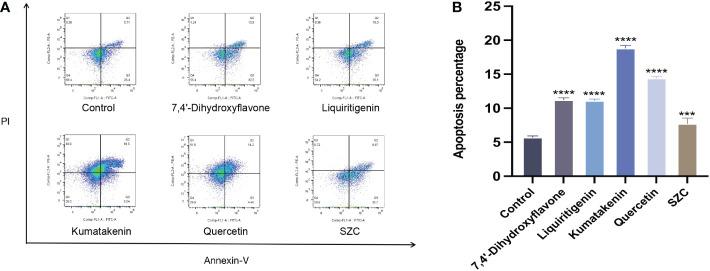
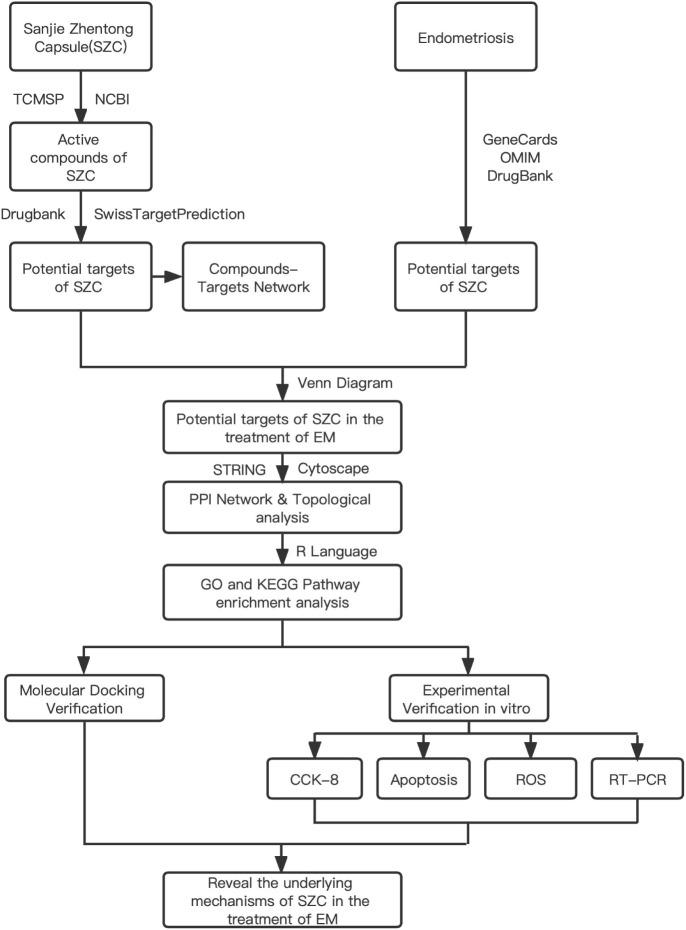
First, a drug target database of Sanjie Zhentong capsule (SZC) was established by consulting the TCMSP database and related literature. An endometriosis (EMs) disease target database was then established by consulting the GeneCards, OMIM and Drug Bank databases. The overlapping genes of SZC and EMs were determined, and protein-protein interactions (PPIs), gene ontology (GO) and Kyoto Gene and Genome Encyclopedia (KEGG) analyses were performed to predict the potential therapeutic mechanisms. Molecular docking was used to observe whether the key active ingredients and targets predicted by network pharmacology had good binding energy. Finally, experiments such as CCK-8, flow cytometry and RT-PCR assays were carried out to preliminarily verify the potential mechanisms.
Through the construction of a pharmacological network, we identified a total of 28 active components in SZC and 52 potential therapeutic targets. According to GO and KEGG enrichment analyses, the effects of SZC treatment may be related to oxidative stress, steroid metabolism, apoptosis and proliferation. We also experimentally confirmed that SZC can regulate the expression of steroid hormone biosynthesis-related genes, inhibit ectopic endometrial stromal cell (EESC) proliferation and oxidative stress, and promote apoptosis.
This study explored the potential mechanism of SZC in the treatment of EMs through network pharmacology and experiments, providing a basis for further future research on SZC in the treatment of EMs.
散结镇痛胶囊(SZC)在子宫内膜异位症(EMs)的治疗中逐渐得到广泛应用,在临床上显示出良好的疗效。然而,散结镇痛胶囊(SZC)治疗子宫内膜异位症(EMs)的活性成分和机制仍不清楚,需要进一步研究以探讨散结镇痛胶囊(SZC)的作用。
首先,通过查阅 TCMSP 数据库和相关文献,建立了散结镇痛胶囊(SZC)的药物靶点数据库。然后,通过查阅 GeneCards、OMIM 和 Drug Bank 数据库,建立了子宫内膜异位症(EMs)疾病靶点数据库。确定 SZC 和 EMs 的重叠基因,并进行蛋白质-蛋白质相互作用(PPIs)、基因本体论(GO)和京都基因与基因组百科全书(KEGG)分析,以预测潜在的治疗机制。采用分子对接观察网络药理学预测的关键活性成分和靶点是否具有良好的结合能。最后,进行 CCK-8、流式细胞术和 RT-PCR 等实验,初步验证潜在机制。
通过构建药理学网络,共鉴定出 SZC 中的 28 种活性成分和 52 个潜在治疗靶点。根据 GO 和 KEGG 富集分析,SZC 治疗的作用可能与氧化应激、类固醇代谢、凋亡和增殖有关。我们还通过实验证实,SZC 可以调节类固醇激素生物合成相关基因的表达,抑制异位子宫内膜基质细胞(EESC)的增殖和氧化应激,促进凋亡。
本研究通过网络药理学和实验探讨了 SZC 治疗 EMs 的潜在机制,为进一步研究 SZC 治疗 EMs 提供了依据。

 Zotero 插件