
术后谵妄、神经炎症与术后谵妄的影响因素:综述。
Postoperative delirium, neuroinflammation, and influencing factors of postoperative delirium: A review.
机构信息
Department of Anesthesiology, The Second Affiliated Hospital of University of South China, Hengyang, China.
Department of Anatomy, Hengyang Medical College of University of South China, Hengyang, China.
出版信息
Medicine (Baltimore). 2023 Feb 22;102(8):e32991. doi: 10.1097/MD.0000000000032991.
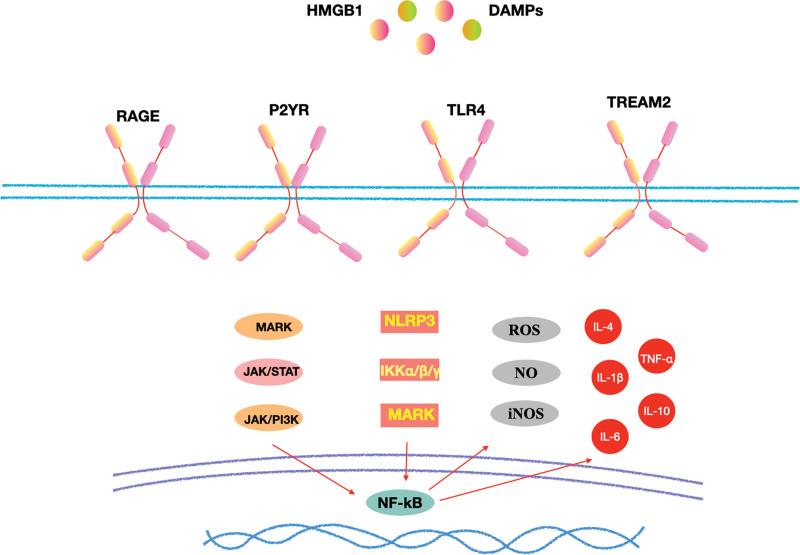
Postoperative delirium (POD) is an acute cognitive dysfunction that is mainly characterized by memory impairment and disturbances in consciousness. POD can prolong the hospital stay and increase the 1-month mortality rate of patients. The overall incidence of POD is approximately 23%, and its prevalence can go up to 50% in high-risk surgeries. Neuroinflammation is an important pathogenic mechanism of POD that mediates microglial activation and leads to synaptic remodeling. Neuroinflammation, as an indispensable pathogenesis of POD, can occur due to a variety of factors, including aseptic inflammation caused by surgery, effects of anesthetic drugs, disruption of the blood-brain barrier, and epigenetics. Understanding these factors and avoiding the occurrence of risk factors may help prevent POD in time. This review provides a brief overview of POD and neuroinflammation and summarizes various factors affecting POD development mediated by neuroinflammation, which may serve as future targets for the prevention and treatment of POD.
术后谵妄(POD)是一种急性认知功能障碍,主要表现为记忆力损害和意识障碍。POD 可延长住院时间并增加患者 1 个月的死亡率。POD 的总体发生率约为 23%,在高危手术中其患病率可高达 50%。神经炎症是 POD 的重要发病机制,介导小胶质细胞激活,导致突触重塑。神经炎症作为 POD 不可缺少的发病机制,可由多种因素引起,包括手术引起的无菌性炎症、麻醉药物的作用、血脑屏障的破坏以及表观遗传学等。了解这些因素并避免危险因素的发生可能有助于及时预防 POD。本综述简要概述了 POD 和神经炎症,并总结了神经炎症介导的各种影响 POD 发展的因素,这些因素可能成为预防和治疗 POD 的未来靶点。


 Zotero 插件