
精油对菌株的抗菌和抗生物膜活性评估
The Assessment of Antimicrobial and Anti-Biofilm Activity of Essential Oils against Strains.
作者信息
Ersanli Caglar, Tzora Athina, Skoufos Ioannis, Fotou Konstantina, Maloupa Eleni, Grigoriadou Katerina, Voidarou Chrysoula Chrysa, Zeugolis Dimitrios I
机构信息
Laboratory of Animal Science, Nutrition and Biotechnology, School of Agriculture, University of Ioannina, 47100 Arta, Greece.
Laboratory of Animal Health, Food Hygiene, and Quality, School of Agriculture, University of Ioannina, 47100 Arta, Greece.
出版信息
Antibiotics (Basel). 2023 Feb 13;12(2):384. doi: 10.3390/antibiotics12020384.
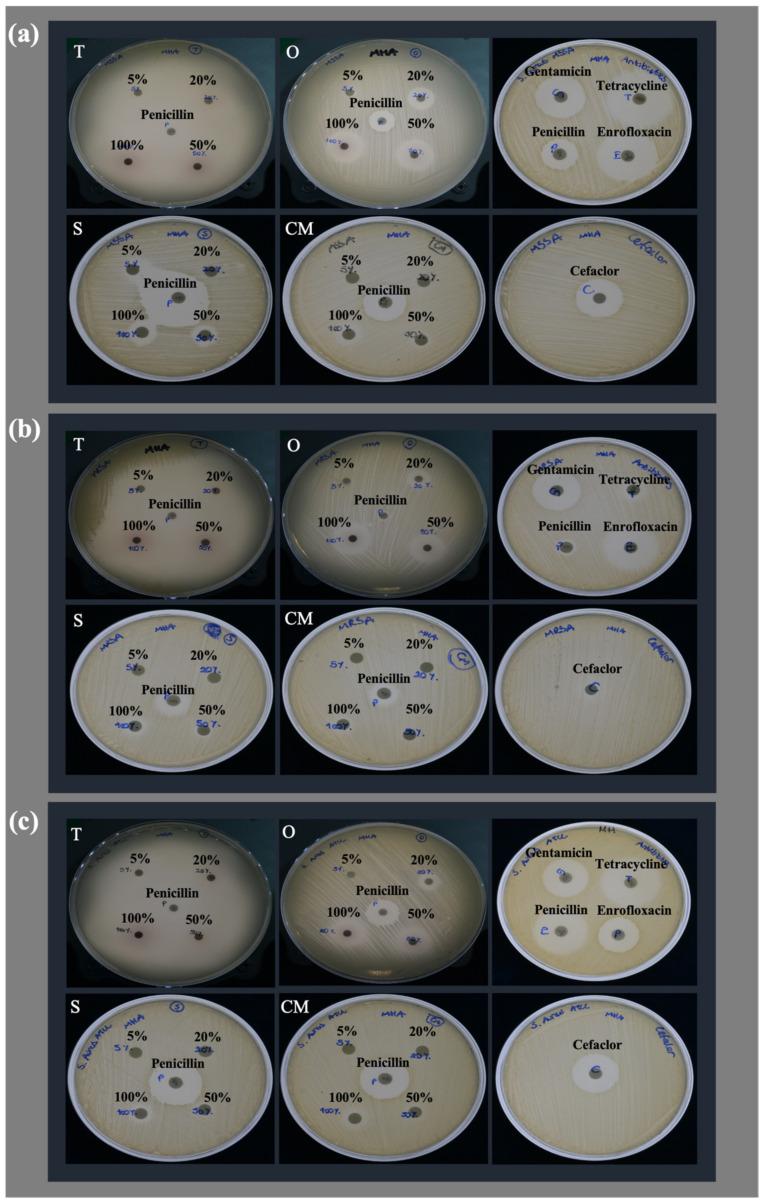
The increase in antimicrobial resistance and tolerance over the years has become a serious public health problem, leading to the inevitable development of alternative antimicrobial agents as substitutes for industrial pharmaceutical antibiotics targeting humans and animals under the concept of one health. Essential oils (EOs) extracted from aromatic and pharmaceutical plants incorporate several bioactive compounds (phytochemicals) that positively affect human and animal health. Herein, this work aimed to examine a standardized chemical composition and screen the antimicrobial and anti-biofilm activity of , , , and EOs against three different strains by gold-standard disc diffusion, broth microdilution, and microtiter plate biofilm assays. Therefore, the evaluation of the above-mentioned EOs were considered as substitutes for antibiotics to combat the ever-mounting antimicrobial resistance problem. The observed bacterial growth inhibition varied significantly depending on the type and concentration of the antimicrobials. was determined as the strongest antimicrobial, with 0.091 mg/mL minimum inhibitory concentration (MIC) and a 14-33 mm diameter inhibition zone at 5% (/) concentration. All tested EOs indicated almost 95% inhibition of biofilm formation at their half MIC, while gentamicin sulfate did not show sufficient anti-biofilm activity. None of the methicillin-resistant strains showed resistance to the EOs compared to methicillin-sensitive strains. and could be potential alternatives as antimicrobial agents to overcome the problem of microbial resistance. The tested EOs might be incorporated into antimicrobial products as safe and potent antimicrobial and anti-biofilm agents.
多年来,抗菌药物耐药性和耐受性的增加已成为一个严重的公共卫生问题,这导致在“同一健康”理念下,不可避免地要开发替代抗菌剂,以替代针对人类和动物的工业用抗生素。从芳香植物和药用植物中提取的精油含有多种生物活性化合物(植物化学物质),对人类和动物健康有积极影响。在此,本研究旨在通过金标准纸片扩散法、肉汤微量稀释法和微量滴定板生物膜测定法,检测标准化的化学成分,并筛选[具体精油名称1]、[具体精油名称2]、[具体精油名称3]和[具体精油名称4]精油对三种不同[细菌名称]菌株的抗菌和抗生物膜活性。因此,对上述精油的评估被视为对抗日益严重的抗菌耐药性问题的抗生素替代品。观察到的细菌生长抑制因抗菌剂的类型和浓度而异。[具体精油名称1]被确定为最强的抗菌剂,最低抑菌浓度(MIC)为0.091 mg/mL,在5%(/)浓度下抑菌圈直径为14 - 33 mm。所有测试的精油在其半数MIC时几乎都显示出95%的生物膜形成抑制率,而硫酸庆大霉素未显示出足够的抗生物膜活性。与甲氧西林敏感菌株相比,耐甲氧西林菌株对这些精油均未表现出耐药性。[具体精油名称2]和[具体精油名称3]可能是克服微生物耐药性问题的潜在抗菌剂替代品。所测试的精油可作为安全有效的抗菌和抗生物膜剂纳入抗菌产品中。


 Zotero 插件