
感染的循证治疗:批判性重新评估
Evidence-Based Treatment of Infections: A Critical Reappraisal.
作者信息
Karruli Arta, Catalini Christian, D'Amore Chiara, Foglia Francesco, Mari Fabio, Harxhi Arjan, Galdiero Massimiliano, Durante-Mangoni Emanuele
机构信息
Department of Precision Medicine, University of Campania 'Luigi Vanvitelli', 80138 Naples, Italy.
Department of Infectious Diseases, University Hospital "Mother Teresa", 10001 Tirana, Albania.
出版信息
Antibiotics (Basel). 2023 Feb 16;12(2):399. doi: 10.3390/antibiotics12020399.
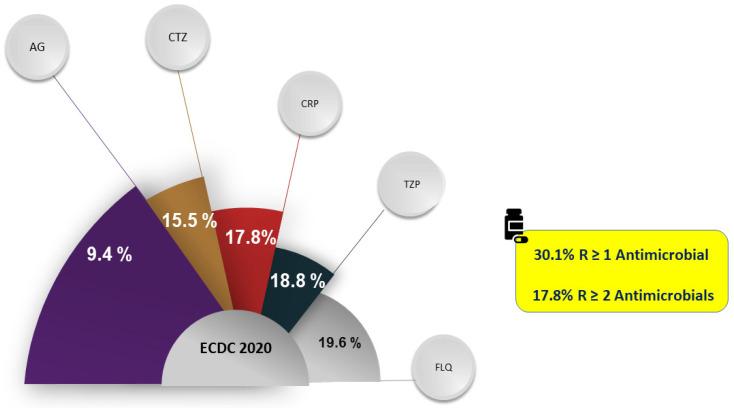
Multidrug-resistant (MDR)/extensively drug-resistant (XDR) is emerging as a major threat related to adverse patient outcomes. The goal of this review is to describe evidence-based empiric and targeted treatment regimens that can be exploited when dealing with suspected or confirmed infections due to MDR/XDR . has inherent resistance to many drug classes, the capacity to form biofilms, and most importantly, the ability to quickly acquire resistance to ongoing treatments. Based on the presence of risk factors for MDR/XDR infections and local epidemiology, where large proportions of strains are resistant to classic beta-lactams, the recommended empirical treatment for suspected infections is based on ceftolozane-tazobactam or ceftazidime-avibactam. Where local epidemiology indicates low rates of MDR/XDR and there are no risk factors, a third or fourth generation cephalosporin can be used in the context of a "carbapenem-sparing" strategy. Whenever feasible, antibiotic de-escalation is recommended after antimicrobial susceptibility tests suggest that it is appropriate, and de-escalation is based on different resistance mechanisms. Cefiderocol and imipenem-cilastatin-relebactam withstand most resistance mechanisms and may remain active in cases with resistance to other new antibiotics. Confronting the growing threat of MDR/XDR , treatment choices should be wise, sparing newer antibiotics when dealing with a suspected/confirmed susceptible strain and choosing the right option for MDR/XDR based on specific types and resistance mechanisms.
多重耐药(MDR)/广泛耐药(XDR)正成为与患者不良预后相关的主要威胁。本综述的目的是描述在处理疑似或确诊的MDR/XDR感染时可采用的循证经验性和靶向治疗方案。[病原体名称]对许多药物类别具有固有耐药性,具有形成生物膜的能力,最重要的是,能够迅速获得对正在进行的治疗的耐药性。基于MDR/XDR感染的危险因素的存在以及当地的流行病学情况,在很大比例的菌株对经典β-内酰胺类耐药的情况下,对于疑似[病原体名称]感染的推荐经验性治疗基于头孢洛扎坦-他唑巴坦或头孢他啶-阿维巴坦。在当地流行病学表明MDR/XDR发生率较低且不存在危险因素的情况下,可以在“碳青霉烯类药物节约”策略的背景下使用第三代或第四代头孢菌素。只要可行,在抗菌药敏试验表明合适后建议进行抗生素降阶梯治疗,降阶梯治疗基于不同的耐药机制。头孢地尔和亚胺培南-西司他丁-雷利巴坦能抵御大多数耐药机制,并且在对其他新型抗生素耐药的情况下可能仍保持活性。面对MDR/XDR日益增长的威胁,治疗选择应明智,在处理疑似/确诊的敏感[病原体名称]菌株时节约使用新型抗生素,并根据特定类型和耐药机制为MDR/XDR选择正确的治疗方案。

 Zotero 插件