
靶向骨膜蛋白表达使胰腺癌球体对自然杀伤细胞更敏感。
Targeting Periostin Expression Makes Pancreatic Cancer Spheroids More Vulnerable to Natural Killer Cells.
作者信息
Karakas Didem, Erkisa Merve, Akar Remzi Okan, Akman Gizem, Senol Ezgi Yudum, Ulukaya Engin
机构信息
Department of Molecular Biology and Genetics, Faculty of Engineering and Natural Sciences, Istinye University, Istanbul 34010, Turkey.
Istinye University Molecular Cancer Research Center (ISUMKAM), Istinye University, Istanbul 34010, Turkey.
出版信息
Biomedicines. 2023 Jan 19;11(2):270. doi: 10.3390/biomedicines11020270.
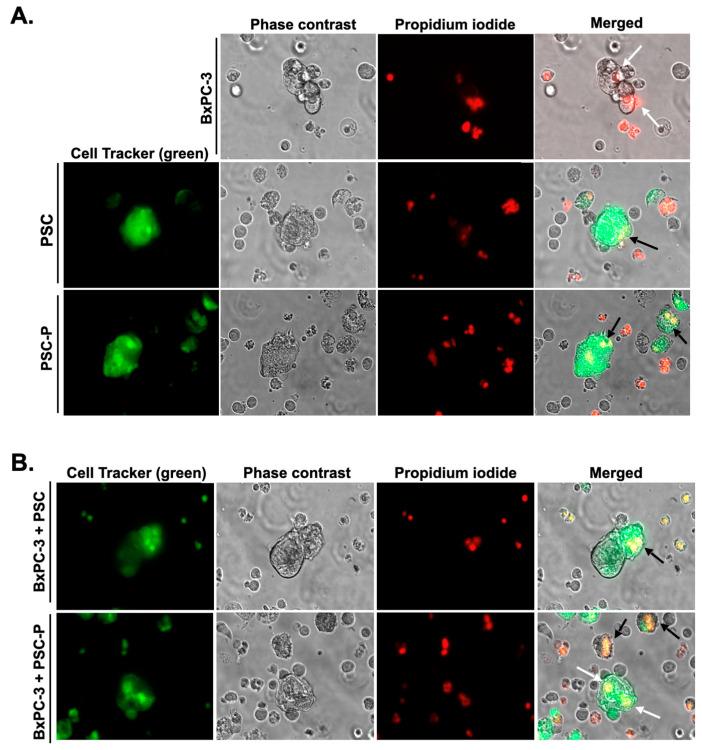
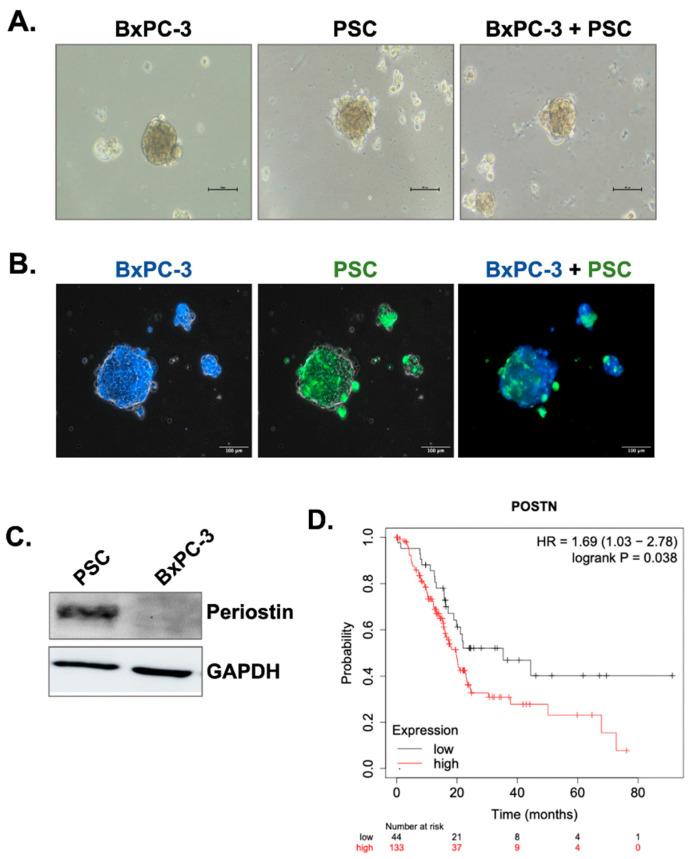
Pancreatic cancer (PaCa) characteristically has a dense tumor microenvironment, which results in poor patient prognosis. Pancreatic stellate cells (PSCs) are the most abundant cells in the PaCa microenvironment and the principal source of collagen. Periostin, a matricellular protein, is produced specifically by PSCs and promotes the aggressiveness of PaCa cells by facilitating extracellular collagen assembly. Here, we aimed to decrease extracellular collagen assembly by suppressing periostin, thereby increasing the cytotoxic activity of natural killer (NK) cells. Periostin expression was suppressed in PSCs (called PSC-P) using CRISPR-Cas9. PaCa cells (BxPC-3) were co-cultured with PSC and PSC-P cells in a 3D environment to form tumor spheroids mimicking the tumor microenvironment. The extracellular collagen production of spheroids was evaluated by Masson's trichrome staining. The cytotoxic activity of NK-92 cells was analyzed by flow cytometry and confocal microscopy via CD107a staining. Cell death in BxPC-3 cells was evaluated by measuring Annexin-V and PI positivity using flow cytometry. As a result, periostin suppression decreased extracellular collagen and increased the infiltration of NK-92 cells into spheroids, and induced cell death in PaCa cells. In conclusion, we suggest that periostin might be a therapeutic target for PaCa and further analysis is warranted using in vivo models for proof-of-concept.
胰腺癌(PaCa)的特征是具有致密的肿瘤微环境,这导致患者预后不良。胰腺星状细胞(PSC)是PaCa微环境中最丰富的细胞,也是胶原蛋白的主要来源。骨膜蛋白是一种基质细胞蛋白,由PSC特异性产生,并通过促进细胞外胶原蛋白组装来促进PaCa细胞的侵袭性。在这里,我们旨在通过抑制骨膜蛋白来减少细胞外胶原蛋白组装,从而增强自然杀伤(NK)细胞的细胞毒性活性。使用CRISPR-Cas9抑制PSC(称为PSC-P)中的骨膜蛋白表达。将PaCa细胞(BxPC-3)与PSC和PSC-P细胞在三维环境中共培养以形成模拟肿瘤微环境的肿瘤球体。通过Masson三色染色评估球体的细胞外胶原蛋白产生。通过流式细胞术和共聚焦显微镜通过CD107a染色分析NK-92细胞的细胞毒性活性。通过使用流式细胞术测量膜联蛋白-V和PI阳性来评估BxPC-3细胞中的细胞死亡。结果,骨膜蛋白抑制减少了细胞外胶原蛋白,并增加了NK-92细胞向球体的浸润,并诱导PaCa细胞死亡。总之,我们认为骨膜蛋白可能是PaCa的治疗靶点,有必要使用体内模型进行进一步分析以验证概念。


 Zotero 插件