
益生菌对非酒精性脂肪性肝病患者小肠微生物群组成、炎性细胞因子及肠道通透性的影响
The Effects of Probiotics on Small Intestinal Microbiota Composition, Inflammatory Cytokines and Intestinal Permeability in Patients with Non-Alcoholic Fatty Liver Disease.
作者信息
Ayob Nurainina, Muhammad Nawawi Khairul Najmi, Mohamad Nor Mohamad Hizami, Raja Ali Raja Affendi, Ahmad Hajar Fauzan, Oon Seok Fang, Mohd Mokhtar Norfilza
机构信息
Department of Physiology, Faculty of Medicine, Universiti Kebangsaan Malaysia, Kuala Lumpur 56000, Malaysia.
Gastroenterology and Hepatology Unit, Department of Medicine, Faculty of Medicine, Universiti Kebangsaan Malaysia, Kuala Lumpur 56000, Malaysia.
出版信息
Biomedicines. 2023 Feb 20;11(2):640. doi: 10.3390/biomedicines11020640.
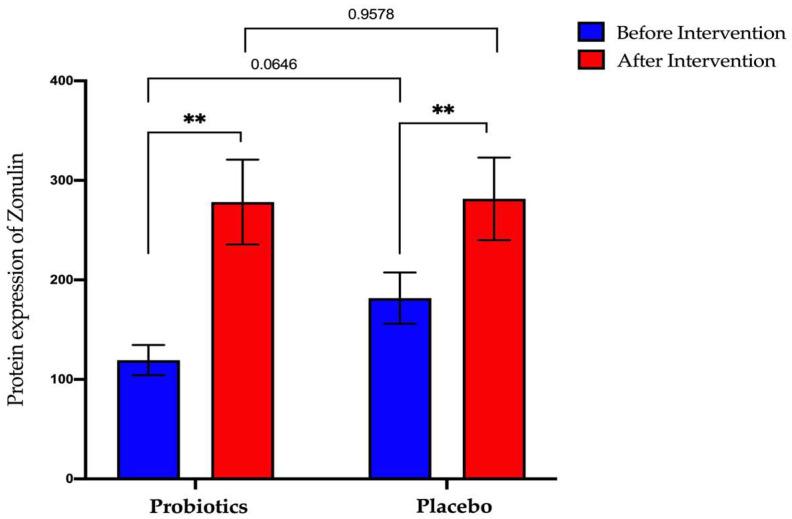
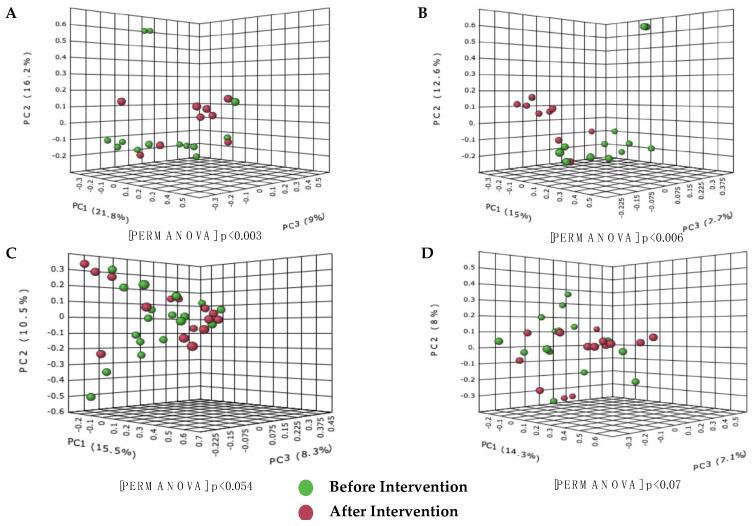
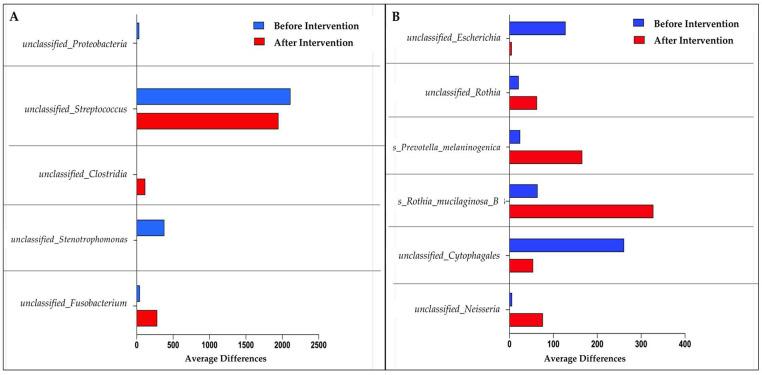
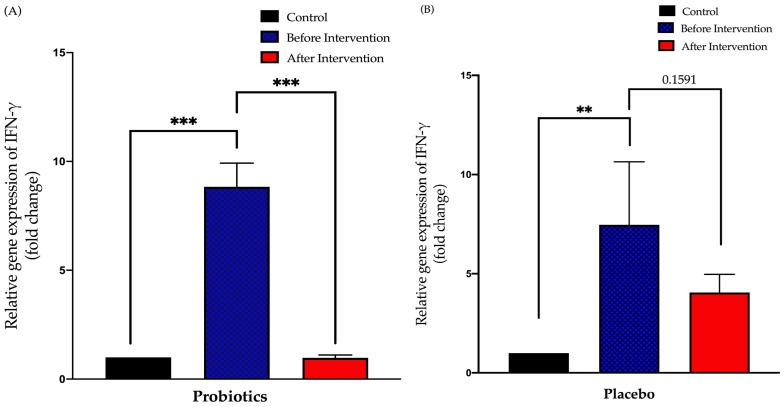
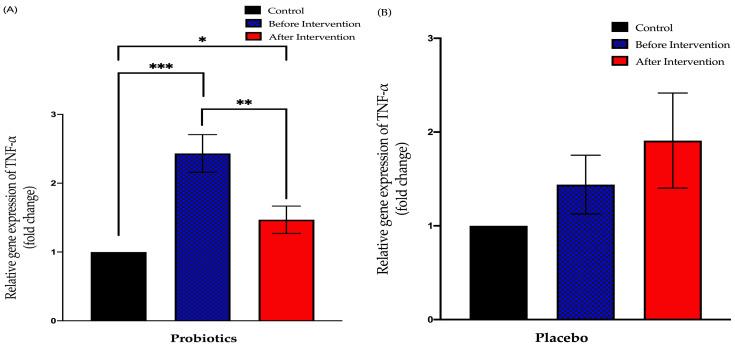
The prevalence of non-alcoholic fatty liver disease (NAFLD) has soared globally. As our understanding of the disease grows, the role of the gut-liver axis (GLA) in NAFLD pathophysiology becomes more apparent. Hence, we focused mainly on the small intestinal area to explore the role of GLA. We looked at how multi-strain probiotics (MCP BCMC strains) containing six different and species affected the small intestinal gut microbiota, inflammatory cytokines, and permeability in NAFLD patients. After six months of supplementation, biochemical blood analysis did not show any discernible alterations in either group. Five predominant phyla known as Actinobacteria, Proteobacteria, Firmicutes, Bacteroidota and Fusobacteria were found in NAFLD patients. The probiotics group demonstrated a significant cluster formation of microbiota composition through beta-diversity analysis ( < 0.05). This group significantly reduced three unclassifiable species: and . In contrast, the placebo group showed a significant increase in and , which were classified as pathogens. Real-time quantitative PCR analysis of small intestinal mucosal inflammatory cytokines revealed a significant decrease in IFN-γ (-7.9 ± 0.44, 0.0001) and TNF-α (-0.96 ± 0.25, 0.0033) in the probiotics group but an increase in IL-6 (12.79 ± 2.24, 0.0001). In terms of small intestinal permeability analysis, the probiotics group, unfortunately, did not show any positive changes through ELISA analysis. Both probiotics and placebo groups exhibited a significant increase in the level of circulating zonulin (probiotics: 107.6 ng/mL ± 124.7, = 0.005 vs. placebo: 106.9 ng/mL ± 101.3, = 0.0002) and a significant decrease in circulating zonula occluden-1 (ZO-1) (probiotics: -34.51 ng/mL ± 18.38, < 0.0001 vs. placebo: -33.34 ng/mL ± 16.62, = 0.0001). The consumption of and suggested the presence of a well-balanced gut microbiota composition. Probiotic supplementation improves dysbiosis in NAFLD patients. This eventually stabilised the expression of inflammatory cytokines and mucosal immune function. To summarise, more research on probiotic supplementation as a supplement to a healthy diet and lifestyle is required to address NAFLD and its underlying causes.
非酒精性脂肪性肝病(NAFLD)在全球的患病率急剧上升。随着我们对该疾病认识的不断深入,肠-肝轴(GLA)在NAFLD病理生理学中的作用愈发明显。因此,我们主要聚焦于小肠区域来探究GLA的作用。我们研究了含有六种不同[具体菌名未给出]的多菌株益生菌(MCP BCMC菌株)如何影响NAFLD患者的小肠肠道微生物群、炎性细胞因子和通透性。补充六个月后,两组患者的血液生化分析均未显示出任何明显变化。在NAFLD患者中发现了五种主要的菌门,分别是放线菌门、变形菌门、厚壁菌门、拟杆菌门和梭杆菌门。通过β多样性分析发现,益生菌组的微生物群组成呈现出显著的聚类形成(P<0.05)。该组显著减少了三种无法分类的菌种:[具体菌种未给出]。相比之下,安慰剂组中被归类为病原体的[具体菌种未给出]和[具体菌种未给出]显著增加。小肠黏膜炎性细胞因子的实时定量PCR分析显示,益生菌组的IFN-γ显著降低(-7.9±0.44,P<0.0001)和TNF-α显著降低(-0.96±0.25,P=0.0033),但IL-6增加(12.79±2.24,P<0.0001)。在小肠通透性分析方面,遗憾的是,通过ELISA分析,益生菌组未显示出任何积极变化。益生菌组和安慰剂组的循环中连蛋白水平均显著升高(益生菌组:107.6 ng/mL±124.7,P=0.005;安慰剂组:106.9 ng/mL±101.3,P=0.0002),而循环中闭合蛋白-1(ZO-1)显著降低(益生菌组:-34.51 ng/mL±18.38,P<0.0001;安慰剂组:-33.34 ng/mL±16.62,P=0.0001)。[具体菌名未给出]和[具体菌名未给出]的存在表明肠道微生物群组成良好。补充益生菌可改善NAFLD患者的肠道菌群失调。这最终稳定了炎性细胞因子的表达和黏膜免疫功能。总之,需要更多关于补充益生菌作为健康饮食和生活方式补充剂的研究,以应对NAFLD及其潜在病因。




 Zotero 插件