
细菌聚羟基烷酸酯(PHA)在可持续未来中的作用:生物多样性综述。
The Role of Bacterial Polyhydroalkanoate (PHA) in a Sustainable Future: A Review on the Biological Diversity.
机构信息
Department of Life Sciences, Centre for Mechanical Engineering, Materials and Processes, University of Coimbra, 3000-456 Coimbra, Portugal.
出版信息
Int J Environ Res Public Health. 2023 Feb 8;20(4):2959. doi: 10.3390/ijerph20042959.
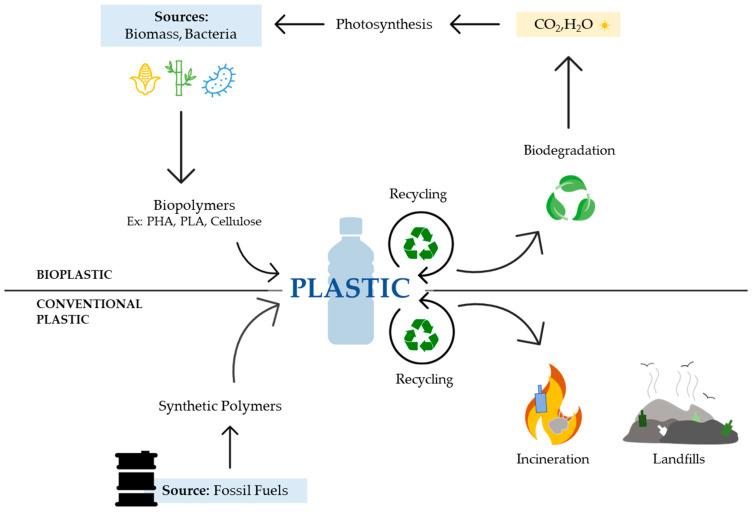
Environmental challenges related to the mismanagement of plastic waste became even more evident during the COVID-19 pandemic. The need for new solutions regarding the use of plastics came to the forefront again. Polyhydroxyalkanoates (PHA) have demonstrated their ability to replace conventional plastics, especially in packaging. Its biodegradability and biocompatibility makes this material a sustainable solution. The cost of PHA production and some weak physical properties compared to synthetic polymers remain as the main barriers to its implementation in the industry. The scientific community has been trying to solve these disadvantages associated with PHA. This review seeks to frame the role of PHA and bioplastics as substitutes for conventional plastics for a more sustainable future. It is focused on the bacterial production of PHA, highlighting the current limitations of the production process and, consequently, its implementation in the industry, as well as reviewing the alternatives to turn the production of bioplastics into a sustainable and circular economy.
环境挑战与塑料废物管理不善有关,在 COVID-19 大流行期间变得更加明显。再次需要新的解决方案来解决塑料的使用问题。聚羟基烷酸酯(PHA)已经证明了它们在包装等方面替代传统塑料的能力。其生物降解性和生物相容性使其成为一种可持续的解决方案。PHA 生产的成本以及与合成聚合物相比的一些较弱的物理性能仍然是其在工业中实施的主要障碍。科学界一直在努力解决与 PHA 相关的这些缺点。本综述旨在探讨 PHA 和生物塑料作为传统塑料替代品的作用,以实现更可持续的未来。它侧重于 PHA 的细菌生产,强调了生产过程的当前限制,以及因此在工业中的实施,同时还回顾了将生物塑料生产转化为可持续和循环经济的替代方案。



 Zotero 插件