
罕见 CFTR 转运突变体的挽救突出了一个结构位置依赖的校正模式。
Rescue of Rare CFTR Trafficking Mutants Highlights a Structural Location-Dependent Pattern for Correction.
机构信息
Biosystems and Integrative Sciences Institute, Faculty of Sciences, University of Lisboa, Campo Grande, 1749-016 Lisboa, Portugal.
出版信息
Int J Mol Sci. 2023 Feb 6;24(4):3211. doi: 10.3390/ijms24043211.
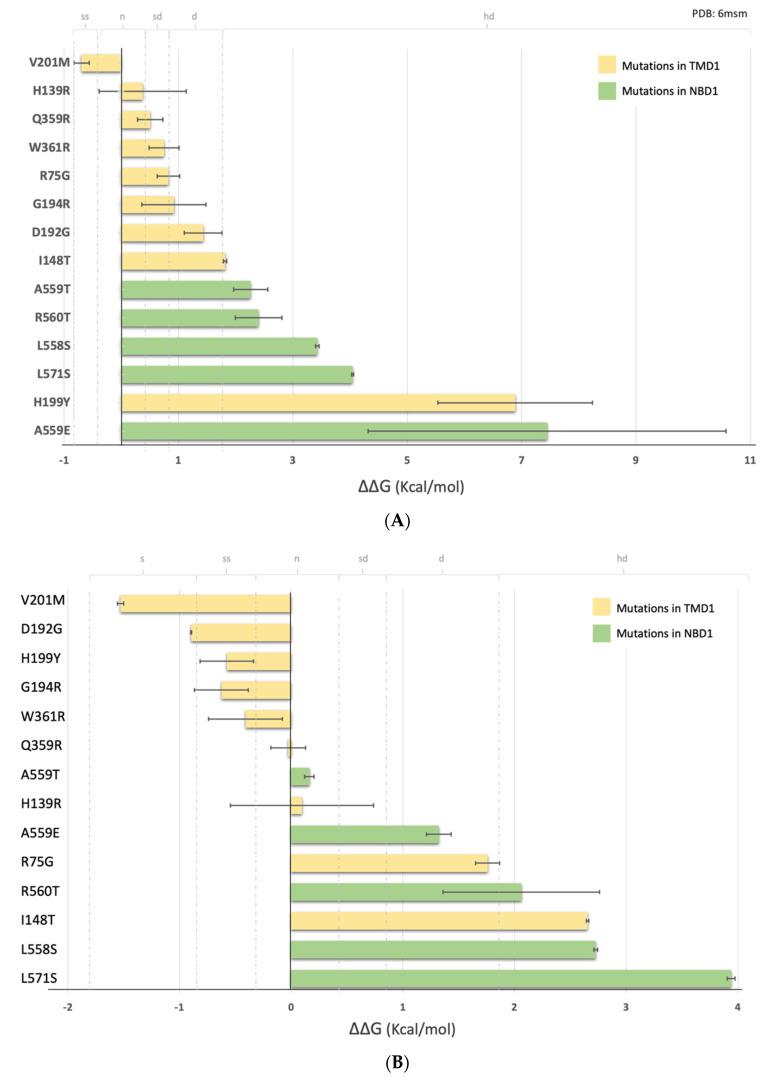
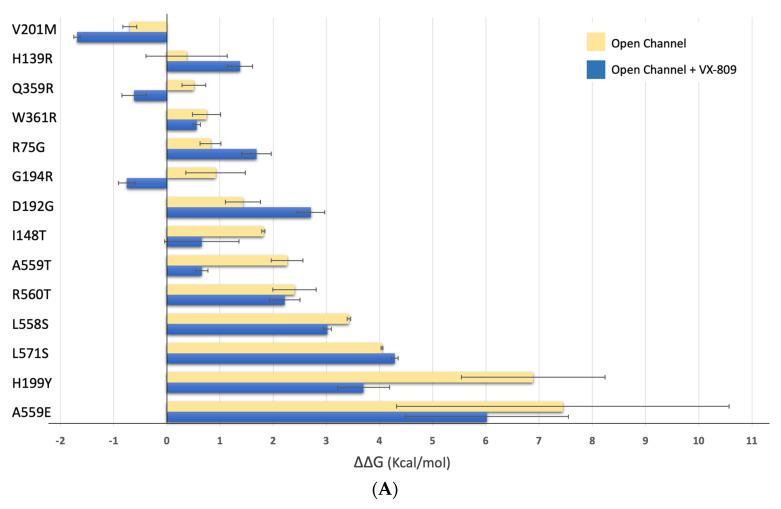
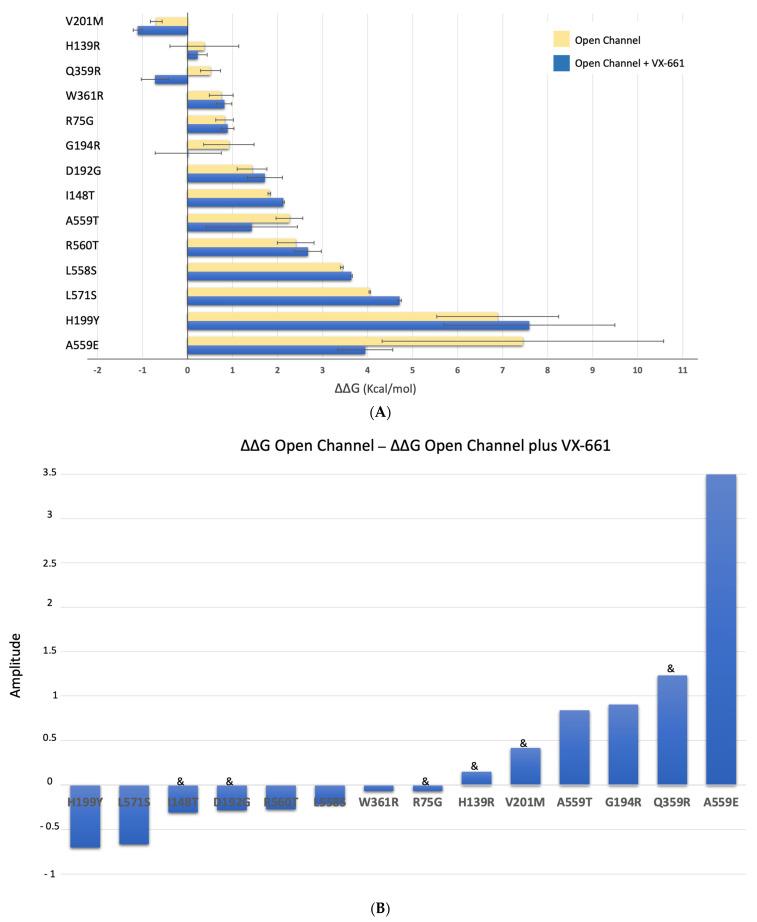
Cystic Fibrosis (CF) is a genetic disease caused by mutations in the gene encoding the Cystic Fibrosis Transmembrane Conductance Regulator (CFTR) channel. Currently, more than 2100 variants have been identified in the gene, with a large number being very rare. The approval of modulators that act on mutant CFTR protein, correcting its molecular defect and thus alleviating the burden of the disease, revolutionized the field of CF. However, these drugs do not apply to all patients with CF, especially those with rare mutations-for which there is a lack of knowledge on the molecular mechanisms of the disease and the response to modulators. In this work, we evaluated the impact of several rare putative class II mutations on the expression, processing, and response of CFTR to modulators. Novel cell models consisting of bronchial epithelial cell lines expressing CFTR with 14 rare variants were created. The variants studied are localized at Transmembrane Domain 1 (TMD1) or very close to the signature motif of Nucleotide Binding Domain 1 (NBD1). Our data show that all mutations analyzed significantly decrease CFTR processing and while TMD1 mutations respond to modulators, those localized in NBD1 do not. Molecular modeling calculations confirm that the mutations in NBD1 induce greater destabilization of CFTR structure than those in TMD1. Furthermore, the structural proximity of TMD1 mutants to the reported binding site of CFTR modulators such as VX-809 and VX-661, make them more efficient in stabilizing the CFTR mutants analyzed. Overall, our data suggest a pattern for mutation location and impact in response to modulators that correlates with the global effect of the mutations on CFTR structure.
囊性纤维化(CF)是一种由编码囊性纤维化跨膜电导调节因子(CFTR)通道的基因突变引起的遗传疾病。目前,该基因中已鉴定出超过 2100 种变体,其中大量变体非常罕见。调节剂的批准作用于突变 CFTR 蛋白,纠正其分子缺陷,从而减轻疾病负担,彻底改变了 CF 的领域。然而,这些药物并不适用于所有 CF 患者,特别是那些罕见突变的患者-对于这些患者,缺乏对疾病的分子机制和对调节剂的反应的了解。在这项工作中,我们评估了几种罕见假定的 II 类突变对 CFTR 的表达、加工和对调节剂的反应的影响。创建了由表达 CFTR 的支气管上皮细胞系组成的新型细胞模型,这些细胞系表达了 14 种罕见变体。研究的变体位于跨膜域 1(TMD1)或非常接近核苷酸结合域 1(NBD1)的特征基序。我们的数据表明,所有分析的突变都显著降低了 CFTR 的加工,而 TMD1 突变对调节剂有反应,而 NBD1 中的突变则没有。分子建模计算证实,NBD1 中的突变比 TMD1 中的突变更能引起 CFTR 结构的不稳定性。此外,TMD1 突变体与 CFTR 调节剂(如 VX-809 和 VX-661)的报道结合位点的结构接近,使它们更有效地稳定分析的 CFTR 突变体。总的来说,我们的数据表明,突变位置和对调节剂的反应模式与突变对 CFTR 结构的整体影响相关。


 Zotero 插件