
用于深部组织光动力疗法的X射线激活纳米平台
X-ray Activated Nanoplatforms for Deep Tissue Photodynamic Therapy.
作者信息
Souris Jeffrey S, Leoni Lara, Zhang Hannah J, Pan Ariel, Tanios Eve, Tsai Hsiu-Ming, Balyasnikova Irina V, Bissonnette Marc, Chen Chin-Tu
机构信息
Department of Radiology, The University of Chicago, Chicago, IL 60637, USA.
Integrated Small Animal Imaging Research Resource, Office of Shared Research Facilities, The University of Chicago, Chicago, IL 60637, USA.
出版信息
Nanomaterials (Basel). 2023 Feb 9;13(4):673. doi: 10.3390/nano13040673.
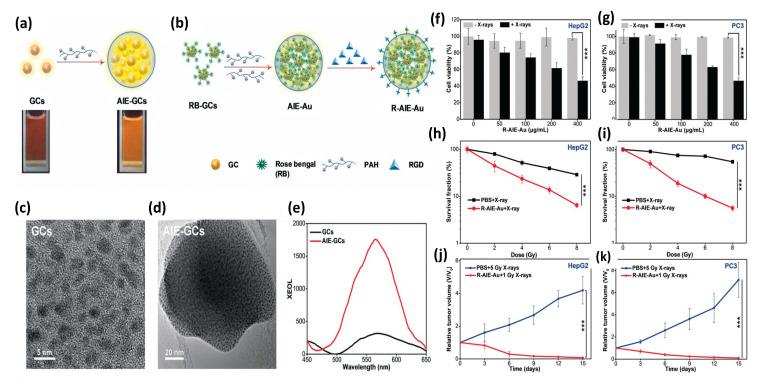
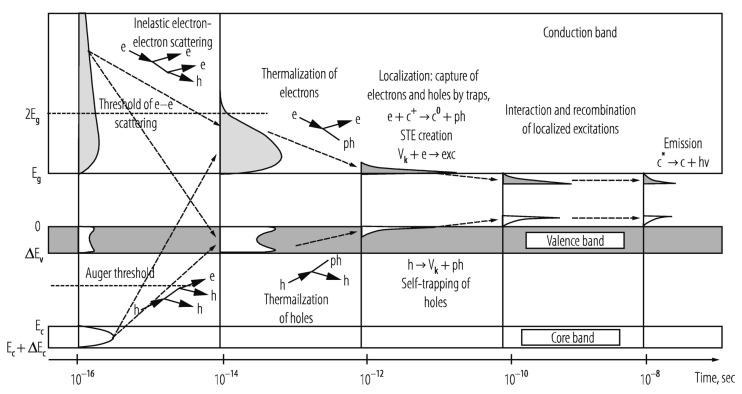
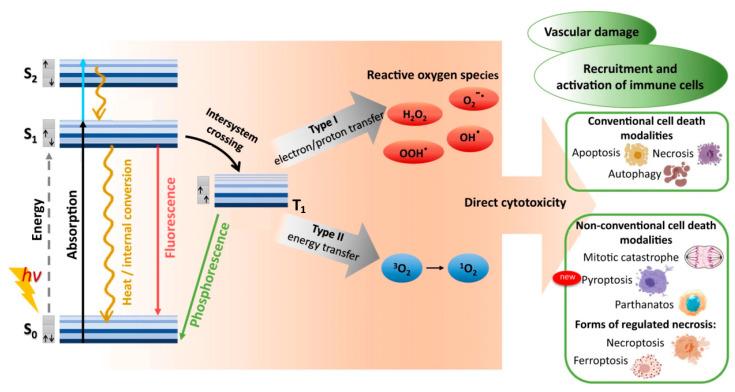
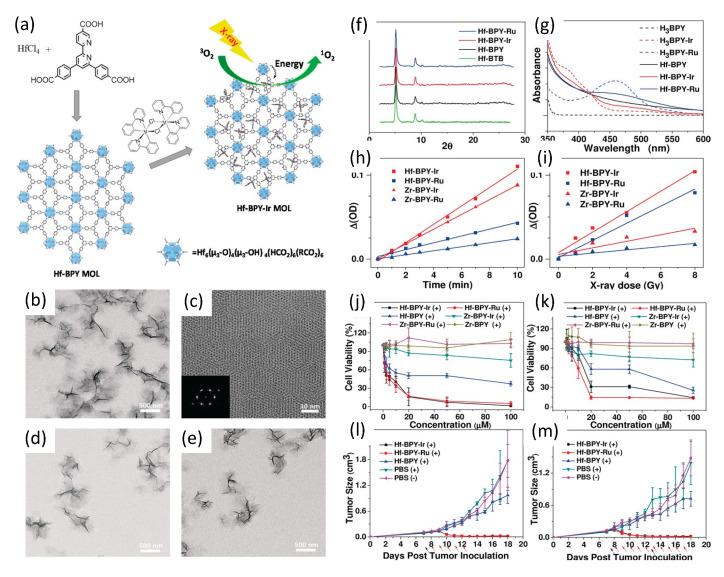
Photodynamic therapy (PDT), the use of light to excite photosensitive molecules whose electronic relaxation drives the production of highly cytotoxic reactive oxygen species (ROS), has proven an effective means of oncotherapy. However, its application has been severely constrained to superficial tissues and those readily accessed either endoscopically or laparoscopically, due to the intrinsic scattering and absorption of photons by intervening tissues. Recent advances in the design of nanoparticle-based X-ray scintillators and photosensitizers have enabled hybridization of these moieties into single nanocomposite particles. These nanoplatforms, when irradiated with diagnostic doses and energies of X-rays, produce large quantities of ROS and permit, for the first time, non-invasive deep tissue PDT of tumors with few of the therapeutic limitations or side effects of conventional PDT. In this review we examine the underlying principles and evolution of PDT: from its initial and still dominant use of light-activated, small molecule photosensitizers that passively accumulate in tumors, to its latest development of X-ray-activated, scintillator-photosensitizer hybrid nanoplatforms that actively target cancer biomarkers. Challenges and potential remedies for the clinical translation of these hybrid nanoplatforms and X-ray PDT are also presented.
光动力疗法(PDT)是利用光激发光敏分子,其电子弛豫驱动产生高细胞毒性的活性氧(ROS),已被证明是一种有效的肿瘤治疗方法。然而,由于中间组织对光子的固有散射和吸收,其应用严重局限于浅表组织以及那些易于通过内镜或腹腔镜进入的组织。基于纳米颗粒的X射线闪烁体和光敏剂设计的最新进展,使得这些部分能够杂交成单个纳米复合颗粒。这些纳米平台在接受诊断剂量和能量的X射线照射时,会产生大量的ROS,并首次实现了对肿瘤的非侵入性深部组织光动力疗法,且几乎没有传统光动力疗法的治疗局限性或副作用。在这篇综述中,我们研究了光动力疗法的基本原理和发展历程:从最初且仍占主导地位的使用光激活的小分子光敏剂被动积聚在肿瘤中,到其最新发展的X射线激活的闪烁体 - 光敏剂混合纳米平台主动靶向癌症生物标志物。还介绍了这些混合纳米平台和X射线光动力疗法临床转化面临的挑战和潜在解决方案。





 Zotero 插件