
植物盐胁迫期间活性氧的调控及其与其他信号分子的相互作用——当前观点与未来方向
Regulation of Reactive Oxygen Species during Salt Stress in Plants and Their Crosstalk with Other Signaling Molecules-Current Perspectives and Future Directions.
作者信息
Kesawat Mahipal Singh, Satheesh Neela, Kherawat Bhagwat Singh, Kumar Ajay, Kim Hyun-Uk, Chung Sang-Min, Kumar Manu
机构信息
Department of Genetics and Plant Breeding, Faculty of Agriculture, Sri Sri University, Cuttack 754006, India.
Department of Food Nutrition and Dietetics, Faculty of Agriculture, Sri Sri University, Cuttack 754006, India.
出版信息
Plants (Basel). 2023 Feb 14;12(4):864. doi: 10.3390/plants12040864.
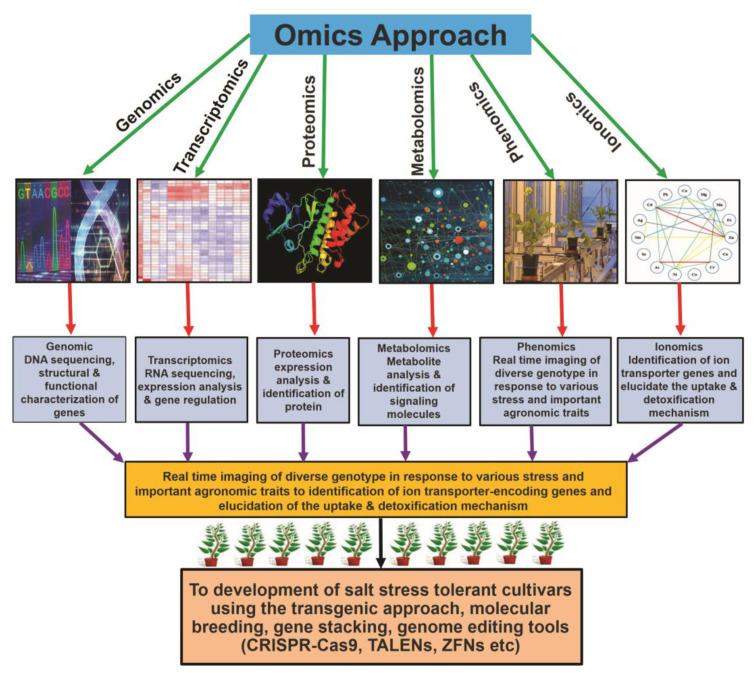
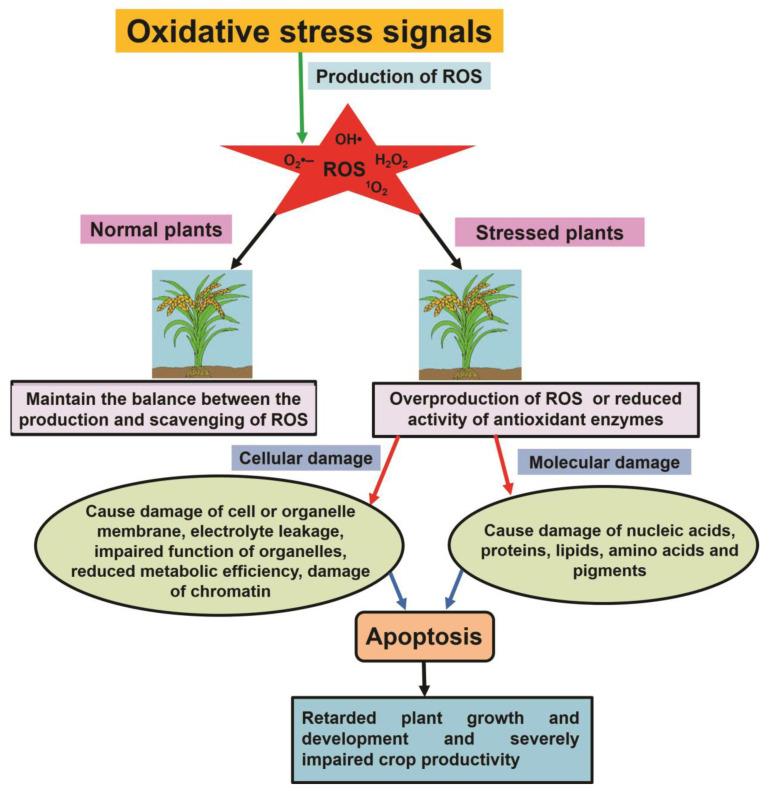
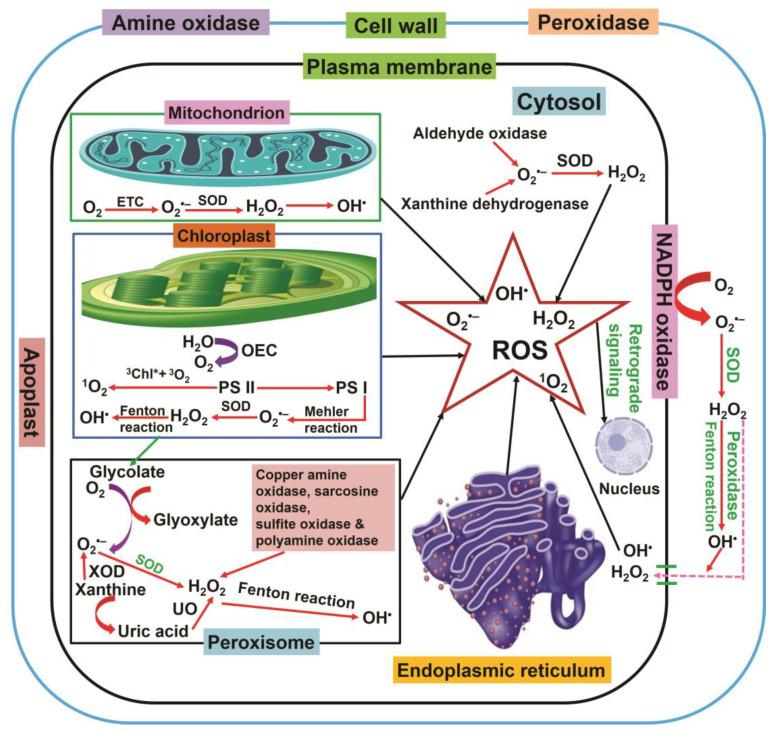
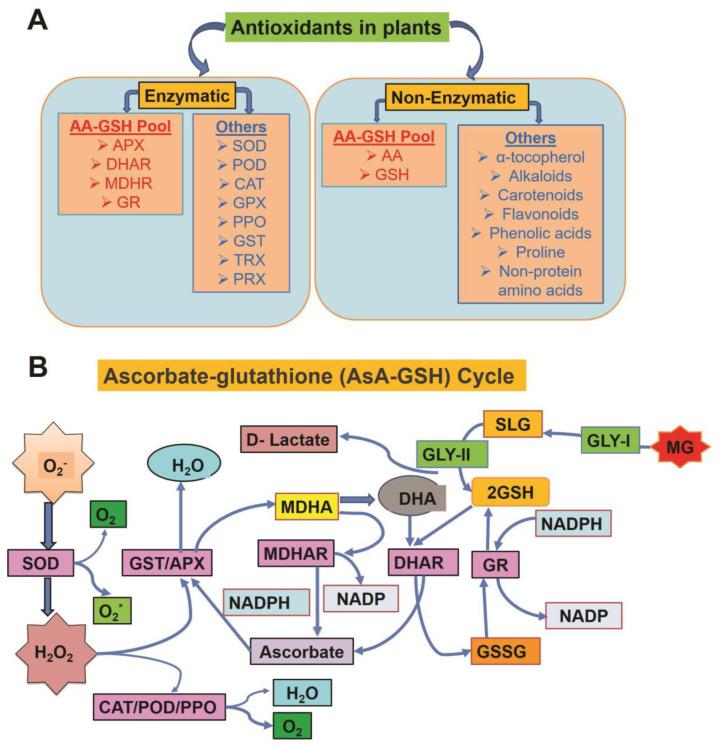
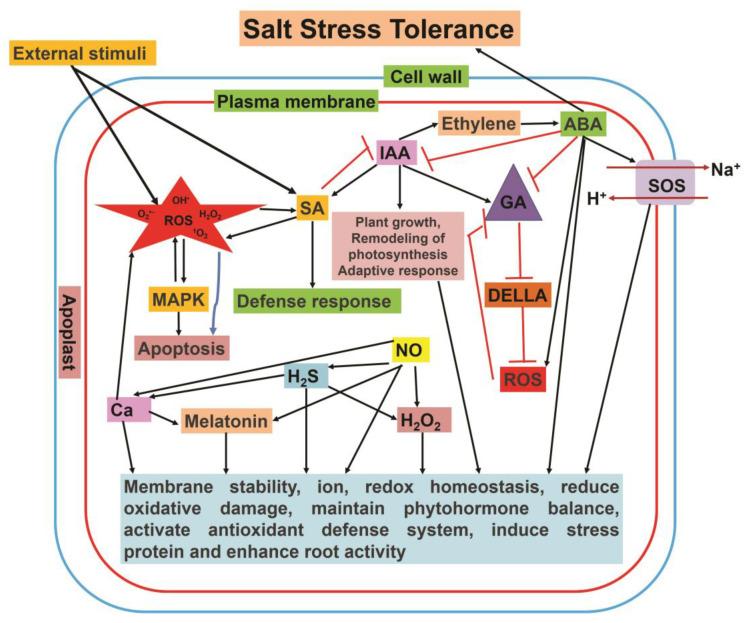
Salt stress is a severe type of environmental stress. It adversely affects agricultural production worldwide. The overproduction of reactive oxygen species (ROS) is the most frequent phenomenon during salt stress. ROS are extremely reactive and, in high amounts, noxious, leading to destructive processes and causing cellular damage. However, at lower concentrations, ROS function as secondary messengers, playing a critical role as signaling molecules, ensuring regulation of growth and adjustment to multifactorial stresses. Plants contain several enzymatic and non-enzymatic antioxidants that can detoxify ROS. The production of ROS and their scavenging are important aspects of the plant's normal response to adverse conditions. Recently, this field has attracted immense attention from plant scientists; however, ROS-induced signaling pathways during salt stress remain largely unknown. In this review, we will discuss the critical role of different antioxidants in salt stress tolerance. We also summarize the recent advances on the detrimental effects of ROS, on the antioxidant machinery scavenging ROS under salt stress, and on the crosstalk between ROS and other various signaling molecules, including nitric oxide, hydrogen sulfide, calcium, and phytohormones. Moreover, the utilization of "-omic" approaches to improve the ROS-regulating antioxidant system during the adaptation process to salt stress is also described.
盐胁迫是一种严重的环境胁迫类型。它对全球农业生产产生不利影响。活性氧(ROS)的过量产生是盐胁迫期间最常见的现象。ROS具有极强的反应性,大量存在时具有毒性,会导致破坏性过程并造成细胞损伤。然而,在较低浓度下,ROS作为第二信使发挥作用,作为信号分子起着关键作用,确保生长调节和对多因素胁迫的适应。植物含有几种能够清除ROS的酶促和非酶促抗氧化剂。ROS的产生及其清除是植物对不利条件正常反应的重要方面。最近,这一领域引起了植物科学家的极大关注;然而,盐胁迫期间ROS诱导的信号通路在很大程度上仍然未知。在这篇综述中,我们将讨论不同抗氧化剂在耐盐胁迫中的关键作用。我们还总结了ROS的有害影响、盐胁迫下清除ROS的抗氧化机制以及ROS与其他各种信号分子(包括一氧化氮、硫化氢、钙和植物激素)之间的相互作用的最新进展。此外,还描述了在适应盐胁迫过程中利用“组学”方法改善ROS调节抗氧化系统的情况。
 Zotero 插件