
推进跨学科科学研究以打破野生物非法交易网络。
Advancing interdisciplinary science for disrupting wildlife trafficking networks.
机构信息
Department of Geographical Sciences, University of Maryland, College Park, MD 20742.
Operations Management and Information Division, Babson College, Babson Park, MA 02457.
出版信息
Proc Natl Acad Sci U S A. 2023 Mar 7;120(10):e2208268120. doi: 10.1073/pnas.2208268120. Epub 2023 Feb 27.
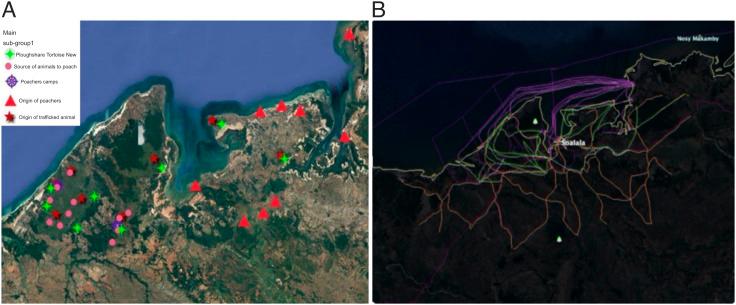
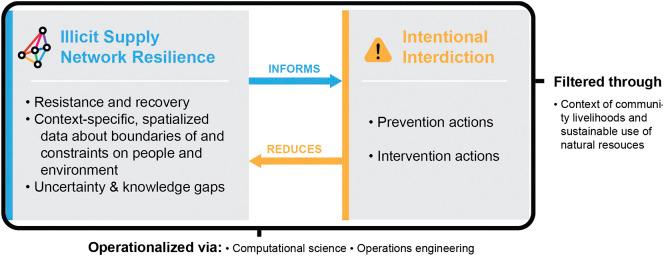
Wildlife trafficking, whether local or transnational in scope, undermines sustainable development efforts, degrades cultural resources, endangers species, erodes the local and global economy, and facilitates the spread of zoonotic diseases. Wildlife trafficking networks (WTNs) occupy a unique gray space in supply chains-straddling licit and illicit networks, supporting legitimate and criminal workforces, and often demonstrating high resilience in their sourcing flexibility and adaptability. Authorities in different sectors desire, but frequently lack knowledge about how to allocate resources to disrupt illicit wildlife supply networks and prevent negative collateral impacts. Novel conceptualizations and a deeper scientific understanding of WTN structures are needed to help unravel the dynamics of interaction between disruption and resilience while accommodating socioenvironmental context. We use the case of ploughshare tortoise trafficking to help illustrate the potential of key advancements in interdisciplinary thinking. Insights herein suggest a significant need and opportunity for scientists to generate new science-based recommendations for WTN-related data collection and analysis for supply chain visibility, shifts in illicit supply chain dominance, network resilience, or limits of the supplier base.
野生动物贩运,无论是本地还是跨国范围,都会破坏可持续发展努力,破坏文化资源,危及物种,侵蚀当地和全球经济,并促进人畜共患病的传播。野生动物贩运网络(WTNs)在供应链中占据独特的灰色地带——跨越合法和非法网络,支持合法和犯罪劳动力,并且在其资源灵活性和适应性方面经常表现出很高的弹性。不同部门的当局希望,但经常缺乏知识,如何分配资源来破坏非法野生动物供应网络并防止负面附带影响。需要对 WTN 结构进行新的概念化和更深入的科学理解,以帮助揭示干扰和弹性之间相互作用的动态,同时适应社会环境背景。我们使用犁头龟贩运案例来帮助说明跨学科思维的关键进展的潜力。本文中的见解表明,科学家们有很大的需求和机会,需要为 WTN 相关数据收集和分析生成新的基于科学的建议,以提高供应链可见性、非法供应链主导地位的变化、网络弹性或供应商基础的限制。

 Zotero 插件