
分析热解法测定复杂环境样品中微塑料内的聚氨酯。
Determination of polyurethanes within microplastics in complex environmental samples by analytical pyrolysis.
机构信息
Department of Chemistry "Giacomo Ciamician", University of Bologna, Tecnopolo Di Rimini, Rimini, Italy.
Institute of Chemistry and Biology of the Marine Environment (ICBM), University of Oldenburg, Oldenburg, Germany.
出版信息
Anal Bioanal Chem. 2023 Jun;415(15):2891-2905. doi: 10.1007/s00216-023-04580-3. Epub 2023 Feb 28.
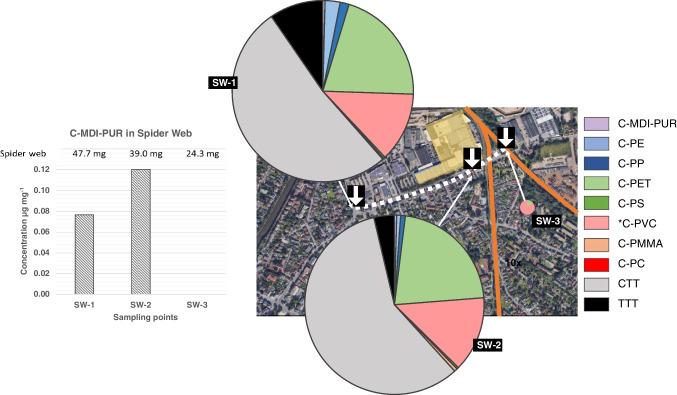
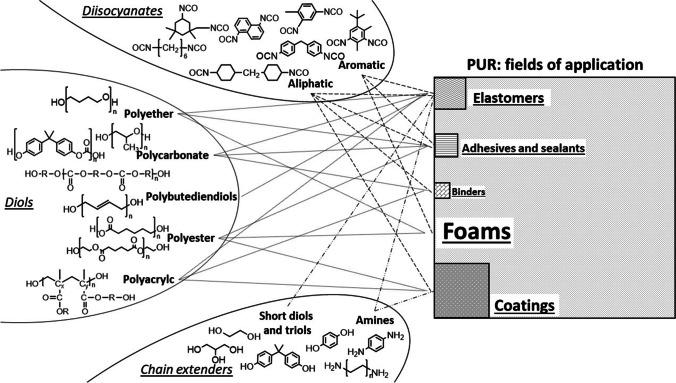
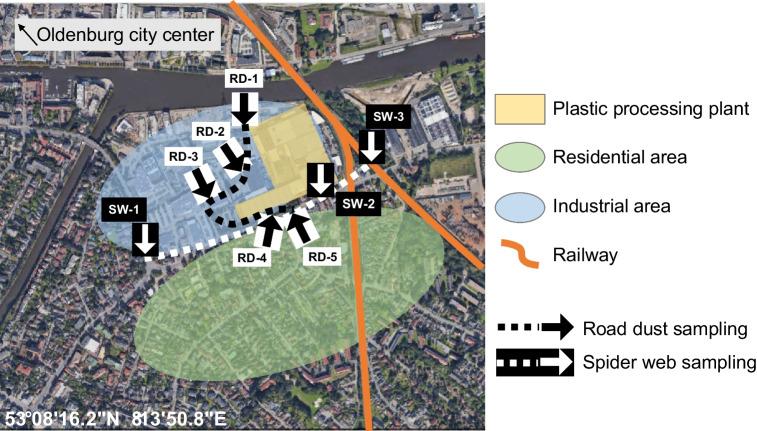
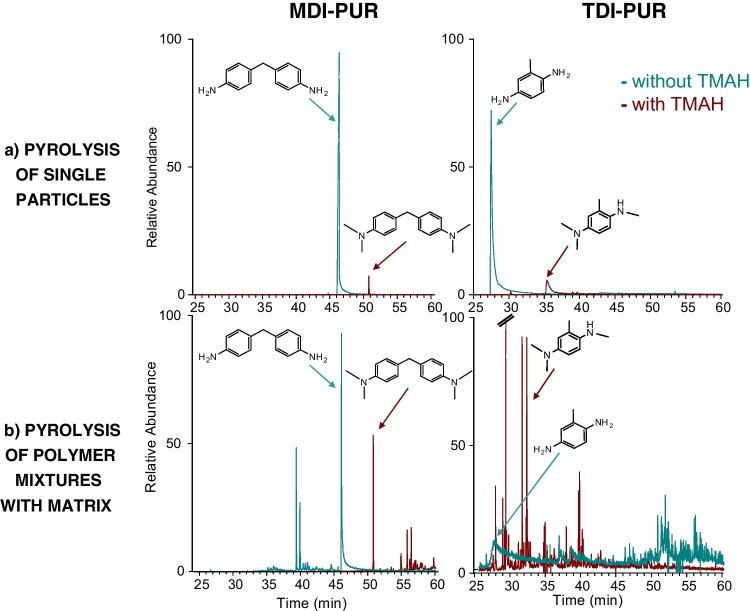
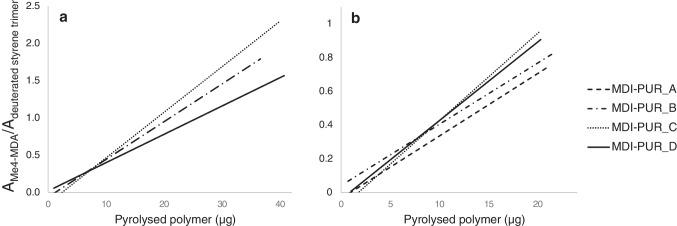
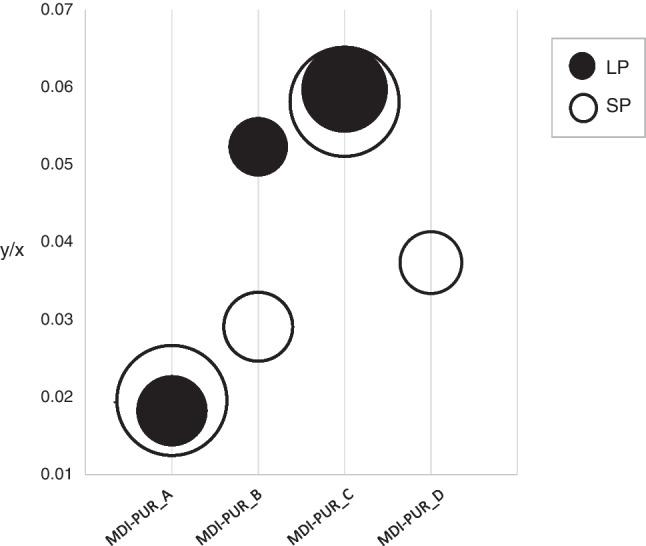
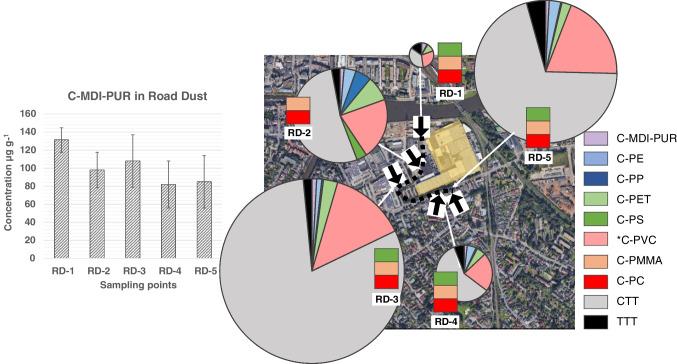
Polyurethanes (PUR) are a group of polymers synthesized from different diisocyanate and polyol monomers resulting in a countless number of possible structures. However, the large market demand, and the variety of application fields justify the inclusion of PUR in microplastic (MP) investigation. This study aimed at providing comprehensive information on PUR within MP analysis by pyrolysis-gas chromatography-mass spectrometry to clarify whether (i) it is possible to make a reliable statement on the PUR content of environmental samples based on a few pyrolysis products and (ii) which restrictions are required in this context. PUR were managed as subclasses defined by the diisocyanates employed for polymer synthesis. Methylene diphenyl diisocyanate (MDI)- and toluene diisocyanate (TDI)-based PUR were selected as subclasses of greatest relevance. Different PUR were pyrolyzed directly and under thermochemolytic conditions with tetramethylammonium hydroxide (TMAH). Distinct pyrolytic indicators were identified. The study supported that the use of TMAH greatly reduced the interactions of pyrolytic MP analytes with the remaining organic matrix of environmental samples and the associated negative effects on analytical results. Improvements of chromatographic behavior of PUR was evidenced. Regressions (1-20 µg) showed good correlations and parallelism tests underlined that quantitation behavior of different MDI-PUR could be represented by the calibration of just one representative with sufficient accuracy, entailing a good estimation of the entire subclass if thermochemolysis were used. The method was exemplary applied to road dusts and spider webs sampled around a plastic processing plant to evaluate the environmental spread of PUR in an urban context. The environmental occurrence of MDI-PUR as MP was highly influenced by the proximity to a potential source, while TDI markers were not observed.
聚氨基甲酸酯(PUR)是由不同的二异氰酸酯和多元醇单体合成的聚合物,其结果是存在无数种可能的结构。然而,庞大的市场需求和广泛的应用领域使得 PUR 有必要纳入微塑料(MP)的调查研究中。本研究旨在通过热裂解-气相色谱-质谱法(Py-GC-MS)为 PUR 分析提供有关 MP 分析的综合信息,以阐明(i)是否可以基于少数几种热裂解产物对环境样品中的 PUR 含量做出可靠的陈述,以及(ii)在这种情况下需要哪些限制。PUR 作为聚合物合成中使用的二异氰酸酯来管理的子类。选择亚甲基二苯基二异氰酸酯(MDI)和甲苯二异氰酸酯(TDI)基 PUR 作为最相关的子类。不同的 PUR 直接和在四甲基氢氧化铵(TMAH)下进行热化学裂解。确定了独特的热裂解指标。该研究支持 TMAH 的使用大大降低了热裂解 MP 分析物与环境样品中剩余有机基质的相互作用,以及对分析结果的负面影响。证据表明 PUR 的色谱行为得到了改善。回归(1-20μg)显示出良好的相关性,平行性测试强调,不同 MDI-PUR 的定量行为可以通过对一个具有足够准确性的代表性化合物进行校准来表示,这意味着如果使用热化学裂解,则可以很好地估计整个子类。该方法被成功应用于在塑料加工厂周围采集的道路灰尘和蜘蛛网,以评估 PUR 在城市环境中的环境扩散情况。MDI-PUR 作为 MP 在环境中的出现受到潜在污染源的近距离的强烈影响,而未观察到 TDI 标记物。
 Zotero 插件