
纳米驱动免疫疗法治疗癌症的新趋势
Emerging Trends in Nano-Driven Immunotherapy for Treatment of Cancer.
作者信息
Kandasamy Gayathri, Karuppasamy Yugeshwaran, Krishnan Uma Maheswari
机构信息
School of Chemical & Biotechnology, SASTRA Deemed University, Thanjavur 613401, India.
Centre for Nanotechnology & Advanced Biomaterials (CeNTAB), SASTRA Deemed University, Thanjavur 613401, India.
出版信息
Vaccines (Basel). 2023 Feb 16;11(2):458. doi: 10.3390/vaccines11020458.
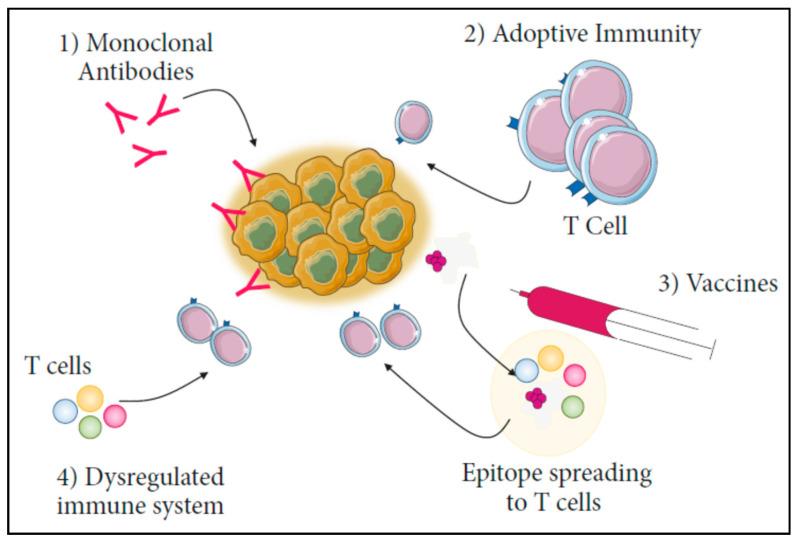
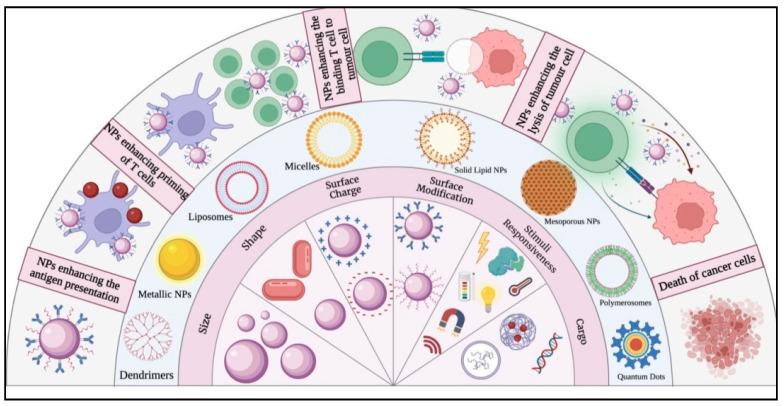
Despite advancements in the development of anticancer medications and therapies, cancer still has the greatest fatality rate due to a dismal prognosis. Traditional cancer therapies include chemotherapy, radiotherapy, and targeted therapy. The conventional treatments have a number of shortcomings, such as a lack of selectivity, non-specific cytotoxicity, suboptimal drug delivery to tumour locations, and multi-drug resistance, which results in a less potent/ineffective therapeutic outcome. Cancer immunotherapy is an emerging and promising strategy to elicit a pronounced immune response against cancer. Immunotherapy stimulates the immune system with cancer-specific antigens or immune checkpoint inhibitors to overcome the immune suppressive tumour microenvironment and kill the cancer cells. However, delivery of the antigen or immune checkpoint inhibitors and activation of the immune response need to circumvent the issues pertaining to short lifetimes and effect times, as well as adverse effects associated with off-targeting, suboptimal, or hyperactivation of the immune system. Additional challenges posed by the tumour suppressive microenvironment are less tumour immunogenicity and the inhibition of effector T cells. The evolution of nanotechnology in recent years has paved the way for improving treatment efficacy by facilitating site-specific and sustained delivery of the therapeutic moiety to elicit a robust immune response. The amenability of nanoparticles towards surface functionalization and tuneable physicochemical properties, size, shape, and surfaces charge have been successfully harnessed for immunotherapy, as well as combination therapy, against cancer. In this review, we have summarized the recent advancements made in choosing different nanomaterial combinations and their modifications made to enable their interaction with different molecular and cellular targets for efficient immunotherapy. This review also highlights recent trends in immunotherapy strategies to be used independently, as well as in combination, for the destruction of cancer cells, as well as prevent metastasis and recurrence.
尽管抗癌药物和疗法的研发取得了进展,但由于预后不佳,癌症仍然是致死率最高的疾病。传统的癌症疗法包括化疗、放疗和靶向治疗。这些传统治疗方法存在许多缺点,例如缺乏选择性、非特异性细胞毒性、肿瘤部位药物递送不理想以及多药耐药性,导致治疗效果不佳或无效。癌症免疫疗法是一种新兴且有前景的策略,可引发针对癌症的显著免疫反应。免疫疗法通过癌症特异性抗原或免疫检查点抑制剂刺激免疫系统,以克服免疫抑制性肿瘤微环境并杀死癌细胞。然而,抗原或免疫检查点抑制剂的递送以及免疫反应的激活需要解决与寿命短、作用时间短相关的问题,以及与免疫系统脱靶、次优激活或过度激活相关的副作用。肿瘤抑制性微环境带来的其他挑战包括肿瘤免疫原性较低和效应T细胞的抑制。近年来,纳米技术的发展为通过促进治疗部分的位点特异性和持续递送以引发强大的免疫反应来提高治疗效果铺平了道路。纳米颗粒对表面功能化的适应性以及可调节的物理化学性质、尺寸、形状和表面电荷已成功应用于癌症免疫疗法以及联合疗法。在这篇综述中,我们总结了在选择不同纳米材料组合及其修饰方面取得的最新进展,以使其能够与不同的分子和细胞靶点相互作用,实现高效的免疫治疗。这篇综述还强调了免疫治疗策略的最新趋势,这些策略可单独使用或联合使用,用于破坏癌细胞以及预防转移和复发。







 Zotero 插件