
紫杉醇对Na1.8轴突定位和囊泡运输的影响。
Paclitaxel effects on axonal localization and vesicular trafficking of Na1.8.
作者信息
Baker Christopher A, Tyagi Sidharth, Higerd-Rusli Grant P, Liu Shujun, Zhao Peng, Dib-Hajj Fadia B, Waxman Stephen G, Dib-Hajj Sulayman D
机构信息
Department of Neurology, Yale University, New Haven, CT, United States.
Center for Neuroscience and Regeneration Research, Yale University, New Haven, CT, United States.
出版信息
Front Mol Neurosci. 2023 Feb 13;16:1130123. doi: 10.3389/fnmol.2023.1130123. eCollection 2023.
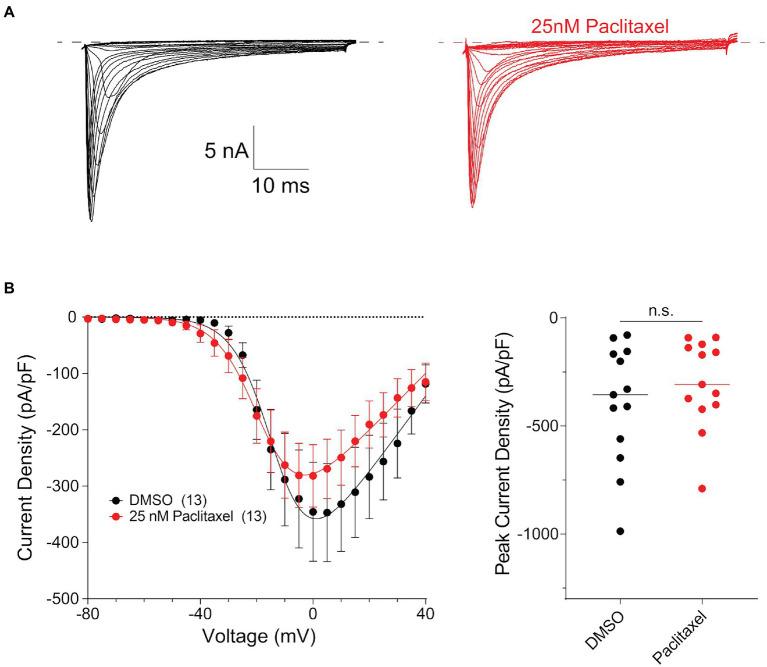
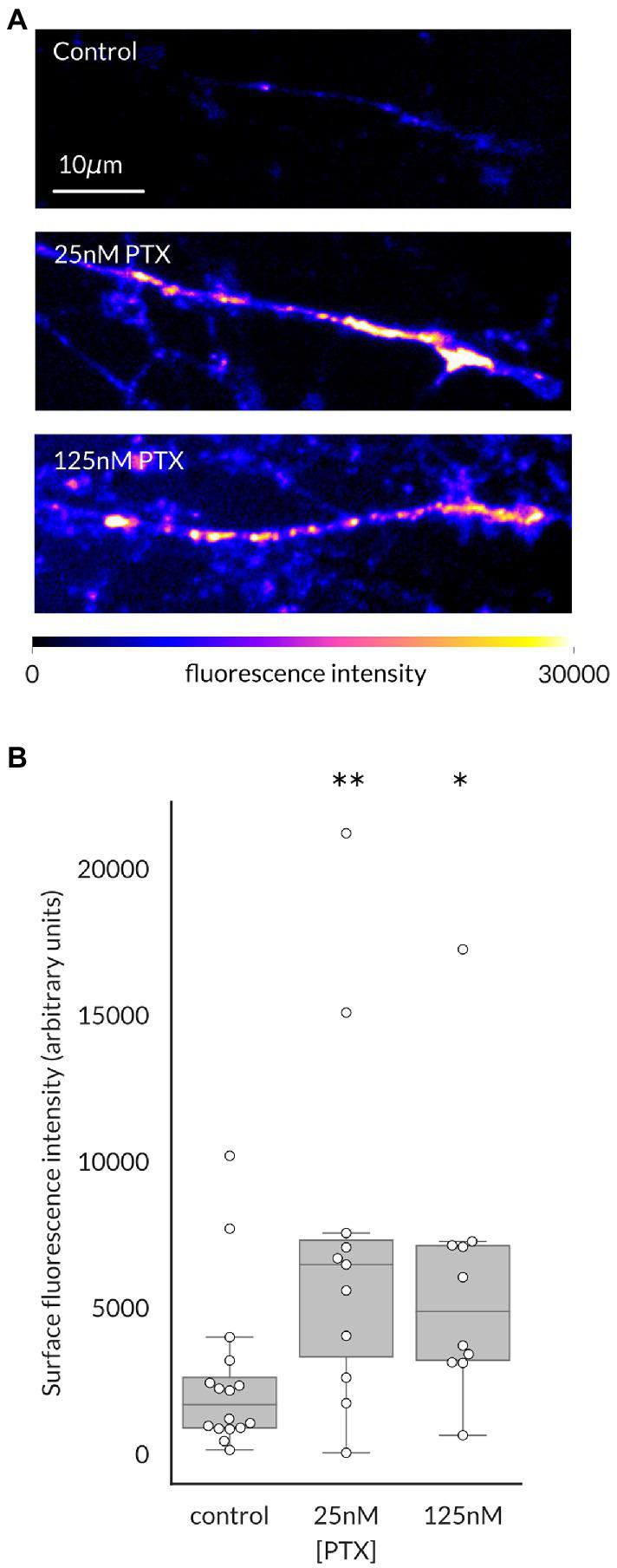
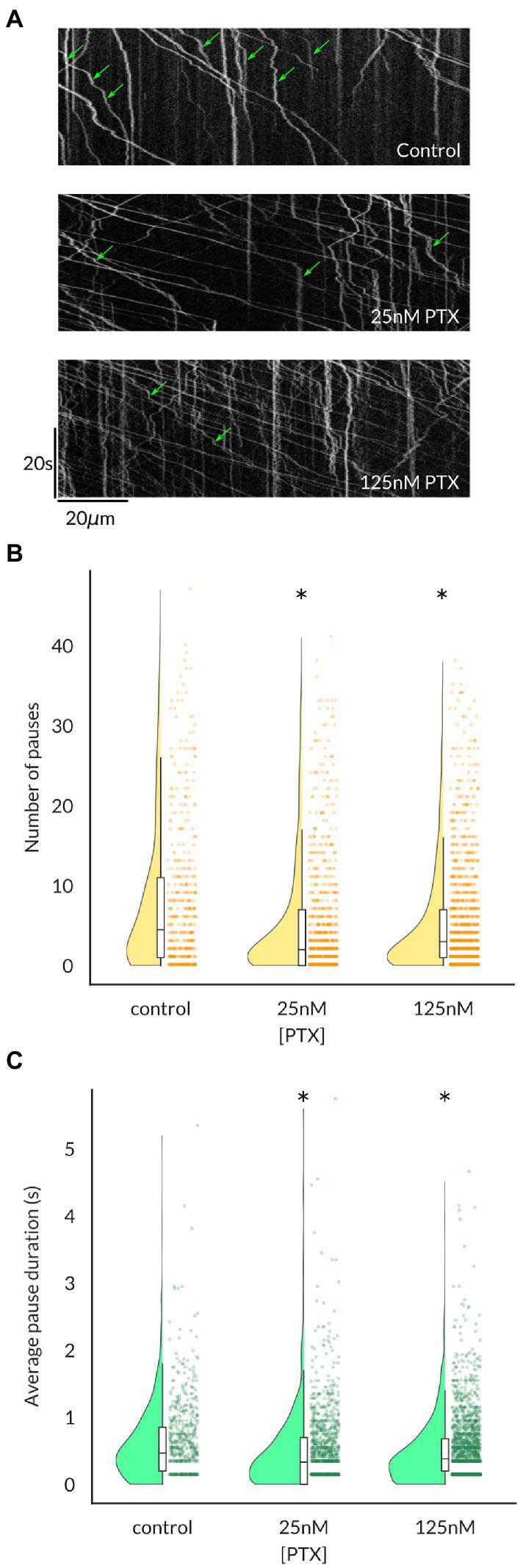
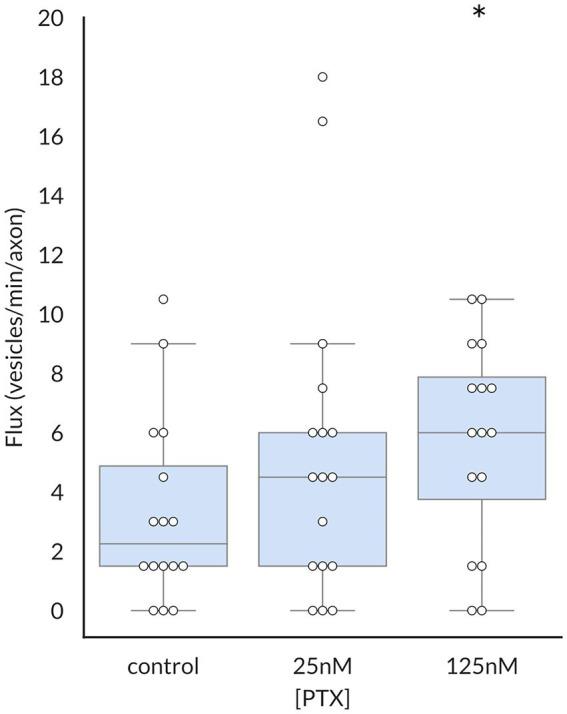
Patients treated with paclitaxel (PTX) or other antineoplastic agents can experience chemotherapy-induced peripheral neuropathy (CIPN), a debilitating side effect characterized by numbness and pain. PTX interferes with microtubule-based transport, which inhibits tumor growth cell cycle arrest but can also affect other cellular functions including trafficking of ion channels critical to transduction of stimuli by sensory neurons of the dorsal root ganglia (DRG). We examined the effects of PTX on voltage-gated sodium channel Na1.8, which is preferentially expressed in DRG neurons, using a microfluidic chamber culture system and chemigenetic labeling to observe anterograde channel transport to the endings of DRG axons in real time. PTX treatment increased the numbers of Na1.8-containing vesicles traversing the axons. Vesicles in PTX-treated cells exhibited greater average velocity, along with shorter and less frequent pauses along their trajectories. These events were paralleled by greater surface accumulation of Na1.8 channels at the distal ends of DRG axons. These results were consistent with observations that Na1.8 is trafficked in the same vesicles containing Na1.7 channels, which are also involved in pain syndromes in humans and are similarly affected by PTX treatment. However, unlike Na1.7, we did not detect increased Na1.8 current density measured at the neuronal soma, suggesting a differential effect of PTX on trafficking of Na1.8 in soma versus axonal compartments. Therapeutic targeting of axonal vesicular traffic would affect both Na1.7 and Na1.8 channels and increase the possibilities of alleviating pain associated with CIPN.
接受紫杉醇(PTX)或其他抗肿瘤药物治疗的患者可能会出现化疗引起的周围神经病变(CIPN),这是一种以麻木和疼痛为特征的使人衰弱的副作用。PTX干扰基于微管的运输,这抑制了肿瘤生长并导致细胞周期停滞,但也会影响其他细胞功能,包括对背根神经节(DRG)感觉神经元刺激转导至关重要的离子通道运输。我们使用微流控腔室培养系统和化学遗传标记来实时观察DRG轴突末梢的顺行通道运输,研究了PTX对在DRG神经元中优先表达的电压门控钠通道Na1.8的影响。PTX处理增加了穿过轴突的含Na1.8囊泡的数量。PTX处理细胞中的囊泡表现出更高的平均速度,并且在其轨迹上的停顿更短且更不频繁。这些事件伴随着DRG轴突远端Na1.8通道在表面的积累增加。这些结果与以下观察结果一致:Na1.8与含有Na1.7通道的相同囊泡一起运输,Na1.7通道也与人类疼痛综合征有关,并且同样受到PTX处理的影响。然而,与Na1.7不同,我们未检测到在神经元胞体处测量的Na1.8电流密度增加,这表明PTX对Na1.8在胞体与轴突区室运输中的影响存在差异。对轴突囊泡运输进行治疗性靶向将影响Na1.7和Na1.8通道,并增加减轻与CIPN相关疼痛的可能性。

 Zotero 插件