
癌症免疫治疗中的新兴吞噬检查点。
Emerging phagocytosis checkpoints in cancer immunotherapy.
机构信息
Tongji University Cancer Center, Shanghai Tenth People's Hospital of Tongji University, School of Medicine, Tongji University, Shanghai, 200092, China.
Department of Nephrology, Shanghai East Hospital, Tongji University School of Medicine, Shanghai, China.
出版信息
Signal Transduct Target Ther. 2023 Mar 7;8(1):104. doi: 10.1038/s41392-023-01365-z.
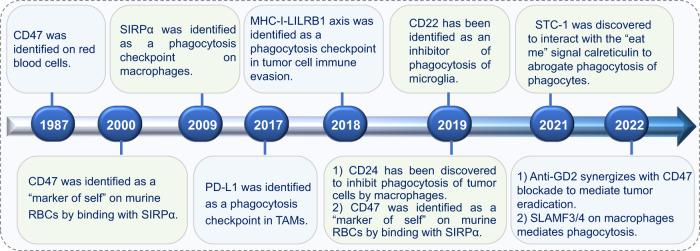
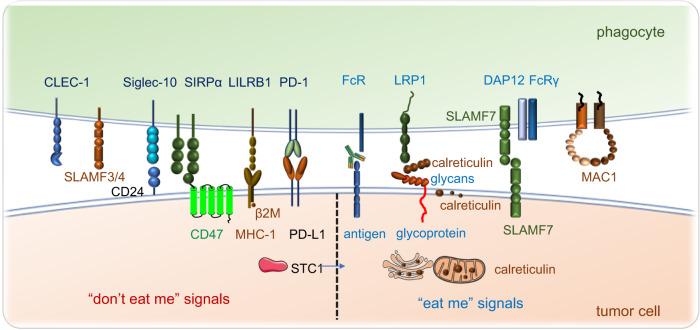
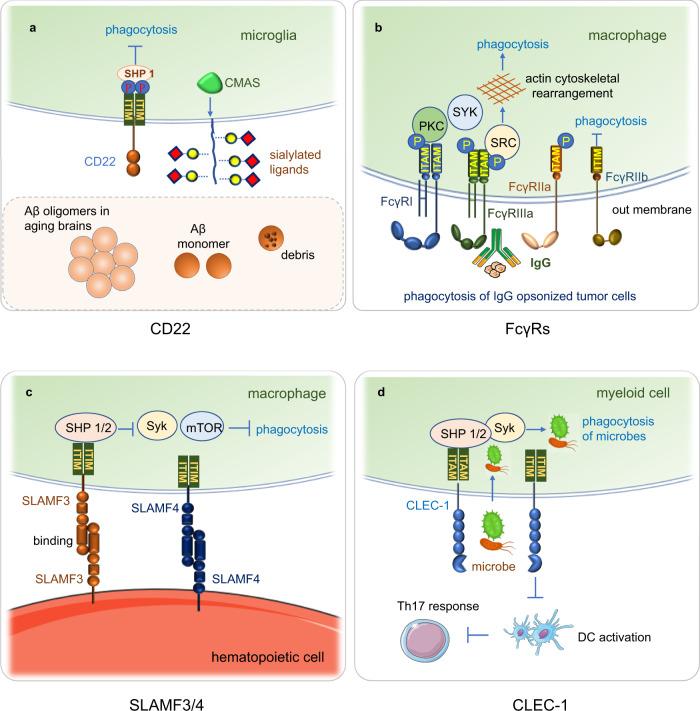
Cancer immunotherapy, mainly including immune checkpoints-targeted therapy and the adoptive transfer of engineered immune cells, has revolutionized the oncology landscape as it utilizes patients' own immune systems in combating the cancer cells. Cancer cells escape immune surveillance by hijacking the corresponding inhibitory pathways via overexpressing checkpoint genes. Phagocytosis checkpoints, such as CD47, CD24, MHC-I, PD-L1, STC-1 and GD2, have emerged as essential checkpoints for cancer immunotherapy by functioning as "don't eat me" signals or interacting with "eat me" signals to suppress immune responses. Phagocytosis checkpoints link innate immunity and adaptive immunity in cancer immunotherapy. Genetic ablation of these phagocytosis checkpoints, as well as blockade of their signaling pathways, robustly augments phagocytosis and reduces tumor size. Among all phagocytosis checkpoints, CD47 is the most thoroughly studied and has emerged as a rising star among targets for cancer treatment. CD47-targeting antibodies and inhibitors have been investigated in various preclinical and clinical trials. However, anemia and thrombocytopenia appear to be formidable challenges since CD47 is ubiquitously expressed on erythrocytes. Here, we review the reported phagocytosis checkpoints by discussing their mechanisms and functions in cancer immunotherapy, highlight clinical progress in targeting these checkpoints and discuss challenges and potential solutions to smooth the way for combination immunotherapeutic strategies that involve both innate and adaptive immune responses.
癌症免疫疗法主要包括免疫检查点靶向治疗和工程化免疫细胞的过继转移,它利用患者自身的免疫系统来对抗癌细胞,从而彻底改变了肿瘤学领域。癌细胞通过过度表达检查点基因,劫持相应的抑制途径来逃避免疫监视。吞噬检查点,如 CD47、CD24、MHC-I、PD-L1、STC-1 和 GD2,通过充当“不要吃我”信号或与“吃我”信号相互作用来抑制免疫反应,已成为癌症免疫疗法的重要检查点。吞噬检查点将先天免疫和适应性免疫联系在一起,在癌症免疫疗法中。这些吞噬检查点的遗传缺失以及它们的信号通路的阻断,显著增强了吞噬作用并减小了肿瘤大小。在所有的吞噬检查点中,CD47 是研究最透彻的,并且已成为癌症治疗的新兴靶点之一。CD47 靶向抗体和抑制剂已在各种临床前和临床试验中进行了研究。然而,贫血和血小板减少似乎是一个巨大的挑战,因为 CD47 广泛表达于红细胞上。在这里,我们通过讨论它们在癌症免疫疗法中的机制和功能来回顾报道的吞噬检查点,强调靶向这些检查点的临床进展,并讨论克服挑战和潜在解决方案的方法,为涉及先天和适应性免疫反应的联合免疫治疗策略铺平道路。



 Zotero 插件