
静脉注射白细胞介素-7逆转感染性休克患者淋巴细胞减少症:一项双盲、随机、安慰剂对照试验。
Intravenously administered interleukin-7 to reverse lymphopenia in patients with septic shock: a double-blind, randomized, placebo-controlled trial.
作者信息
Daix Thomas, Mathonnet Armelle, Brakenridge Scott, Dequin Pierre-François, Mira Jean-Paul, Berbille Frederique, Morre Michel, Jeannet Robin, Blood Teresa, Unsinger Jacqueline, Blood Jane, Walton Andrew, Moldawer Lyle L, Hotchkiss Richard, François Bruno
机构信息
Réanimation Polyvalente, INSERM CIC 1435 and UMR 1092, CHU Limoges, Limoges, France.
Médecine Intensive Réanimation, CH Orléans, Orléans, France.
出版信息
Ann Intensive Care. 2023 Mar 12;13(1):17. doi: 10.1186/s13613-023-01109-w.
BACKGROUND
Profound lymphopenia is an independent predictor of adverse clinical outcomes in sepsis. Interleukin-7 (IL-7) is essential for lymphocyte proliferation and survival. A previous phase II study showed that CYT107, a glycosylated recombinant human IL-7, administered intramuscularly reversed sepsis-induced lymphopenia and improved lymphocyte function. Thepresent study evaluated intravenous administration of CYT107. This prospective, double-blinded, placebo-controlled trial was designed to enroll 40 sepsis patients, randomized 3:1 to CYT107 (10 µg/kg) or placebo, for up to 90 days.
RESULTS
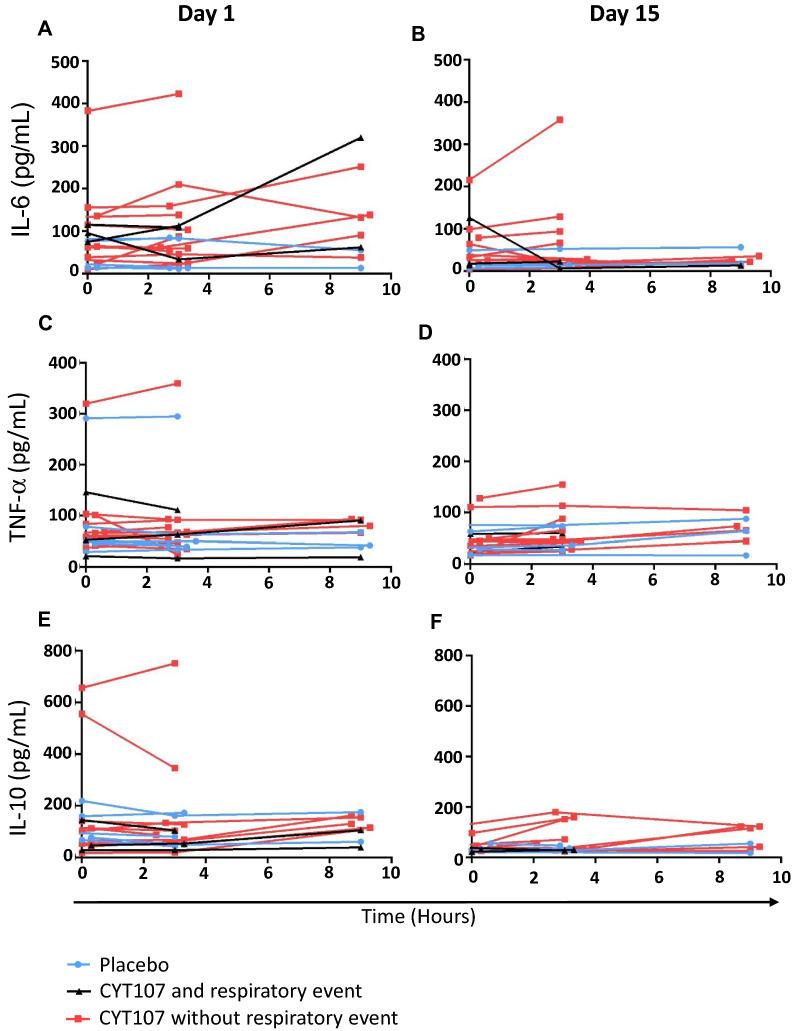
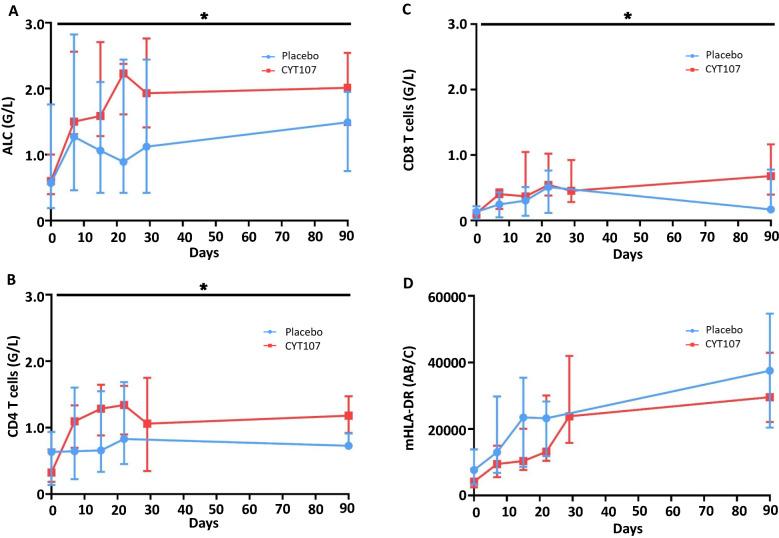
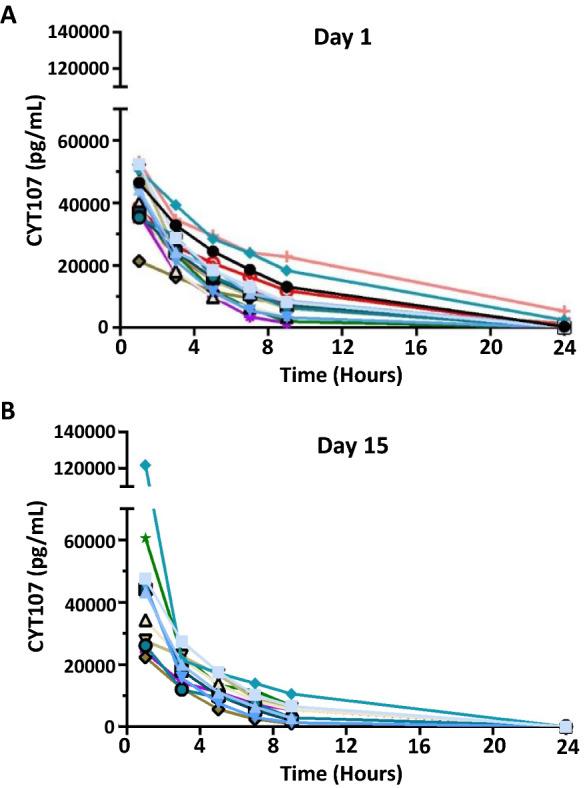
Twenty-one patients were enrolled (fifteen CYT107 group, six placebo group) at eight French and two US sites. The study was halted early because three of fifteen patients receiving intravenous CYT107 developed fever and respiratory distress approximately 5-8 h after drug administration. Intravenous administration of CYT107 resulted in a two-threefold increase in absolute lymphocyte counts (including in both CD4 and CD8 T cells (all p < 0.05)) compared to placebo. This increase was similar to that seen with intramuscular administration of CYT107, was maintained throughout follow-up, reversed severe lymphopenia and was associated with increase in organ support free days (OSFD). However, intravenous CYT107 produced an approximately 100-fold increase in CYT107 blood concentration compared with intramuscular CYT107. No cytokine storm and no formation of antibodies to CYT107 were observed.
CONCLUSION
Intravenous CYT107 reversed sepsis-induced lymphopenia. However, compared to intramuscular CYT107 administration, it was associated with transient respiratory distress without long-term sequelae. Because of equivalent positive laboratory and clinical responses, more favorable pharmacokinetics, and better patient tolerability, intramuscular administration of CYT107 is preferable.
TRIAL REGISTRATION
Clinicaltrials.gov, NCT03821038. Registered 29 January 2019, https://clinicaltrials.gov/ct2/show/NCT03821038?term=NCT03821038&draw=2&rank=1 .
背景
严重淋巴细胞减少是脓毒症不良临床结局的独立预测因素。白细胞介素-7(IL-7)对淋巴细胞增殖和存活至关重要。一项先前的II期研究表明,肌肉注射糖基化重组人IL-7(CYT107)可逆转脓毒症诱导的淋巴细胞减少并改善淋巴细胞功能。本研究评估了CYT107的静脉给药。这项前瞻性、双盲、安慰剂对照试验旨在招募40例脓毒症患者,按3:1随机分为CYT107(10µg/kg)组或安慰剂组,为期90天。
结果
在法国的8个和美国的2个地点共招募了21例患者(CYT107组15例,安慰剂组6例)。该研究提前终止,因为15例接受静脉注射CYT107的患者中有3例在给药后约5-8小时出现发热和呼吸窘迫。与安慰剂相比,静脉注射CYT107使绝对淋巴细胞计数增加了两到三倍(包括CD4和CD8 T细胞,所有p<0.05)。这种增加与肌肉注射CYT107时所见相似,在整个随访过程中持续存在,逆转了严重淋巴细胞减少,并与无器官支持天数(OSFD)增加相关。然而,与肌肉注射CYT107相比,静脉注射CYT107使CYT107血药浓度增加了约100倍。未观察到细胞因子风暴,也未形成针对CYT107的抗体。
结论
静脉注射CYT107可逆转脓毒症诱导的淋巴细胞减少。然而,与肌肉注射CYT107相比,它与短暂的呼吸窘迫相关,无长期后遗症。由于实验室和临床反应相当、药代动力学更有利且患者耐受性更好,肌肉注射CYT107更为可取。
试验注册
Clinicaltrials.gov,NCT03821038。2019年1月29日注册,https://clinicaltrials.gov/ct2/show/NCT03821038?term=NCT03821038&draw=2&rank=1 。
 Zotero 插件