
巨大基因组中的转座元件与宿主沉默活性
Transposable element and host silencing activity in gigantic genomes.
作者信息
Wang Jie, Yuan Liang, Tang Jiaxing, Liu Jiongyu, Sun Cheng, Itgen Michael W, Chen Guiying, Sessions Stanley K, Zhang Guangpu, Mueller Rachel Lockridge
机构信息
CAS Key Laboratory of Mountain Ecological Restoration and Bioresource Utilization & Ecological Restoration and Biodiversity Conservation Key Laboratory of Sichuan Province, Chengdu Institute of Biology, Chinese Academy of Sciences, Chengdu, Sichuan, China.
School of Life Sciences, Xinjiang Normal University, Urumqi, China.
出版信息
Front Cell Dev Biol. 2023 Feb 24;11:1124374. doi: 10.3389/fcell.2023.1124374. eCollection 2023.
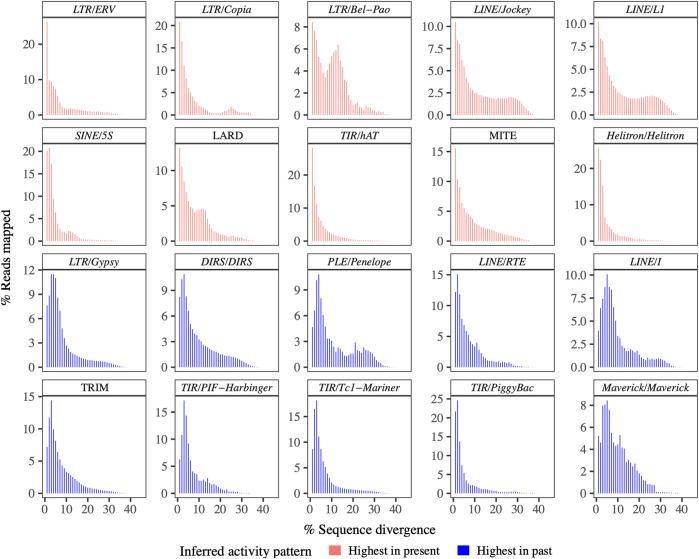
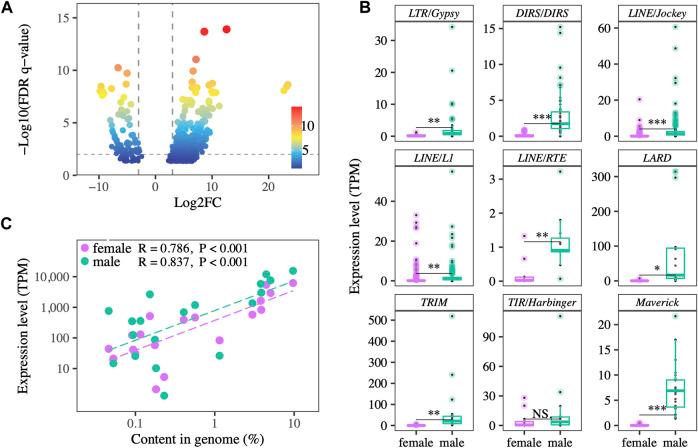
Transposable elements (TEs) and the silencing machinery of their hosts are engaged in a germline arms-race dynamic that shapes TE accumulation and, therefore, genome size. In animal species with extremely large genomes (>10 Gb), TE accumulation has been pushed to the extreme, prompting the question of whether TE silencing also deviates from typical conditions. To address this question, we characterize TE silencing two pathways-the piRNA pathway and KRAB-ZFP transcriptional repression-in the male and female gonads of , a salamander species with a ∼21 Gb genome. We quantify 1) genomic TE diversity, 2) TE expression, and 3) small RNA expression and find a significant relationship between the expression of piRNAs and TEs they target for silencing in both ovaries and testes. We also quantified TE silencing pathway gene expression in and 14 other vertebrates with genome sizes ranging from 1 to 130 Gb and find no association between pathway expression and genome size. Taken together, our results reveal that the gigantic genome includes at least 19 putatively active TE superfamilies, all of which are targeted by the piRNA pathway in proportion to their expression levels, suggesting comprehensive piRNA-mediated silencing. Testes have higher TE expression than ovaries, suggesting that they may contribute more to the species' high genomic TE load. We posit that apparently conflicting interpretations of TE silencing and genomic gigantism in the literature, as well as the absence of a correlation between TE silencing pathway gene expression and genome size, can be reconciled by considering whether the TE community or the host is currently "on the attack" in the arms race dynamic.
转座元件(TEs)与其宿主的沉默机制参与了一种种系军备竞赛动态,这种动态塑造了TE的积累,进而影响基因组大小。在基因组极大(>10 Gb)的动物物种中,TE的积累已被推至极端,这引发了一个问题,即TE沉默是否也偏离了典型情况。为了解决这个问题,我们在一种基因组约为21 Gb的蝾螈物种的雄性和雌性性腺中,对TE沉默的两条途径——piRNA途径和KRAB-ZFP转录抑制——进行了表征。我们对以下三个方面进行了量化:1)基因组TE多样性,2)TE表达,3)小RNA表达,并发现piRNA与其靶向沉默的TE在卵巢和睾丸中的表达之间存在显著关系。我们还量化了该蝾螈以及其他14种基因组大小从1 Gb到130 Gb的脊椎动物中TE沉默途径基因的表达,发现途径表达与基因组大小之间没有关联。综合来看,我们的结果表明,巨大的蝾螈基因组包含至少19个推定活跃的TE超家族,所有这些超家族都按其表达水平被piRNA途径靶向,这表明存在全面的piRNA介导的沉默。睾丸中的TE表达高于卵巢,这表明睾丸可能对该物种高基因组TE负荷的贡献更大。我们认为,文献中对TE沉默和基因组巨大化的明显相互矛盾的解释,以及TE沉默途径基因表达与基因组大小之间缺乏相关性,可以通过考虑在军备竞赛动态中TE群体或宿主当前是否“处于攻击状态”来调和。



 Zotero 插件