
靶向卵巢癌中的受体酪氨酸激酶:基因组失调、抑制剂的临床评估及联合疗法的潜力
Targeting receptor tyrosine kinases in ovarian cancer: Genomic dysregulation, clinical evaluation of inhibitors, and potential for combinatorial therapies.
作者信息
Wei Ying, Erfani Sonia, Schweer David, de Gouvea Rafael, Qadir Javeria, Shi Junfeng, Cheng Kai, Wu Dabao, Craven Rolf, Wu Yadi, Olivier Thibault, Baldwin Lauren A, Zhou Binhua, Zhou Ying, Zhao Weidong, Yang Burton B, Ueland Frederick R, Yang Xiuwei H
机构信息
Department of Obstetrics and Gynecology, The First Affiliated Hospital of University of Science & Technology of China, Hefei, Anhui Province, P.R. China.
Department of Pharmacology and Nutritional Sciences, College of Medicine, University of Kentucky, Lexington, KY, USA.
出版信息
Mol Ther Oncolytics. 2023 Feb 19;28:293-306. doi: 10.1016/j.omto.2023.02.006. eCollection 2023 Mar 16.
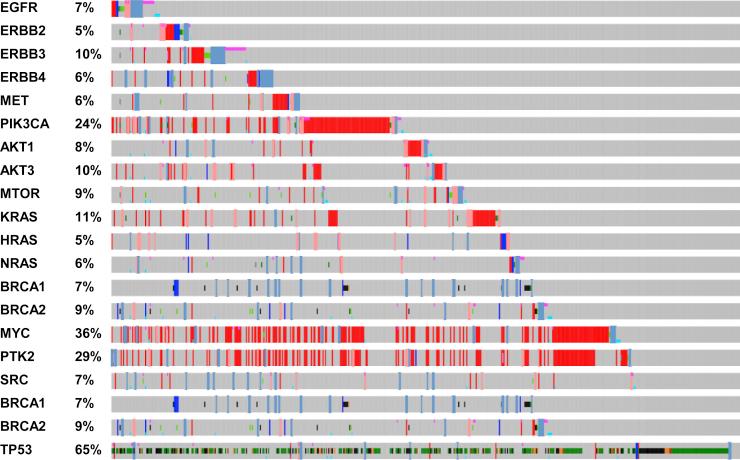
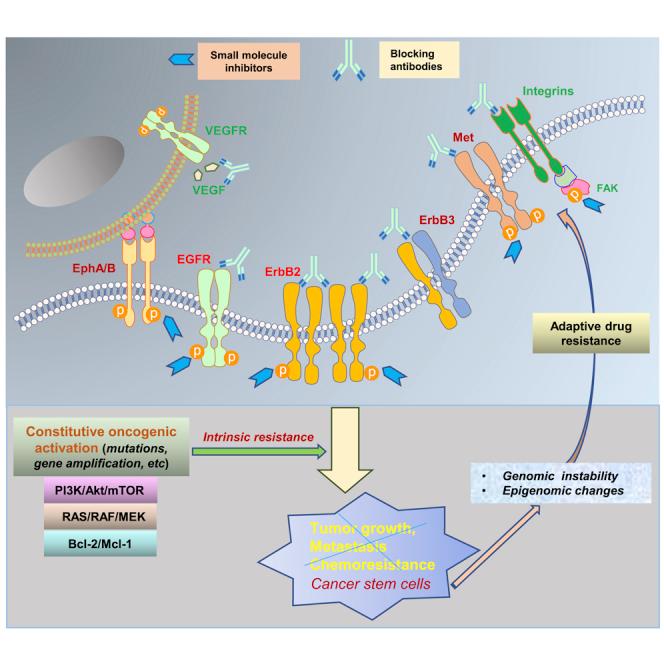
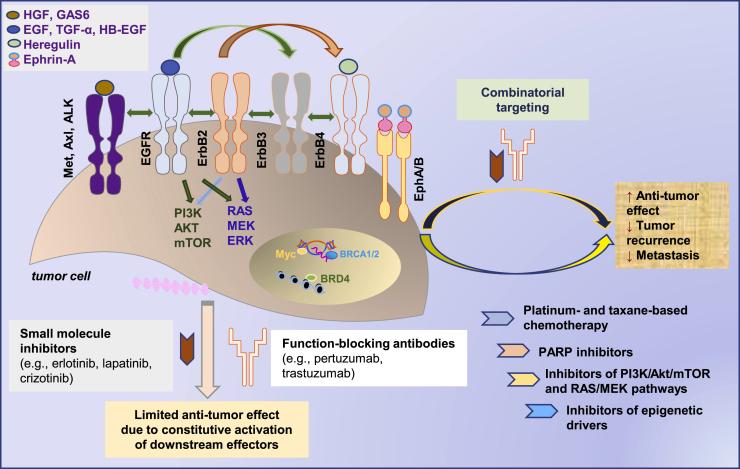
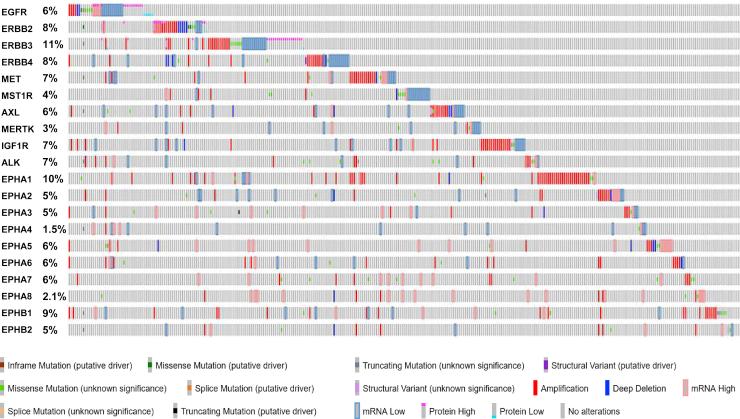
Epithelial ovarian cancer (EOC) remains one of the leading causes of cancer-related deaths among women worldwide. Receptor tyrosine kinases (RTKs) have long been sought as therapeutic targets for EOC, as they are frequently hyperactivated in primary tumors and drive disease relapse, progression, and metastasis. More recently, these oncogenic drivers have been implicated in EOC response to poly(ADP-ribose) polymerase (PARP) inhibitors and epigenome-interfering agents. This evidence revives RTKs as promising targets for therapeutic intervention of EOC. This review summarizes recent studies on the role of RTKs in EOC malignancy and the use of their inhibitors for clinical treatment. Our focus is on the ERBB family, c-Met, and VEGFR, as they are linked to drug resistance and targetable using commercially available drugs. The importance of these RTKs and their inhibitors is highlighted by their impact on signal transduction and intratumoral heterogeneity in EOC and successful use as maintenance therapy in the clinic through suppression of the VEGF/VEGFR axis. Finally, the therapeutic potential of RTK inhibitors is discussed in the context of combinatorial targeting via co-inhibiting proliferative and anti-apoptotic pathways, epigenomic/transcriptional programs, and harnessing the efficacy of PARP inhibitors and programmed cell death 1/ligand 1 immune checkpoint therapies.
上皮性卵巢癌(EOC)仍然是全球女性癌症相关死亡的主要原因之一。长期以来,受体酪氨酸激酶(RTK)一直被视为EOC的治疗靶点,因为它们在原发性肿瘤中经常过度激活,并驱动疾病复发、进展和转移。最近,这些致癌驱动因素与EOC对聚(ADP - 核糖)聚合酶(PARP)抑制剂和表观基因组干扰剂的反应有关。这一证据使RTK重新成为EOC治疗干预的有希望的靶点。本综述总结了最近关于RTK在EOC恶性肿瘤中的作用及其抑制剂在临床治疗中的应用的研究。我们重点关注ERBB家族、c - Met和VEGFR,因为它们与耐药性相关,并且可以使用市售药物进行靶向治疗。这些RTK及其抑制剂对EOC信号转导和肿瘤内异质性的影响,以及通过抑制VEGF/VEGFR轴在临床上成功用作维持治疗,突出了它们的重要性。最后,在通过共同抑制增殖和抗凋亡途径、表观基因组/转录程序以及利用PARP抑制剂和程序性细胞死亡1/配体1免疫检查点疗法的疗效进行联合靶向的背景下,讨论了RTK抑制剂的治疗潜力。
 Zotero 插件